Checkpoint Charlie to Be Reshaped
One of Berlin's most recognizable Cold War sites is about to change. In future, tourists will have the opportunity to get a more realistic view of this border crossing's history. It is supposed to be a unified place of learning and remembrance.
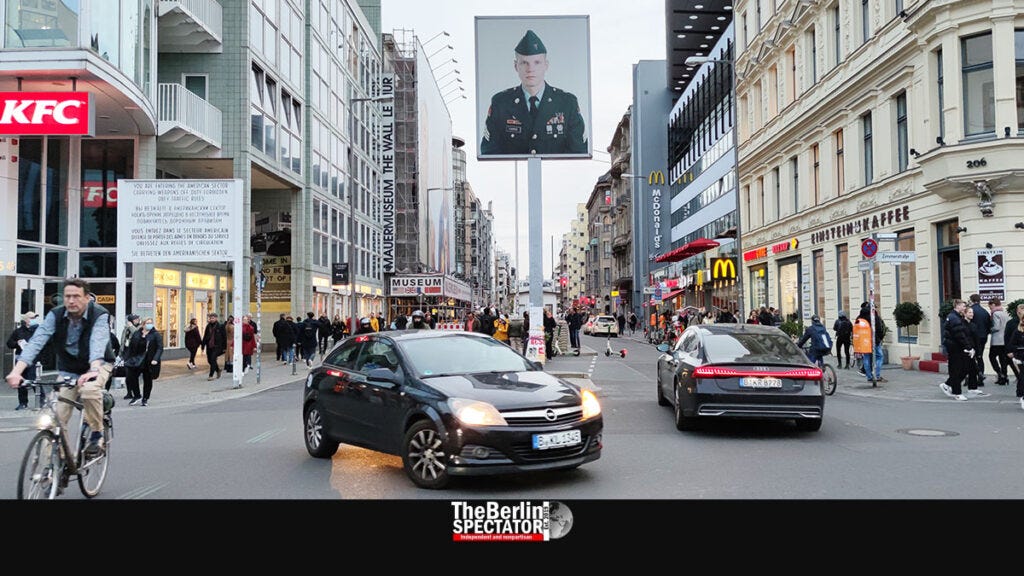
Berlin has a few iconic landmarks that every first-time visitor must see, such as the Brandenburg Gate, the TV Tower, the East Side Gallery, and Checkpoint Charlie. However, the area around the former border crossing between West Berlin and East Berlin has become disorganized and chaotic. Tourists flock to the tiny replica of the guard hut, taking selfies and touching the object.
Meanwhile, motorized traffic weaves back and forth adjacent to the checkpoint, which has maintained a precarious balance and avoided major accidents. The current layout of Checkpoint Charlie does not accurately represent its historical significance and the events that occurred there during the Cold War. In response, the Senate Department for Urban Development is working on improving the area.
A jury has selected a winning design submitted by a Berlin-based firm, A24 Landschaft, in collaboration with Holzer Kobler Architekturen (Berlin) and Argus Stadt und Verkehr (Hamburg). The new concept aims to transform Checkpoint Charlie into a hub for education, remembrance, and public engagement. Instead of simply being a historical marker, the redesign envisions a space where visitors can actively interact with the story of the divided city and the broader Cold War conflict.
The plan also seeks to create a functional public square within one of Berlin's busiest tourist destinations. City planners emphasize that the redesign will bring order to the high-traffic area while preserving its historical essence, offering opportunities for public discourse and reflection amidst daily activities. The German government's Commissioner for Culture and Media has allocated 1.65 million Euros toward the project through the federal memorial site program, funded by the Berlin Wall Foundation.
The competition, launched in April, received 22 interdisciplinary teams from landscape architecture, architecture, and exhibition design. The exhibition showcasing the five winning designs, including the chosen prize-winning design, will open on October 12th at the Neues Stadthaus in Mitte, Berlin.
Written by urgent.news from The Berlin Spectator's reporting — not their text. Machine-written — may contain errors; check the original before relying on it.