BRICS issues New Delhi Declaration, as UAE and Iran back down from tough positions
PM chairs BRICS summit, says grouping not “against anyone”; holds hour-long meet with Mr. Xi declaration calls for “maximum restraint” in war with no specific mention of strikes; rebukes Israel
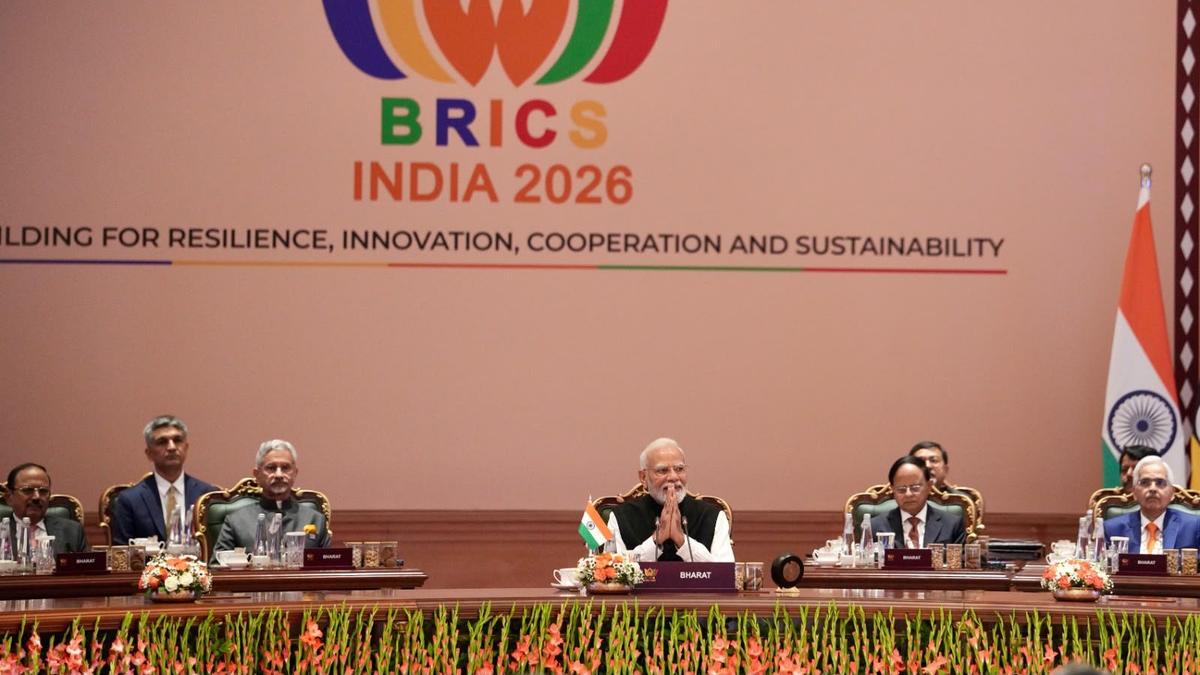
On September 12, 2026, BRICS nations issued the New Delhi Declaration, after Iran and the United Arab Emirates compromised on language regarding the conflict in West Asia, allowing the 11-member group to adopt the statement chaired by Prime Minister Narendra Modi. The declaration called for maximum restraint in the war and did not specifically mention the U.S.-Israeli strikes in Iran or Iran's retaliatory actions against its neighboring countries, including the UAE.
The meeting in New Delhi involved the leaders of the BRICS members, including Russian President Vladimir Putin and Chinese President Xi Jinping, as well as heads from Indonesia, Ethiopia, Egypt, and South Africa. Brazil sent high-level representatives, while the UAE sent a low-ranking delegation. Modi described BRICS as "coming of age" with a distinct identity that promotes consensus rather than confrontation.
Modi proposed a "troika" system, similar to the G-20, for rotating presidencies, a roadmap for global governance reform, a seafarer distress network, and a BRICS mechanism for skill development in new technologies. The declaration also called for comprehensive reform of the United Nations, including increased roles for India and Brazil in the Security Council.
The New Delhi Declaration expressed deep concern over attacks on civilian infrastructure and nuclear facilities in West Asia, particularly in reference to U.S. and Israeli missile strikes on Iran. BRICS leaders strongly criticized Israel's bombardment of Gaza and supported South Africa's case against Israel in international courts. They also called for humanitarian aid in Gaza and advocated for a two-state solution with full rights for Palestinians at the UN, with East Jerusalem as its capital.
The BRICS nations condemned unilateral coercive measures like the U.S. blockade of Cuba and expressed concern over violence in Sudan. Economic discussions focused on increasing intra-BRICS trade and payments in national currencies, condemning unilateral sanctions imposed by Western countries.
The consensus on the Middle East situation emerged after months of delicate negotiations, with Iran initially seeking strong condemnation of the U.S. and Israel for starting the war. The UAE, on the other hand, demanded equal condemnation of Iran's attacks against its neighbors. Ultimately, the declaration included non-specific references to the conflict, reflecting a delicate balance forged through consensus.
Written by urgent.news from The Hindu's reporting — not their text. Machine-written — may contain errors; check the original before relying on it.