Help Refine Data from Space Telescopes with Artifact InSPECtor
How do scientists studying space with data from a telescope hundreds of thousands of miles away know that what they are seeing is real? A new NASA project, Artifact InSPECtor, invites you to find out – and by doing so, to help missions like Euclid and NASA’s new Nancy Grace Roman Space Telescope answer fundamental […] The post Help Refine Data from Space Telescopes with Artifact InSPECtor…
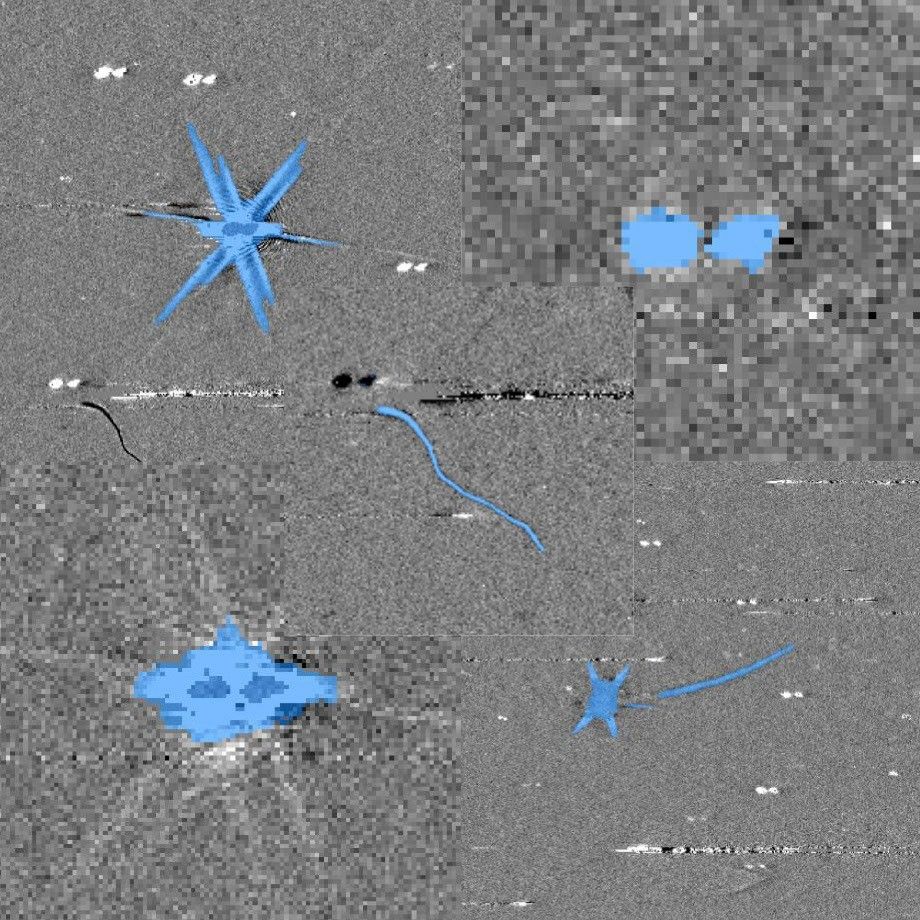
A new NASA project called Artifact InSPECtor is inviting citizen scientists to help refine data from space telescopes and aid missions like Euclid and NASA’s Nancy Grace Roman Space Telescope. By participating, volunteers of all ages can contribute to understanding our universe by refining artificial intelligence tools that remove errors in telescope data.
The Euclid space telescope, built by the European Space Agency with NASA's contributions, collects light from millions of distant galaxies. It will soon be joined by NASA’s Nancy Grace Roman Space Telescope, which will capture similar galaxies at different distances and densities. Together, these telescopes aim to answer questions about the universe's expansion and dark energy.
To study these galaxies, telescopes use spectrographs that split the light into rainbow patterns called spectra. Scientists study these patterns to determine the distance of each galaxy, the types of stars it contains, and information about the black holes at their centers. However, the data contains "artifacts" – signals from non-astronomical sources, such as light glints, cosmic rays, or camera quirks. Recognizing these artifacts is challenging for AI.
As a volunteer with Artifact InSPECtor, participants will examine real space telescope data from Euclid and later from the Nancy Grace Roman Space Telescope. The project will teach volunteers how to recognize artifacts and help improve the AI tool's instructions. By working together, the citizen scientists, AI, and scientists will gain a deeper understanding of our universe's workings. Interested individuals can visit https://go.nasa.gov/3Uyrguy to begin their contribution today.
Written by urgent.news from NASA Science's reporting — not their text. Machine-written — may contain errors; check the original before relying on it.
Also reported by 1 other outlet
- Help Refine Data from Space Telescopes with Artifact InSPECtor science.nasa.gov