Starlink al test dell’Alta Velocità: così Internet a 300 all’ora sui treni Italo
A Bologna il satellite non si percepisce. Il treno è fermo nella stazione sotterranea dell’Alta Velocità e lo speed test restituisce 11,2 megabit al secondo in download, 12,2 in upload...
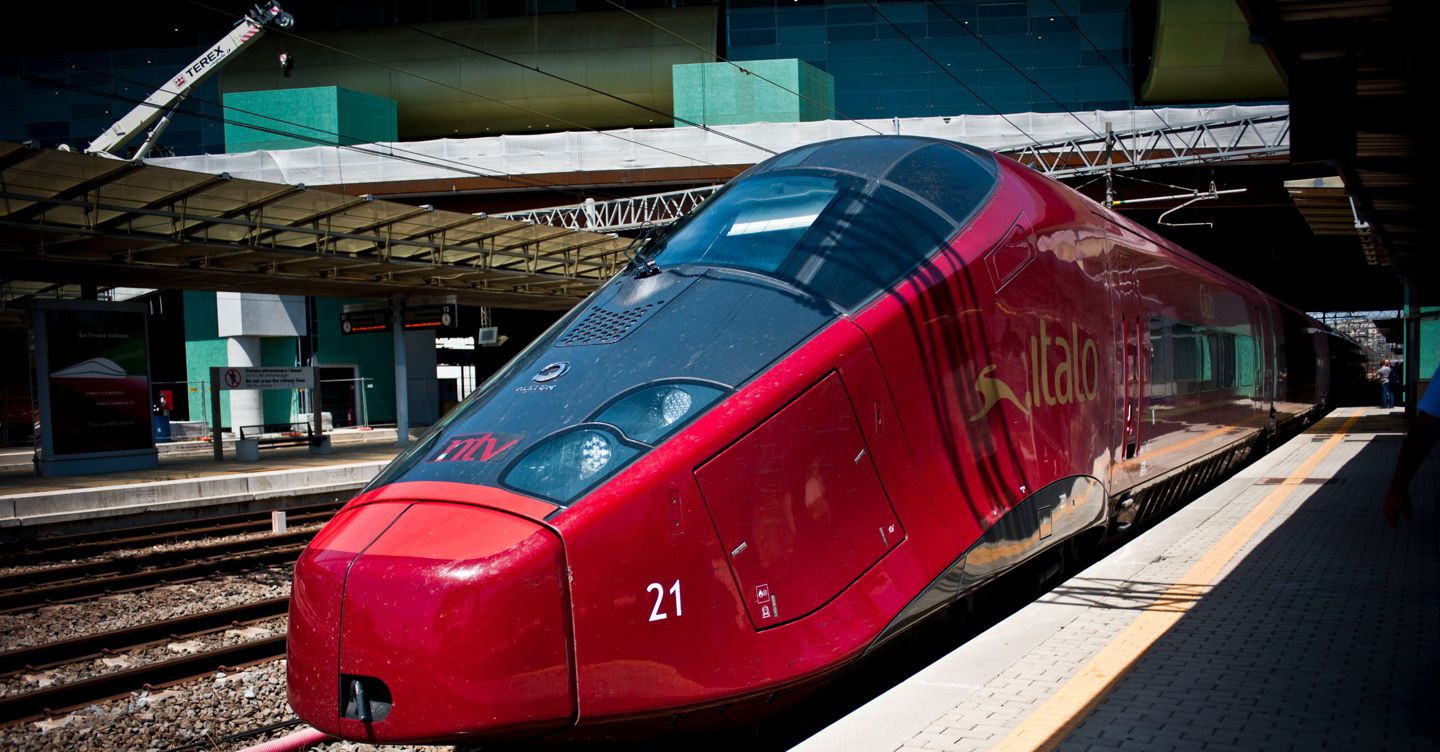
Starlink's high-speed test reveals internet at 300 km/h on Italo trains. In the Bologna station, a speed test returns 11.2 Mbps download, 12.2 Mbps upload, and 90 milliseconds latency. Above the train, cement separates it from the satellite network Starlink, which belongs to Elon Musk's Space X. However, with Starlink, Italo has partnered to provide connections worthy of the name even on trains.
After just ten minutes, the situation changes dramatically. As the train departs from Bologna towards Milan, download speeds soar to 137 Mbps, upload speeds reach 8.7 Mbps, and latency drops to 69 milliseconds. Shortly after, the connection reaches 192 Mbps. While not the over 400 Mbps achieved during previous tests on 300 km/h trains, this demonstrates that railway Wi-Fi can no longer be the lottery travelers have grown accustomed to.
Italo's promise, owned by the Msc Group, is to make all this a reality guaranteed to Italo travelers, on any train and in any part of Italy. "By the end of the year, 45 out of 51 trains will be covered. By March, the entire fleet will be covered," says Italo's CEO, Gianbattista La Rocca. Currently, 19 trains are equipped, with 27 expected by the end of September, half of the fleet.
Acceleration follows: 45 trains by December and all 51 trains available by March 2027. The key to this technology is the node, the cornerstone of the connection quality, embodying one of Italy's mobility paradoxes: traveling at high speed and having an Internet connection that often (perhaps better to say "rarely") fails to keep up.
The partnership between Italo and Starlink aims to put an end to this. The investment in connection technology on the trains has cost slightly more than 10 million for installations, plus a few million euros annually for service and maintenance. The connection is free: it raises quality and attracts international business and tourism.
The test on Bologna-Milan was primarily a proof of everyday life. Video calls remained stable, and eight episodes of a series on Amazon Prime Video were downloaded in just over three minutes. Juventus-Milan highlights streamed without interruptions. The most interesting result, though, is that for most of the journey, one forgets to use the train's Wi-Fi.
Below the surface lies an architecture that automatically selects the best connection between Starlink and the mobile 5G network. The passenger does not need to do anything. According to Luca Chiti, Italo's Operations Projects Leader, there are currently 143 people connected simultaneously. Underneath the tracks, however, lies the problem.
The antenna loses contact with the low Earth orbit satellites used by Starlink and cannot function. Other networks available step in, and upon exiting, the reconnection with the satellite occurs in milliseconds, with minimal discontinuity. This is the physical limit of satellite technology. While it may not impact video or streaming on film, it can lead to the need to close a program to reopen it for continuous operation, a challenge that could affect remote systems.
However, the bet is all on the line for train travelers, especially for business, to make an hour of train not a time of suspension but of meetings, office work, streaming, and cloud usage. The quality of this connection could enter competitive comparison with operators almost as much as prices and onboard services. Italo plans to bring 5G and Starlink to the 26 Velaro trains ordered from Siemens for deployment in Germany by 2028.
Milan's arrival may not reach the 400 megabit record, but the more useful result is achieved. The connection has handled videos, downloads, and video calls without transforming the journey into a fight with the infamous round-robin. The galleries remain, inevitable shadows of the satellite. Yet, the real novelty is not having to think about internet at 192 megabits on a train launched onto the Alta Velocità. It's simply being able to forget about it altogether.
Written by urgent.news from Il Sole 24 Ore's reporting — not their text. Machine-written — may contain errors; check the original before relying on it.