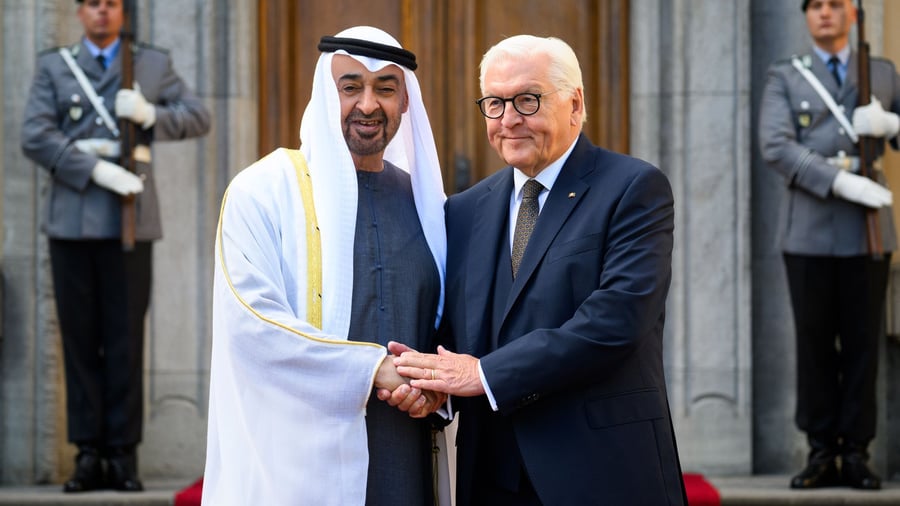
Staatsbesuch vom Golf: Emirate wollen 40 Milliarden Euro in Deutschland investieren
Deutschland und die Vereinigten Arabischen Emirate sind seit langem enge Partner. Jetzt wollen sie ihre Beziehungen nochmals deutlich ausbauen - auch mit einer hohen Investitionssumme des Golfstaats.
The United Arab Emirates (UAE) announced plans to invest 40 billion euros in Germany during President Mohammed bin Sajid's state visit. This represents a more than doubling of the country's previous investment in the German economy, which stood at around 34 billion euros. The visit kicked off with a two-day state visit to Berlin, where the Emir was welcomed by German President Frank-Walter Steinmeier with military honors.
Chancellor Friedrich Merz (CDU) also met with the Emir in the afternoon, where several agreements were expected to be signed. Both sides had previously signaled their intention to elevate their relationship through the state visit. Sultan Al Jaber, the UAE Minister for Industry and High Technology, stated that Germany has been a "key strategic and economic partner" for the UAE for decades.
The additional investments underscored the Emirate's ambition to further strengthen this relationship. The investments would support industries, technologies and skilled jobs that drive future growth and competitiveness. This included fostering industrial capacities, innovation and qualified employment, enhancing energy security and supply chains, and helping German companies remain and grow globally.
The Emiratis saw opportunities for joint investments with leading German industrial and technology firms, deepening their competencies in strategic sectors and enabling the creation of companies that could serve growth markets in the Gulf region, Asia and Africa. The UAE is Germany's largest trading partner in the Gulf, with bilateral trade reaching nearly 13 billion euros last year.
Germany exported goods worth around 11 billion euros, while imports were roughly 2 billion euros. German investments largely targeted technology and investment goods products such as machinery and chemical goods. Bilateral trade is currently hampered by import tariffs and restrictions on imports and exports. The German government, therefore, supports ongoing negotiations between the EU and the Emirates on a free trade agreement.
Written by urgent.news from Handelsblatt's reporting — not their text. Machine-written — may contain errors; check the original before relying on it.