Climate: Warmest August globally – oceans at record temperature
Extreme heat, drought, and large forest fires characterized the summer of 2026 in Western Europe. What the global climate data show and what consequences the EU climate service Copernicus sees for humans and nature.
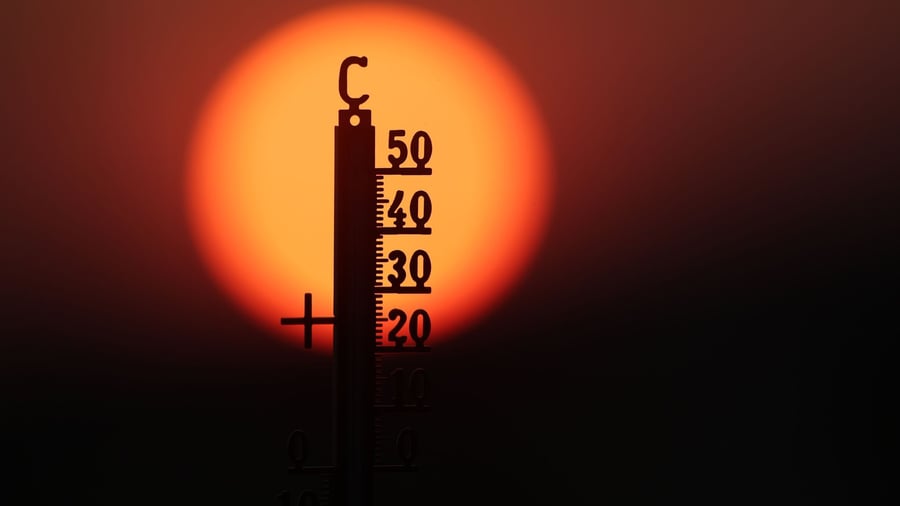
August 2026 marked the hottest August on record globally, with the EU's Copernicus climate service reporting that the average global land surface temperature reached 16.96 degrees Celsius. This was the highest temperature ever recorded for August, tying with July 2023. Moreover, sea surface temperatures experienced a record high, averaging 21.07 degrees Celsius in August.
This surpassed the previous August maximum of 20.98 degrees Celsius recorded in 2023. The measurements were taken outside the polar regions, making August 2026 the hottest month ever recorded. The cause behind this record-breaking warmth, according to Copernicus, is the global warming resulting from fossil fuel combustion and rapidly increasing sea surface temperatures in the equatorial Pacific, linked to a strong El Niño event.
El Niño is a naturally occurring climate phenomenon that happens roughly every few years, increasing the likelihood of extreme weather events. This summer (June, July, and August) was as hot as the summer of 2024, which previously held the record for the hottest summer. In Europe, the summer was the third warmest on record, behind 2024 and 2022.
Western Europe experienced the hottest summer since records began. Samantha Burgess, Copernicus' strategic director for climate, described August 2026 as a "remarkable month in the global climate story," noting that it was both the hottest August and the hottest month ever recorded, with global temperatures 1.65 degrees above pre-industrial levels.
It was evident how climate change was driving extreme developments both in the atmosphere and the oceans. The effects of these conditions are increasingly felt by societies, economies, and ecosystems worldwide. In Western Europe, the previous heat record set in 2003 was broken this summer. The sequence of extreme heat had already begun in May, with additional heatwaves in August.
Along the Atlantic coast and in the western Mediterranean, sea surface temperatures in August reached record highs. In Western Europe, severe drought conditions, low water levels, and numerous large wildfires were reported. According to Copernicus, large parts of Western Europe and some areas in Central and Eastern Europe experienced widespread drought conditions in August.
In France, the United Kingdom, Hungary, Romania, and Serbia, it was reported that river levels were exceptionally low in the dry regions. Conversely, Western Iberia, Southern Greece, Southern Turkey, Cyprus, and Northeastern Europe were wetter than average this summer, with August being particularly wet in the Alps and Eastern Turkey.
This resulted in heavy rainfall in several areas, leading to localized flooding. The climate service regularly publishes data on surface temperatures, sea ice coverage, and precipitation. The insights are based on computer-generated analyses incorporating billions of measurements from satellites, ships, aircraft, and weather stations across the globe.
The data used for the global average land temperature goes back to 1940, with earlier data also available.
Written by urgent.news from Handelsblatt's reporting — not their text. Machine-written — may contain errors; check the original before relying on it.