Drax ash mound extraction plan approved
Plans to extract and reuse million tonnes of ash from a mound next to Drax are given the go-ahead.
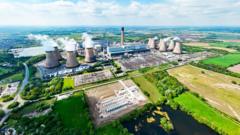
Drax Power Station, situated near Selby, has been granted permission to extract up to 23.5 million tonnes of ash from a nearby disposal site. The ash mound, stretching 161 hectares (398 acres) and reaching heights of 39 meters (128 feet), has been utilized for ash storage since the 1970s. The plan involves extracting the ash for use in construction products like concrete, aiming to lessen the reliance on virgin aggregates.
The extraction process is set to continue until 2045, with the site's restoration to be completed by 2055. North Yorkshire Council approved the scheme but attached conditions to the operation, following concerns raised by residents. These apprehensions included issues related to dust, noise, lighting, air pollution, and the impact on the landscape.
The council also expressed worries about habitat loss, the scheme's scale, duration, and the removal of screening that helps to shield Drax Power Station from nearby communities. Councillor Tim Thrall, speaking on behalf of Barlow Parish Council, stated that while they had no objection to removing the ash mound, they were concerned about whether the proposed mitigation measures would adequately address the quality of life of local residents.
Another councillor, Mark Crane, questioned the proposal of operating the extraction site 18 hours a day, from 6 a.m. to midnight, seven days a week, excluding bank holidays, deeming it "completely unreasonable." The planning committee agreed to limit the working hours to 8 a.m. to 8 p.m., excluding Sundays and bank holidays. They also mandated that 65% of the ash be transported by rail, with the remaining amount removed by road.
Council officers concluded that, provided these conditions are met, the development would not lead to unacceptable impacts on residents, highways, ecology, air quality, or the water environment. The approval also requires a legal agreement that includes a £200,000 fund to help mitigate the project's impact on the surrounding landscape.
Written by urgent.news from BBC Science's reporting — not their text. Machine-written — may contain errors; check the original before relying on it.