Why is there controversy around OpenAI’s Millennium Prize maths breakthrough?
8 September should have been an exciting day of celebration for mathematicians worldwide. Instead, it became a confusing, salacious and intriguing drama. Why was the solution to one of the world's toughest mathematical problems embroiled in controversy?
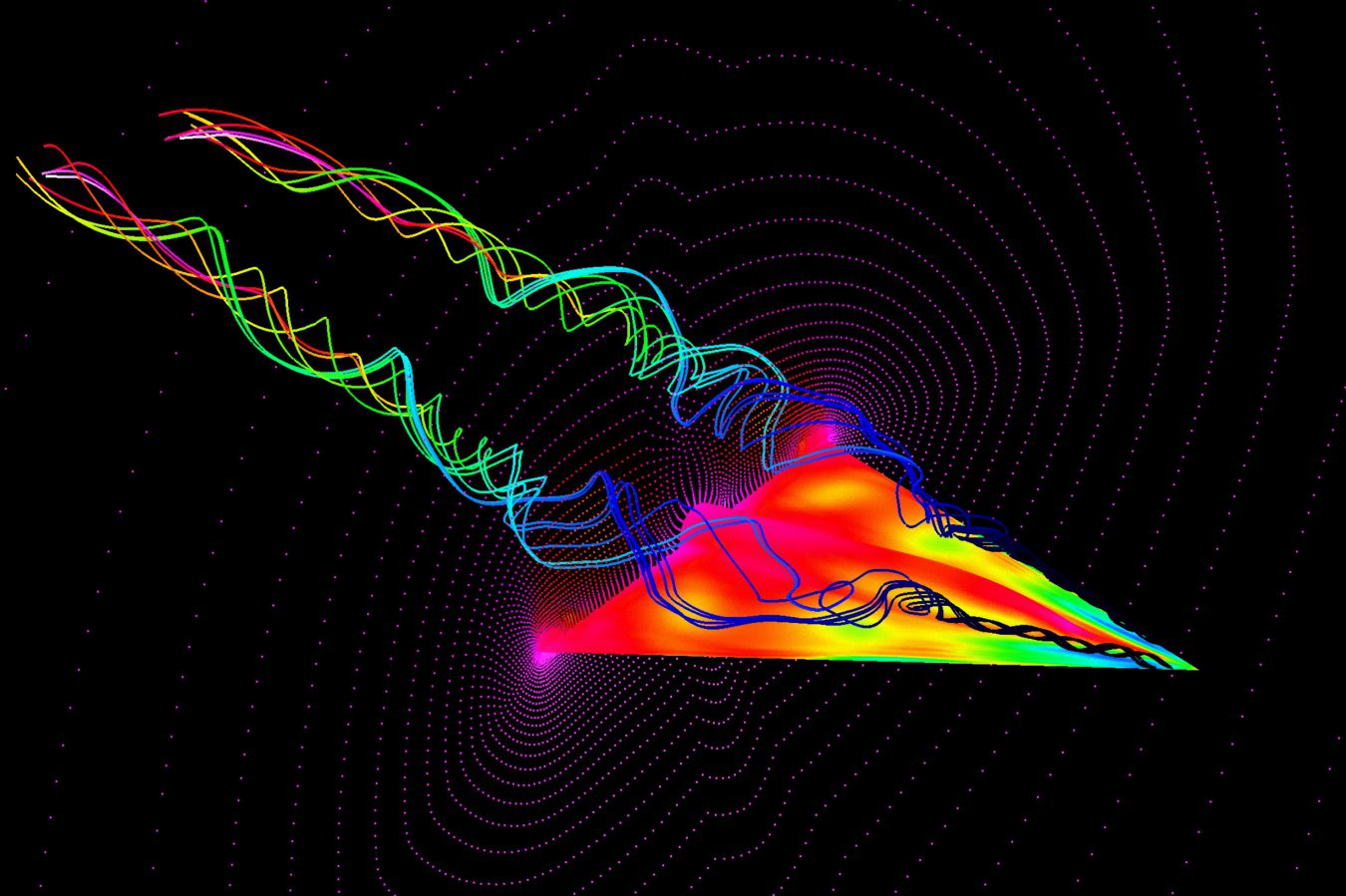
OpenAI has made a significant breakthrough in solving one of the most challenging problems in mathematics: the Navier-Stokes equations. These equations are used to model fluid flows, such as the air over aircraft wings and the flow of blood in veins. The equations have been a subject of intense study for decades, with a $1 million prize offered by the Clay Mathematics Institute for anyone who could solve a particular problem related to them.
However, this news has sparked controversy within the mathematical community. OpenAI's discovery, while not controversial in and of itself, has raised concerns because it was announced shortly after a pair of researchers, Tristan Buckmaster and Levent Alpöge, made a similar solution to an easier problem – the Euler equations. The Euler equations are a cousin of the Navier-Stokes equations and their solution could potentially lead to a full solution for the more complex Navier-Stokes equations.
The controversy arises from the fact that OpenAI did not formally acknowledge Buckmaster and Alpöge's work, despite being aware of it. Buckmaster claims that he was met with vague responses from OpenAI when he inquired about the potential overlap between their research. OpenAI has denied any wrongdoing, stating that no one from the company had access to Buckmaster and Alpöge's work and that their solution is fundamentally different.
The situation has left mathematicians divided. Some are excited about the potential of AI to accelerate mathematical research, while others fear that the rapid pace of AI-driven discoveries could lead to a lack of time for proper review and assimilation of new findings. Terence Tao, a leading mathematician, expresses concern that AI may disrupt the traditional process of peer-review and publication, potentially causing more harm than good to the field.
Written by urgent.news from New Scientist's reporting — not their text. Machine-written — may contain errors; check the original before relying on it.
This story
This is one outlet's version. Read the fullest account.