This Is the Biggest 2D Map of the Universe. Here’s How to Use It
The map covers 75% of the sky, and you can explore all sorts of cool celestial objects once you know where to look.
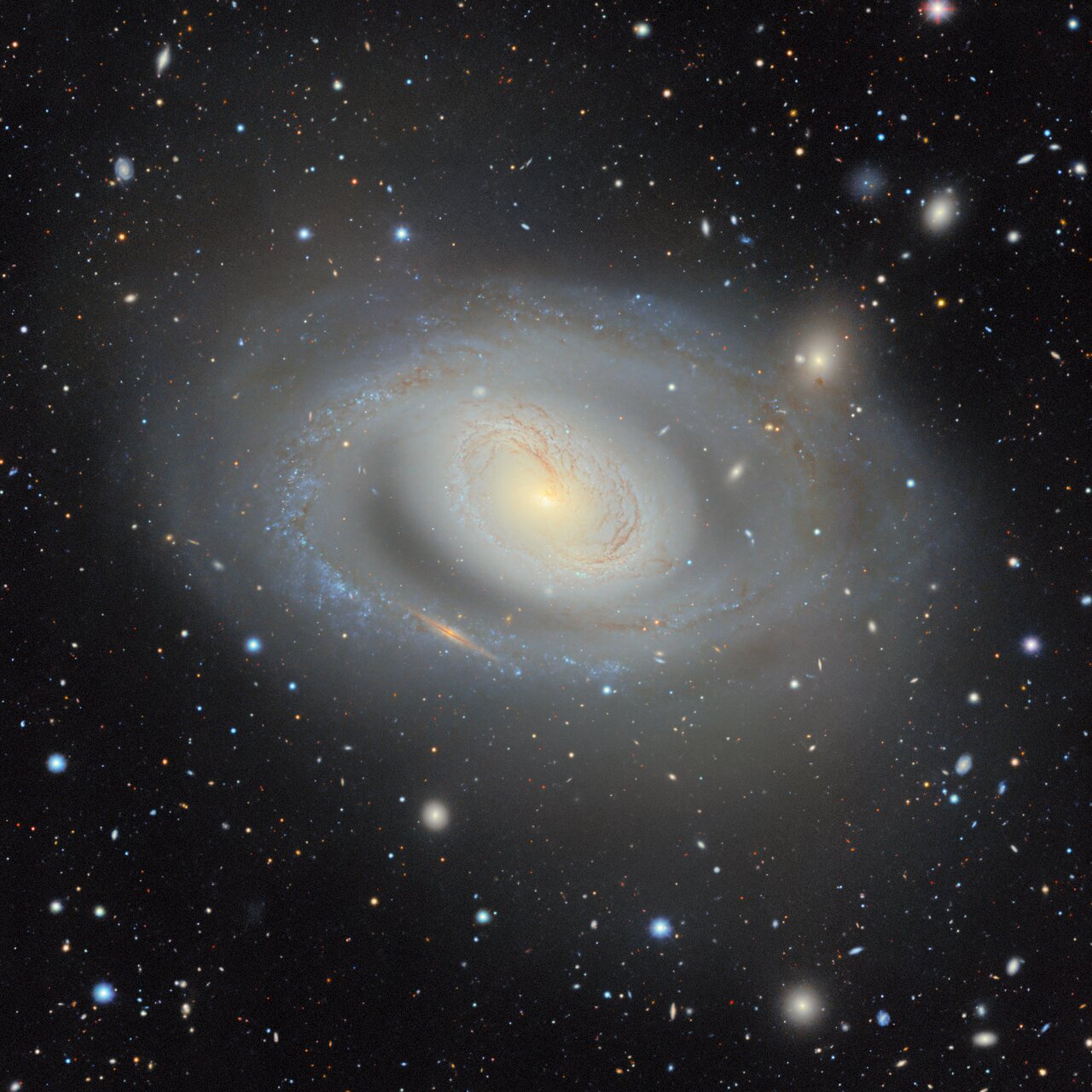
Scientists have mapped the cosmos for centuries using telescopes, creating increasingly detailed maps of the night sky. However, there exists one map that stands out from the rest: Data Release 11 (DR11), the largest 2D map of the sky ever created. Developed by the DESI Legacy Imaging Surveys team, a collaborative effort between NSF NOIRLab, Lawrence Berkeley National Laboratory, and other agencies, DR11 covers 75% of the sky across 5.6 trillion pixels.
This comprehensive map is built upon prior versions and expands on DR9 by 50%, while also restoring northern sky coverage missing from DR10.
The map catalogs 4 billion objects, including stars, galaxies, black holes, and asteroids, in visible and near-infrared light, based on 263,407 ground-based exposures by 160 scientists. It has already been cited in over 1,800 research papers, making it the premier 2D map in its category for years to come. DR11 has also helped identify 60 million targets for the DESI project and the completion of a full 3D map in 2026, with further expansions planned.
The map might seem like a cloud of colorful objects at first glance, but zooming in reveals billions of celestial bodies scattered throughout space. Despite not including planets, moons, or asteroids within our solar system, DR11 is teeming with fascinating objects for exploration. While the user interface may appear overwhelming initially, players need only focus on four boxes in the bottom-left corner.
These include zoom, contrast and brightness adjustments, a "Jump to object" box, and a "Jump to object" function to locate celestial bodies by name.
Upon landing on an object, players can use the zoom slider in the top-left corner to get a closer look, avoiding using the mouse wheel to zoom in on arbitrary locations. They can also drag the cursor around the screen to view nearby objects. Some celestial bodies, like Arcturus and LHS 1140b, are easier to locate than others, with the latter being the first star discovered in another star's habitable zone with an atmosphere.
Meanwhile, other objects like HD 80606 b remain hidden behind bright glare from binary stars. A large, blank area on the map indicates regions yet to be mapped, caused by factors such as space dust, bright stars, and black holes obscuring the view.
Rewritten by urgent.news; may contain errors — check the original.
Source: cnet.com
This story
This is one outlet's version. Read the fullest account.