NVIDIA Brings Real-Time AI to Broadcast, Sports and Global Streaming at IBC
At the IBC conference, running Sept. 11-14 in Amsterdam, the creative, technology and business communities are coming together to turn ideas into action and discuss innovations across the media and entertainment industries. More than 44,000 attendees from 170+ countries are gathering to explore 1,300+ exhibitions in 14+ halls and outdoor spaces, with over 600 speakers […]
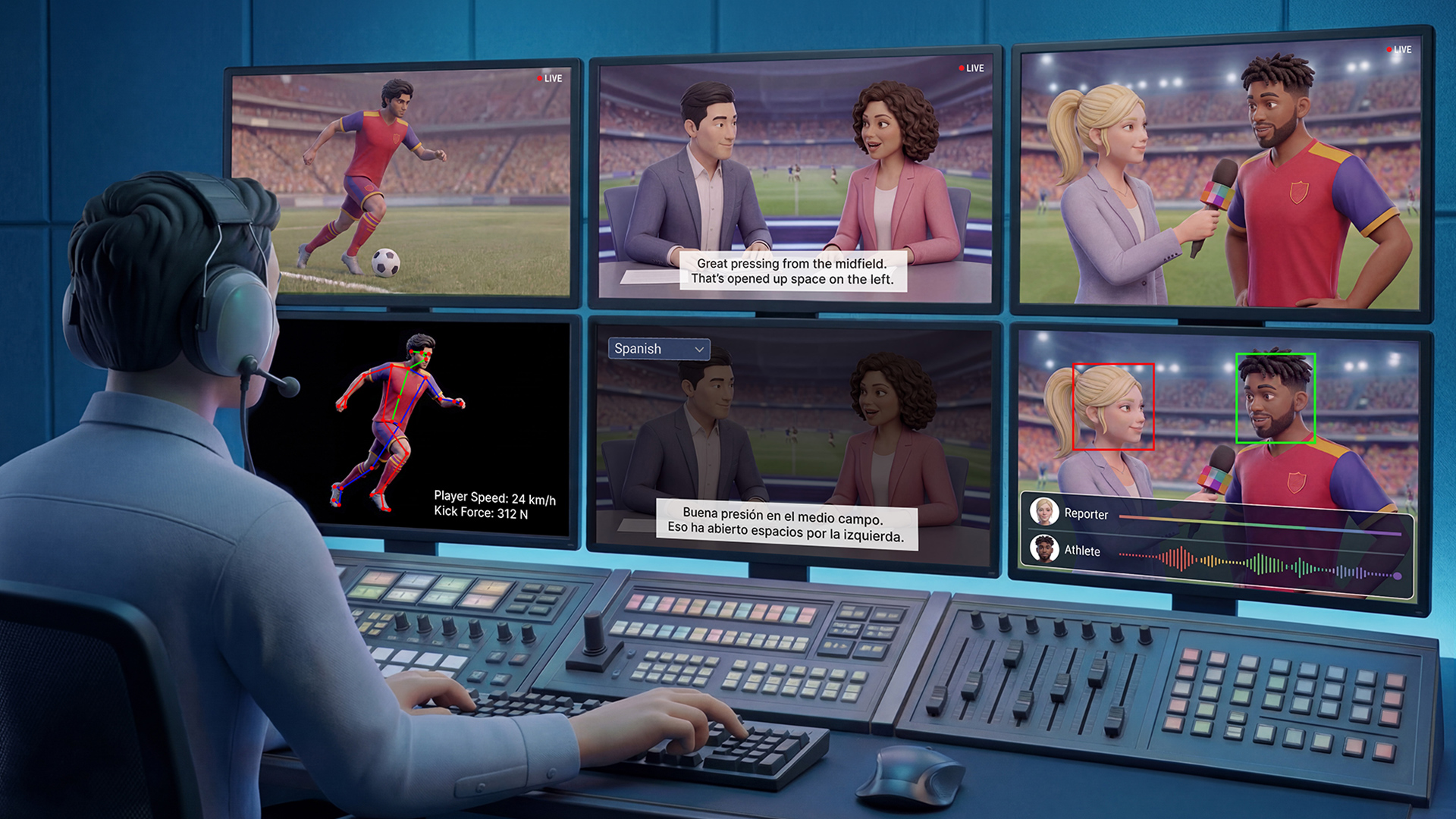
At the IBC conference in Amsterdam from September 11-14, NVIDIA showcased advancements in artificial intelligence for media and entertainment industries. With over 44,000 attendees from 170+ countries exploring over 1,300 exhibitions, NVIDIA highlighted its AI for Media solutions that bring real-time intelligence to broadcast, sports, and production workflows.
NVIDIA AI for Media consists of GPU-accelerated software development kits, microservices, playbooks, and blueprints, enhancing audio, video, and augmented reality effects within media and entertainment workflows. At the show, NVIDIA introduced several new AI capabilities.
The Synthetic Video Detector (SVD) NIM microservice assists organizations in assessing the authenticity of video footage, providing a probability of whether content is real or AI-generated. SVD's accuracy reached 99.3% for text-to-video content and 97.7% for image-to-video content, with significant improvements on challenging image-to-video cases.
Dalet integrated SVD into a secure, cloud-hosted verification workflow for news organizations, allowing editorial teams to submit footage and review scores and metadata within a Dalet interface. TwelveLabs launched Compliance by TwelveLabs, its first application built on the video intelligence platform, which integrates SVD to add frame-level authenticity signals and confidence scores.
Wowza Streaming Engine technology will distribute SVD through the Wowza Video Intelligence Framework, enabling broadcasters and streaming providers to analyze live video feeds and extract data on objects, scenes, and signs of AI generation in real time.
NVIDIA's 3D Body Pose technology estimates 2D and 3D human joint locations and angles from single-camera video, benefiting sports organizations with player and athlete movement tracking, biomechanics analysis, replay enhancement, officiating, and virtual interaction experiences. Vizrt employs Body Pose technology in live virtual-studio environments, using tracked body movement to drive real-time 3D lighting effects.
Video Frame Generation (VFG) creates new video frames between the original frames, increasing frame rates by 2x or 4x while preserving visual quality. Ross Video integrated VFG into its Rio Replay platform for AI-assisted slow-motion video generation in sports production, supporting 6x slow-motion for sports replay, with development underway for 8x interpolation.
NVIDIA Video Super Resolution (VSR) uses AI to upscale video while reducing noise, blur, and compression artifacts, offering real-time or high-quality streaming modes. VSR supports 10-bit video and can be combined with VFG and TrueHDR within a single video-effects pipeline, enhancing existing content libraries for various applications.
Written by urgent.news from NVIDIA Blog's reporting — not their text. Machine-written — may contain errors; check the original before relying on it.