Irrigation, forest conservation key to sustainable food security, says PS Kimotho
Government has called for stronger integration of forest conservation and irrigation development, particularly in the upstream areas of irrigation schemes, to safeguard water availability and strengthen the country’s food security. Speaking during a meeting with a delegation from the United Nations Development Programme (UNDP), New Forests and Britam, Principal Secretary, State Department for…
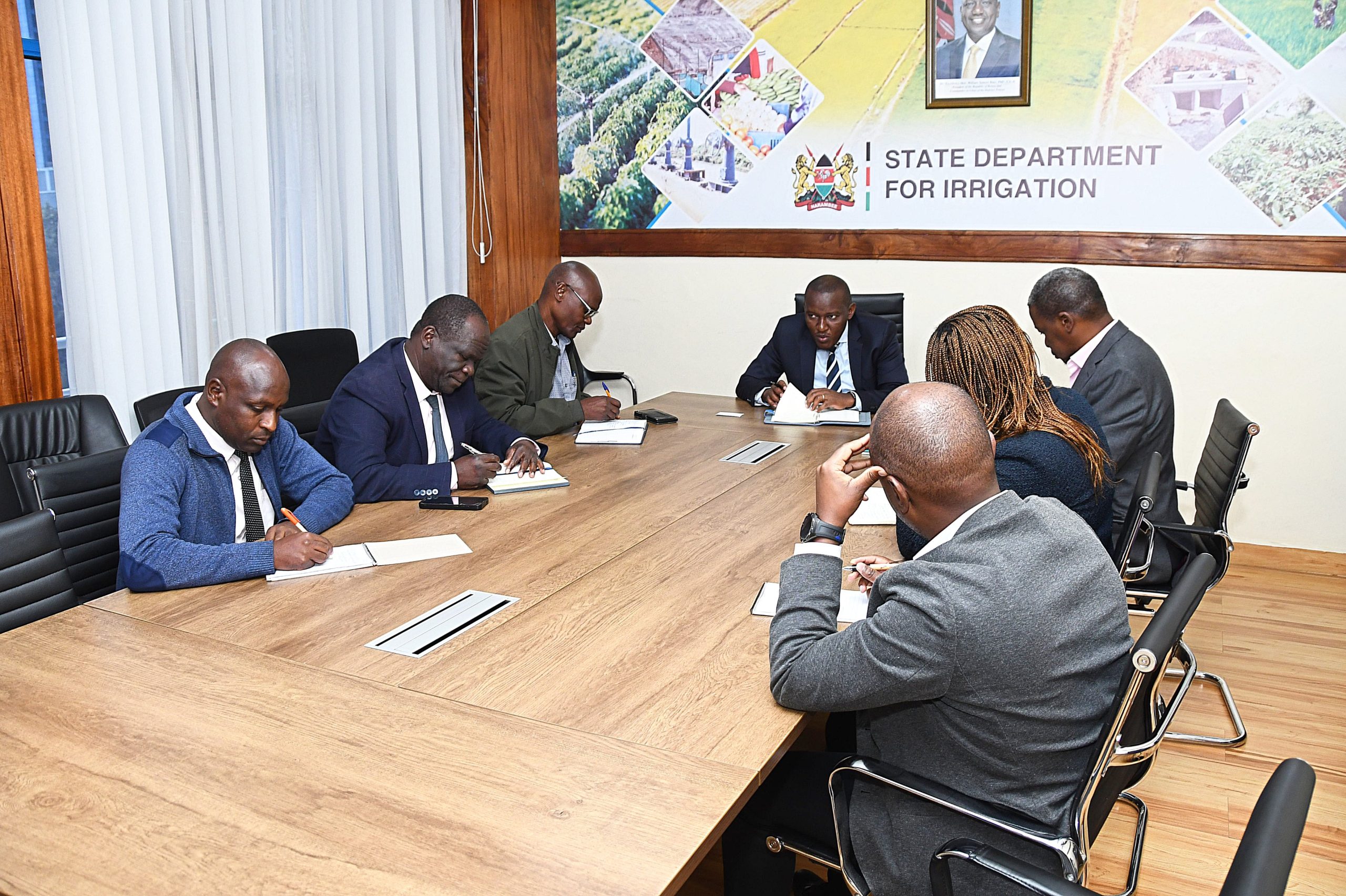
Kenya's government has emphasized the importance of integrating forest conservation and irrigation development to ensure sustainable food security. Speaking with a delegation from the United Nations Development Programme (UNDP), New Forests and Britam, Principal Secretary for the State Department for Irrigation, Ephantus Kimotho highlighted that river drying and water catchment degradation continue to threaten irrigation sustainability.
He stressed the necessity of restoring degraded landscapes and creating buffers around critical water infrastructure to safeguard water resources. Kimotho highlighted that climate change has intensified the role of irrigation in ensuring food security due to the uncertainty of rain-fed agriculture. The State Department has irrigated about 760,000 acres, with a target of another million acres under the National Irrigation Sector Investment Plan (NISIP).
The country's total irrigation potential is estimated at 2.5 million acres. During the meeting, collaboration on sustainable irrigation and linking water catchment conservation with irrigated agriculture was explored. Additionally, discussions focused on integrating forest restoration, sustainable agriculture, and irrigation development, particularly through degraded land restoration in water catchment areas.
Such efforts could enhance water retention and availability, vital for irrigation schemes' long-term sustainability. The meeting also looked at opportunities for farmers to diversify their agriculture through fruit and tree crop integration, such as avocado, macadamia, and coffee, in suitable agro-ecological conditions. This could offer farmers additional income sources while supporting landscape restoration and sustainable land management.
With over 2,000 irrigation schemes across Kenya, there are significant investment opportunities for climate-resilient and productive agriculture. Under NISIP's five pathways, irrigation is a key driver of agricultural productivity, food security, and economic transformation. Galana-Kulalu, Bura, and Perkerra schemes show potential for increased production and investment.
Kimotho stressed that partnerships with development organizations and private sector entities are crucial for mobilizing resources, expertise, and innovative financing for sustainable irrigation development. New Forests, a natural capital investment manager focusing on sustainable forestry and agriculture, can strengthen collaboration on landscape restoration, sustainable forestry, and irrigation development.
The state department remains committed to ensuring sustainable and climate-resilient irrigation expansion, with forest and water catchment protection integral to irrigation investments' long-term success. Kimotho affirmed the government's dedication to strengthening partnerships promoting sustainable water management, landscape restoration, and irrigation scheme productivity for farmers and the economy's benefit.
Written by urgent.news from KBC's reporting — not their text. Machine-written — may contain errors; check the original before relying on it.