How does brain activity change as strangers become friends?
Researchers investigated the brain activity of younger and older people while they interacted—and the results are surprising.
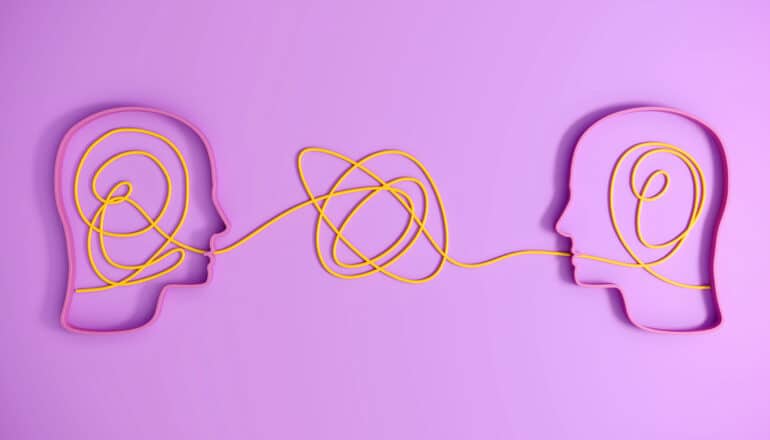
A recent study by ETH Zurich cognitive scientist Ryssa Moffat reveals intriguing findings regarding brain activity when strangers transform into friends. The research involved 61 pairs of participants, aged between 18-35 and 70-85, who met six times over six weeks to engage in drawing together. Pairs were divided into cross-generational and same-age groups.
Upon initial acquaintance, participants had to get to know one another. During each session, they first drew individually on separate sheets, then collaborated on a single sheet through turns or simultaneous drawing. Participants could converse throughout, but were instructed to remain silent while drawing.
Brain activity of the participants was recorded using wearable sensors, enabling researchers to examine how the relationship-building process affected brain patterns. The findings were surprising, as researchers initially expected stronger synchronization in brain activity as the pairs became more familiar with each other. Instead, brain synchrony was found to be higher at the start of cross-generational pairs, which gradually decreased over the six weeks, while same-age pairs experienced the opposite trend – lower synchrony at the beginning, which increased over time.
Despite these variations, brain synchrony was consistently higher during collaborative drawing tasks than when participants worked independently. The study suggests that collaboration leads to greater synchronization of brain activity, with similar patterns observed in both groups initially. However, the difference between the two groups became apparent over time.
Moffat proposes two models to explain these findings. The first, "Common Cognitive Processing," suggests that two people experience similar stimuli, resulting in similar brain reactions. The second, "Mutual Prediction," posits that individuals learn to anticipate their counterpart's behavior and adapt accordingly. This latter model may explain the age-related differences observed in the study, as participants of different age groups had varying life experiences and daily routines.
Younger participants, often students with similar routines, found common ground more quickly, leading to increased brain synchrony over time. In contrast, older participants, who initially struggled to find common topics of conversation, required more effort to predict their counterpart's behavior, resulting in greater efforts to understand each other and maintain higher brain synchrony.
Written by urgent.news from Futurity's reporting — not their text. Machine-written — may contain errors; check the original before relying on it.