GitHub Workflows Strain Under AI Agent Development
Coder CEO Rob Whiteley joins Mike Vizard to explain why GitHub workflows, CI/CD pipelines and developer platforms are showing strain under agentic development — and what a policy-aware redesign of the DevOps stack should look like.
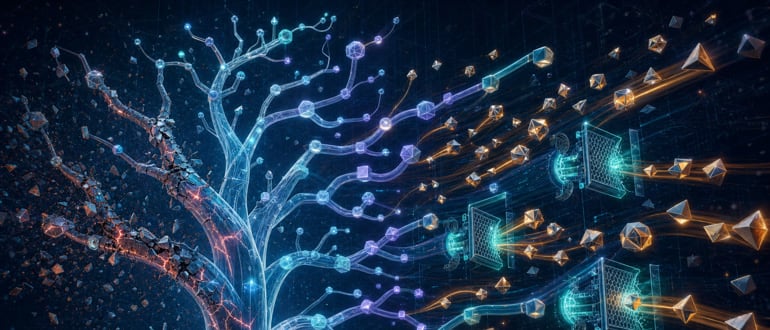
GitHub revolutionized software development with its human-centric workflows, but the rise of AI agents threatens to overwhelm its systems. These AI agents process code at machine speeds, causing strain on GitHub's repositories, pipelines, and developer platforms. Rob Whiteley, CEO of Coder, explains that while Git's distributed version control remains valuable, the platforms built around it were optimized for slower, more deliberate development.
The volume and velocity of activity generated by AI agents strain the operational side of GitHub, leading to security and supply chain concerns. Malware and risky code can spread rapidly through repositories, and the automation potential of AI heightens the risks of both malicious attacks and inadvertent mistakes. As AI agents take on more coding responsibilities, teams must establish clear boundaries for agent access, workflow triggers, and audit trails.
Current permissions and execution environments, designed for human contributors, may not suffice for agent equivalents. Whiteley advocates for a comprehensive redesign of the DevOps stack, emphasizing distributed, policy-aware, and resilient systems with robust controls around context and execution. Organizations preparing for this next phase are proactively addressing these challenges.
Written by urgent.news from DevOps.com's reporting — not their text. Machine-written — may contain errors; check the original before relying on it.