Europe’s Rightward Turn: A Victory For Democracy Or New Ground For The Kremlin?
European elections will increasingly determine the future of support for Ukraine and Western security. The right-wing populist "Alternative for Germany" (AfD) party won 43.8% of the vote in the September 6 election to the Saxony-Anhalt state parliament. This is currently the party's best result in its history. AfD won 39 of 83 seats. It fell three seats short of an absolute majority. This is…
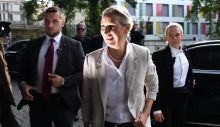
European elections are increasingly shaping support for Ukraine and Western security measures. The Alternative for Germany (AfD) party achieved its highest vote share in Saxony-Anhalt's state election on September 6, winning 43.8% of the votes and securing 39 of 83 seats. This result marked the party's best performance in history, though they fell three seats short of an absolute majority.
In the 2025 federal election, AfD garnered 20.8% of the vote and 152 seats, making it the second-largest political force in the Bundestag.
The Saxony-Anhalt state election demonstrated a shift into a new phase for AfD. They are no longer merely expanding their parliamentary presence, but are now close to forming a government. For Ukraine, the critical question is not about the rise of right-wing populism per se, but rather which of these forces can alter European policy towards Russia, NATO, and support for Ukraine.
Germany, as the EU's largest economy and a key partner for Ukraine in military and financial spheres, is particularly vulnerable to shifts in political balance. AfD advocates for ending military aid to Ukraine, restoring relations with Moscow, and revising sanctions policies. The September 6 election highlighted the scale of AfD's popularity, with a 23 percentage point increase compared to the 2021 election, while the CDU's support dropped by 19.9 points, to 17.2%.
Despite AfD's political isolation, the party faces a practical test following the Saxony-Anhalt election. In the 2025 federal election, the left-populist alliance (BSW) won five seats, and BSW representatives have not ruled out negotiations with AfD. This development is of significant importance for Ukraine.
While equating Europe's rightward turn with pro-Russian forces is a mistake, different models emerge across various countries. Italy under Giorgia Meloni, for instance, embraces strict migration policies, national conservatism, and a critical stance towards certain EU policies, while still maintaining support for NATO and Ukraine. In contrast, Hungary and Slovakia exhibit a more critical attitude towards sanctions against Russia and military support for Ukraine.
France poses a potentially more dangerous scenario for Ukraine. The National Rally remains a key contender for power, and its stance on Ukraine differs significantly from the current French leadership. France's importance extends beyond aid to Ukraine, encompassing nuclear weapons, a permanent seat on the UN Security Council, a powerful military, and a central role in shaping European defense policy.
A change in France's position on Ukraine could have systemic effects on European defense initiatives, sanctions policy, military aid, and future security guarantees.
Italy provides a different model of a right-wing government that supports Ukraine. Meloni's government continues to back Ukraine and the Euro-Atlantic security system, despite the presence of forces within the right-wing spectrum that oppose further military aid to Kyiv. The danger for Ukraine in Italy lies in the gradual rise in domestic political costs associated with supporting Ukraine.
Austria's Freedom Party (FPÖ) represents a complex case for Ukraine. Traditionally appealing to Austrian neutrality, the party takes a softer stance towards Russia. Its participation in shaping EU policy could potentially strengthen the bloc opposed to sanctions and expanded military support for Ukraine. The Netherlands, as an active military partner of Ukraine, faces a similar dilemma.
The composition of the coalition, its attitude towards NATO, and its readiness to continue military programs for Ukraine are crucial factors.
Written by urgent.news from UATV English's reporting — not their text. Machine-written — may contain errors; check the original before relying on it.