Colorful Himalayan pheasants face a less rosy future under human pressure
In the Indian Himalayas, numerous species of colorful pheasants roam the understory, pecking at seeds, roots, leaves, berries, and insects. These large, ornate birds are vital to the Himalayan ecosystem. But some species now face increasing pressures from habitat degradation and hunting, reports contributor Hirra Azmat for Mongabay India. Among them is the white-crested kalij […]
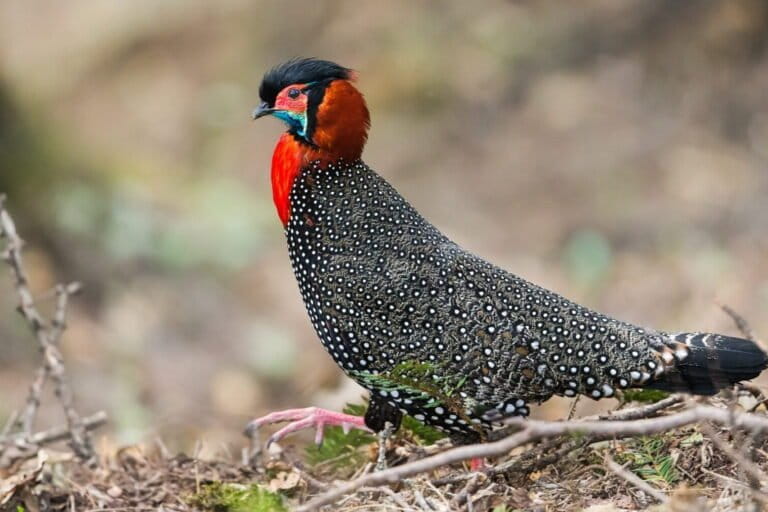
In the Indian Himalayas, vibrant pheasant species thrive in the undergrowth, feeding on seeds, roots, leaves, berries, and insects. These striking birds play a crucial role in maintaining the balance of the Himalayan ecosystem. However, certain pheasant species now face challenges due to human activities such as habitat loss and hunting, according to a report by Hirra Azmat for Mongabay India.
The white-crested kalij pheasant (Lophura leucomelanos hamiltoni) is particularly vulnerable. This adaptable bird can inhabit coniferous forests, scrublands, and forest edges near human settlements. It serves as a vital food source for carnivores and raptors, while also aiding in seed dispersal and soil aeration. Despite not being listed as endangered on the IUCN Red List, a 2025 study by Arif Nabi Lone, a researcher at the University of Kashmir’s Department of Zoology, identified several threats to the species.
These include habitat degradation, hunting, livestock grazing, and mushroom collection. Lone noted that timber and firewood collection, resource extraction, and deforestation are degrading the bird’s habitat. Additionally, hunting and overgrazing pose serious threats, while mushroom collection during the breeding season can disturb nesting females, reducing their reproductive success.
Another pheasant species, the western tragopan (Tragopan melanocephalus), is also at risk. Listed as vulnerable on the IUCN Red List, this bird faces similar threats from human activities. The article, originally published on Mongabay, highlights the urgent need to address these challenges to ensure the survival of these colorful Himalayan pheasants.
Written by urgent.news from Mongabay's reporting — not their text. Machine-written — may contain errors; check the original before relying on it.