Calcium silicate in your food: Why it’s added to salt, spice powders and what it does
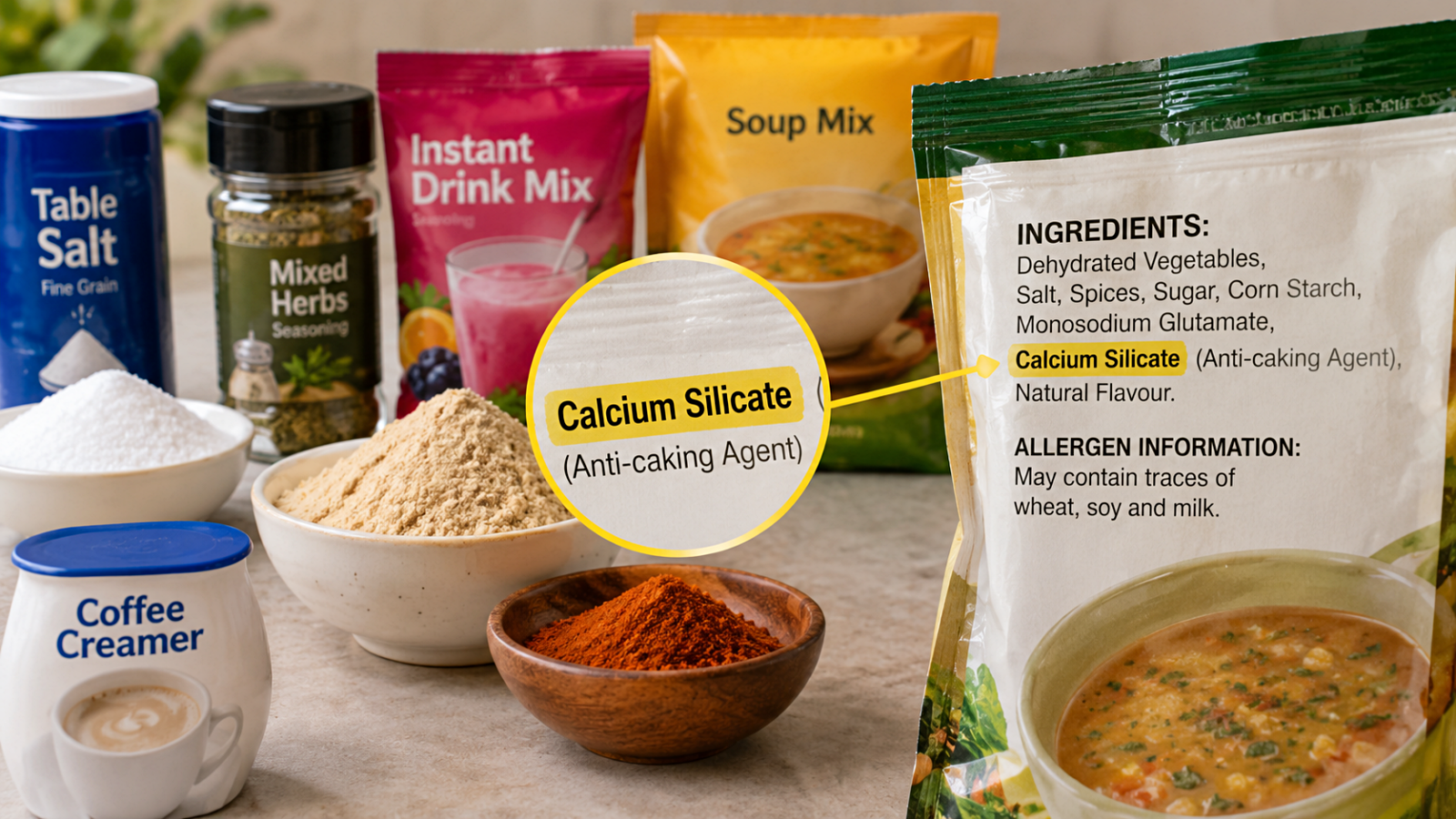
Have you ever examined the ingredient list on a packet of salt, spice mix or another powdered food product? You might have encountered the term "calcium silicate," which is frequently employed as an anti-caking agent to prevent dry foods from clumping together. However, the presence of the word "calcium" in its name may cause you to ponder: Does it serve as a source of calcium? And if not, could its consumption pose any health risks?
Himanshi Sharma, Chief Clinical Nutritionist at ISIC Multispeciality Hospital, provides clarity on calcium silicate in food. She clarifies that despite its name, calcium silicate should not be considered a meaningful source of dietary calcium, as its primary function is to enhance texture, handling, and shelf life without adding nutritional value.
Calcium silicate is commonly found in dry, powdered, or granular food products where moisture might lead to clumping. This includes certain types of salt, spice and seasoning powders, powdered drink mixes, soup mixes, coffee creamers, and other dry food preparations, depending on the product’s manufacturing process. However, not all products in these categories contain calcium silicate. To determine if a specific product includes this ingredient, check the ingredient list for "calcium silicate" or "INS 552."
Sharma notes that calcium silicate is approved for use as an anticaking agent in India and other regulatory systems, but this does not imply that unlimited consumption is safe. The European Food Safety Authority (EFSA) has pointed out that the long-term safety data for calcium silicate are limited, emphasizing the need for ongoing research and regulatory review.
Upon ingestion, calcium silicate primarily remains undissociated in the gastrointestinal tract, with minimal absorption into the bloodstream. Most of the material passes through the digestive system without entering the bloodstream in significant amounts. Thus, while small quantities may be absorbed and metabolized by the body, calcium silicate should not be regarded as a substantial nutritional source of calcium or silicon.
As for potential health consequences of excessive or prolonged exposure to calcium silicate, evidence is currently insufficient to determine its effects on humans. EFSA has reported low absorption levels and found no evidence of genotoxicity or developmental toxicity in available studies. Some animal studies have noted silicon accumulation in the liver and kidneys at high doses, but this does not necessarily indicate the same effects in humans from regular food consumption.
Sharma advises that if someone experiences persistent digestive issues or has concerns about frequent exposure, they should consult a healthcare professional.
In summary, simply consuming a product containing calcium silicate does not necessitate avoidance. Consumers are encouraged to maintain a balanced diet with fewer highly processed foods and, if they have specific medical conditions or concerns about additive exposure, seek advice from a qualified nutritionist or doctor.
Written by urgent.news from The Indian Express - Lifestyle's reporting — not their text. Machine-written — may contain errors; check the original before relying on it.