Beijing tells Manila to ‘stop lying’ after minister exposes South China Sea note
China has accused Philippine officials of “grandstanding and lying” after Manila’s defence secretary publicly read aloud a Chinese diplomat’s note on the South China Sea that the Philippine minister described as “coercion, bullying and aggression”. “We urge certain people in the Philippines to stop this grandstanding and lying, and to protect China-Philippine relations and the peace and stability…
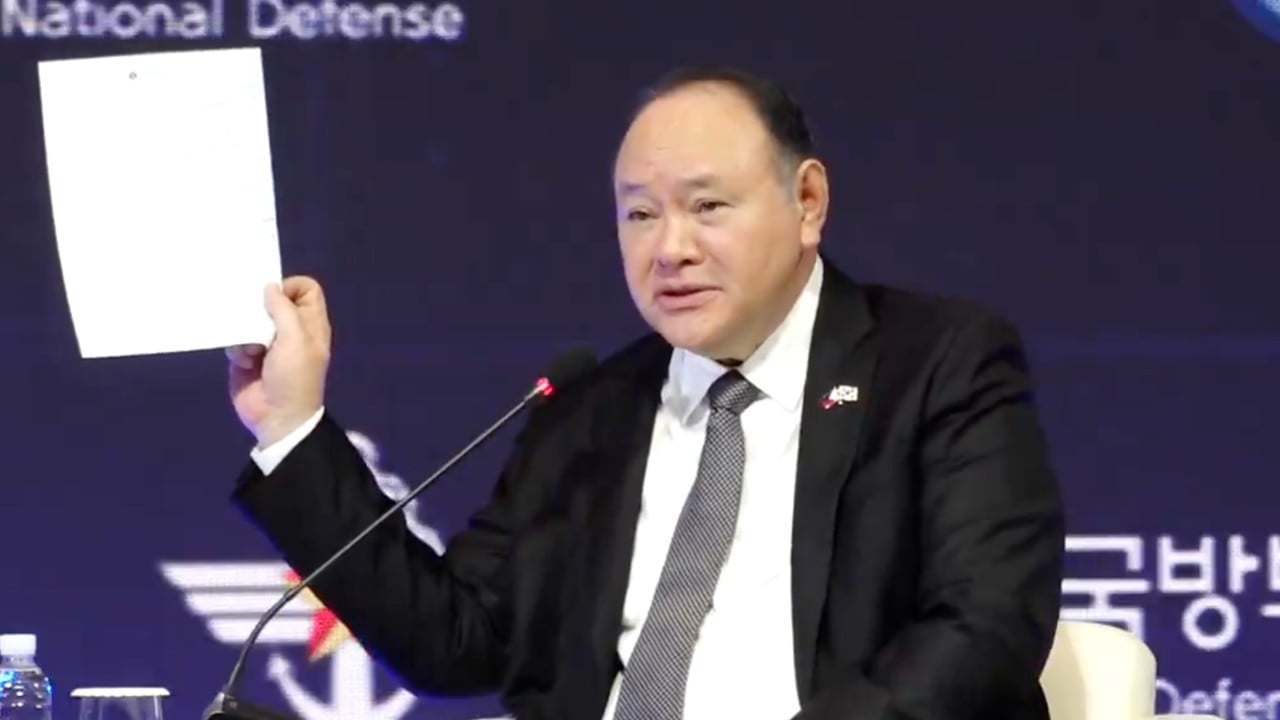
Beijing has rebuked the Philippines after Manila's defense secretary publicly read a Chinese diplomat's note on the South China Sea conflict. The Philippine defense minister described the note as containing "coercion, bullying and aggression." Beijing urged the Philippines to cease such behavior and preserve the bilateral relationship and stability in the South China Sea.
Chinese Foreign Ministry spokeswoman Mao Ning made the statement, responding to Gilberto Teodoro Jr., who presented parts of the note at a Seoul Defence Dialogue session. The note reiterated China's stance on the South China Sea arbitration, rejecting it as "illegal, null and void." The forum organizer disclosed that the note originated from a Chinese military attache at the embassy in Seoul, who handed it to a staff member and directed Teodoro to read it.
Teodoro found the act impolite to their hosts in South Korea and claimed it showed disrespect for international law. He called for "basic decency and behavior" from China and kept the note as a memento of China's desperation. The incident occurred amid tensions in the disputed waters, which have led to confrontations and clashes between Chinese and Philippine vessels, raising concerns of a potential military escalation involving the United States, a treaty ally of the Philippines.
In June, China had imposed sanctions on Teodoro for allegedly making inaccurate remarks that harmed China's interests and strained bilateral relations.
Written by urgent.news from South China Morning Post's reporting — not their text. Machine-written — may contain errors; check the original before relying on it.