A Nazi-curious party just won big in Germany. The White House approves.
Germany’s local elections usually don’t matter to anyone but Germans. But Sunday’s contest in the state of Saxony-Anhalt was an exception: It could very well produce the first far-right government anywhere in Germany since the Nazis. Alternatives fur Deutschland (AfD), a party so extreme that Germany’s intelligence services put them under surveillance, won 43.8 — a […]
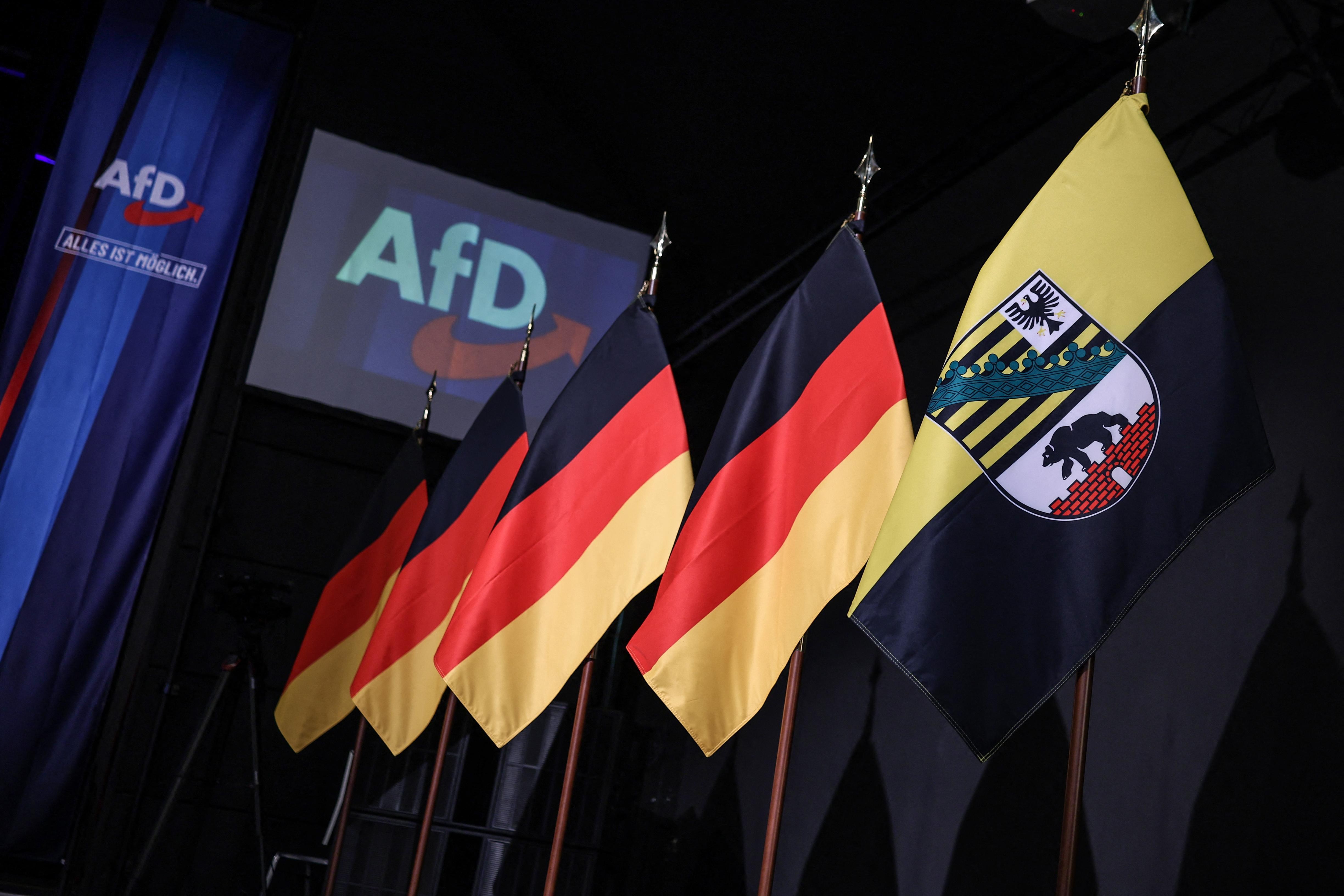
A far-right party called Alternatives fur Deutschland, or AfD, has made an impressive showing in the local elections of Saxony-Anhalt, a German state. This could mark the first time a far-right government has been in power in Germany since the Nazis. The AfD won 43.8% of the votes, which is the highest the party has ever received in a German election.
While the AfD is not large enough to form a government on its own, they are close to a majority in the parliament. The party has been negotiating with other factions to form a coalition government. The leader of the AfD has been meeting with other political parties to discuss forming a government together. However, it is not yet clear if they will be able to come to an agreement.
Chancellor Friedrich Merz, of the center-right Christian Democratic Union (CDU), said this result has shaken his party "to its very foundations." The outcome of these elections has raised concerns that the AfD may have a large impact on national politics. The White House has shown support for the AfD. This is different from the usual American foreign policy of being "America First".
Some experts have said that the Trump administration may be trying to help the AfD gain more power. This could be a sign of a shift in American foreign policy towards supporting far-right parties around the world. The rise of the AfD is seen as a major challenge to the goal of preventing another Nazi-like party from gaining power in Germany.
The AfD was once a Euroskeptic party, but it has become more extreme over time. In the 2025 election platform, they called for a program of "remigration", which would involve mass deportations of recent immigrants. Several members of the AfD have been convicted of using Nazi slogans in public speeches. There have been concerns that the AfD is being influenced by neo-Nazi groups.
This has led to various efforts to keep the AfD out of power, such as the Brandmauer policy, which involves abstaining from forming a coalition with the AfD. However, the AfD's growing popularity has made this more difficult. The Saxony-Anhalt election results have created a crisis, as they test whether the Brandmauer can survive the AfD's growing popularity.
The AfD is actively reaching out to other dissident factions, like the Sahra Wagenknecht Alliance, to join them in local government. This could mark the end of the Brandmauer and the official re-entry of the Nazi-adjacent far-right into German politics.
Written by urgent.news from Vox's reporting — not their text. Machine-written — may contain errors; check the original before relying on it.
This story
This is one outlet's version. Read the fullest account.
- Inside the White House on 9/11 theatlantic.com