Why it’s so hard to predict a tragedy like Nepal’s glacier collapse
Melting glaciers spell disaster around the world. Protecting people will be a challenge for decades to come.
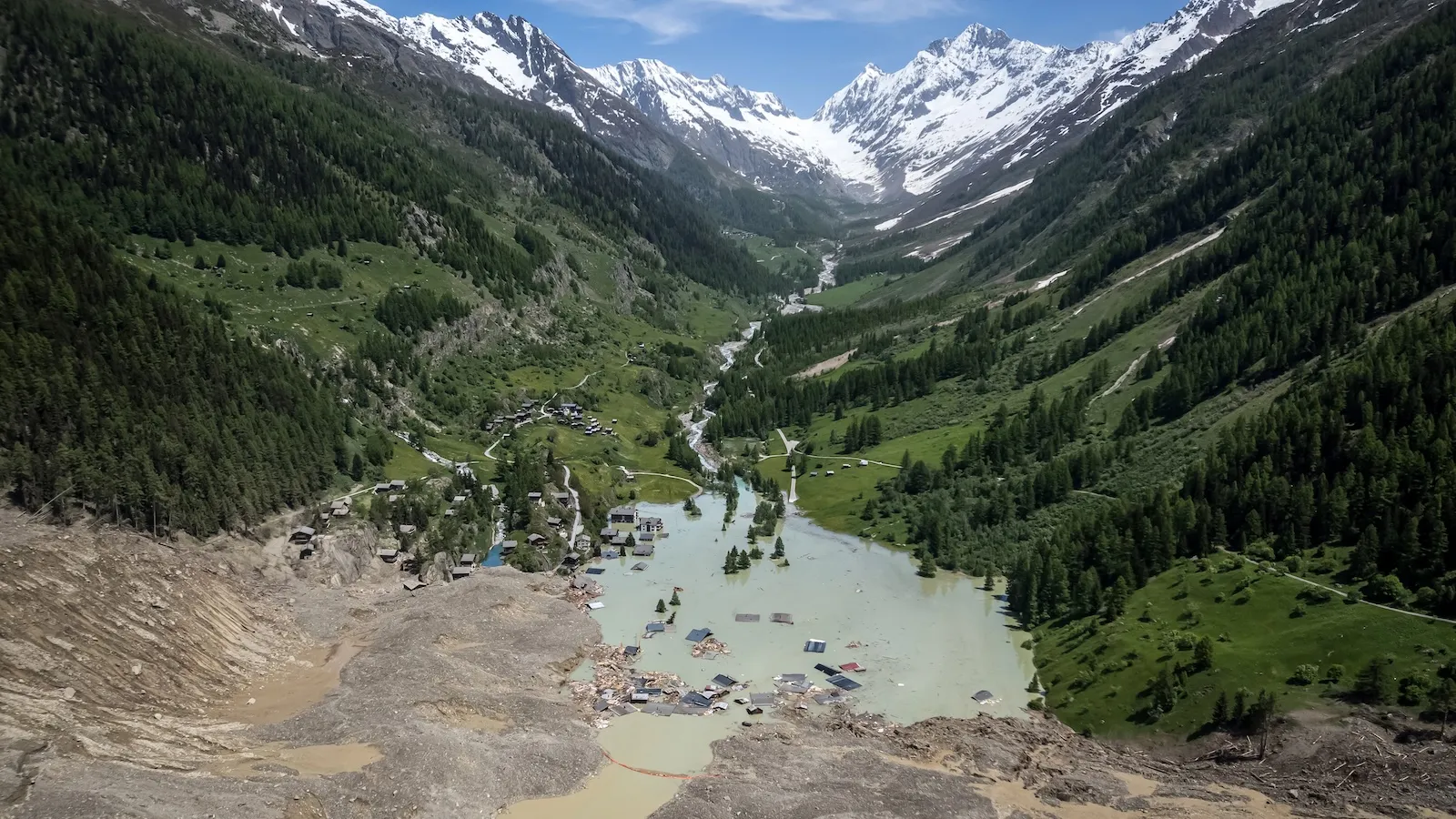
On August 26, a massive piece of glacial ice and rock from a mountain near Nepal and Tibet's border plummeted down a slope, creating a wave of destruction. The avalanche displaced approximately seven billion cubic feet of ice and rock, enough to fill 100 football stadiums, causing a wall of mud and water to rush through the valley at speeds up to 100 miles per hour.
The ferocious flood obliterated dozens of villages and led to over 1,300 fatalities, with thousands still missing. This disaster, unlike other often anticipated floods and landslides, stands out as an extraordinary event, even in a region accustomed to such catastrophes. Scientists estimate it will require months to determine the exact cause.
However, they emphasize that one thing is certain: as climate change continues to melt glaciers globally, such tragedies will become more probable. Professor Mark Carey, a leading expert in environmental studies and geography, explains that glacial loss destabilizes slopes in unpredictable and catastrophic ways. While proactive research and monitoring have saved lives in certain regions, in the vast and diverse Himalayan region, monitoring and establishing early warning systems everywhere is impossible.
The world's glaciers have dwindled by about one-fifth in the last century and are expected to lose at least another quarter by 2100. As temperatures rise, these massive ice masses are vanishing faster, with hundreds of billions of tons of ice lost annually. The consequences of this disappearing ice are complex and multifaceted. Glaciers typically shield the sides of mountains, and as they retreat, the exposed silt and rock can become unstable.
Moreover, the soil, often bound together by permafrost, can melt, further weakening slopes. Glacial meltwater can seep into the cracks of bedrock, gradually weakening it. The meltwater can also destabilize natural dams formed by glacial debris, leading to catastrophic releases of water. Glaciers can themselves act as dams, as seen in Juneau, Alaska, where meltwater has triggered flooding annually since 2011.
In Nisar, Peru, a similar situation has been managed through careful monitoring and engineering. Eran Hood, a hydrologist and professor at the University of Alaska, notes that though the yearly flood in Nisar has caused significant property damage, it has never claimed any lives due to robust monitoring systems. In India, authorities have spent decades draining high-risk glacial lakes in the Andes, saving tens of thousands of lives.
Similarly, in Switzerland, a village named Blatten was evacuated just days before a glacier collapse engulfed it. While early-warning systems in the Himalayas monitor water levels in some high-risk rivers and lakes, there is no comprehensive system capable of continuously observing the sudden rock-and-ice collapse events that triggered this disaster.
The lack of such a system is a critical factor as the processes leading to such collapses are inherently unpredictable. Technology may offer some solutions. Seismic early-warning systems could potentially detect the rapid movements of glaciers. In Alaska, a 5.2 magnitude earthquake triggered by the glacial collapse was detected, indicating that such networks could provide a few minutes of warning.
Additionally, fiber-optic cables laid across glaciers in Switzerland have shown promise in detecting tiny icequakes, offering further clues about a glacier's stability. Furthermore, a new satellite, NISAR, launched jointly by the US and India, is designed to detect minute changes on Earth’s surface, potentially identifying shifts in glaciers.
Written by urgent.news from Grist's reporting — not their text. Machine-written — may contain errors; check the original before relying on it.