When things go bad, you want to be in China, says Gavekal’s Louis-Vincent Gave
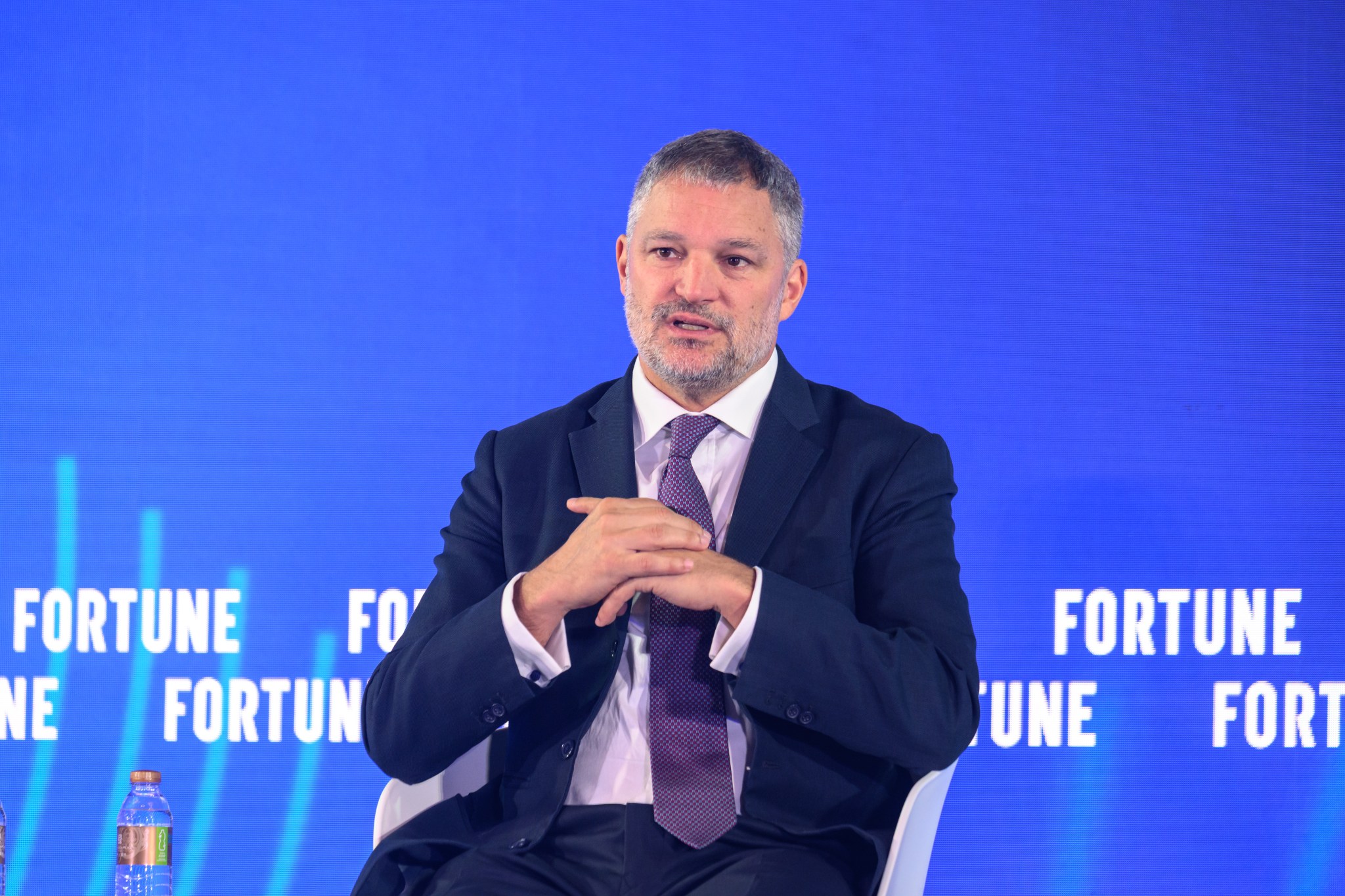
American investors tend to favor the U.S., with its business-friendly policies and robust capital markets, for their investments. However, as geopolitical tensions rise and debt concerns mount, they might consider shifting their focus to China. At the Fortune Leaders Forum in Macau on September 8, economist Louis-Vincent Gave posed a rhetorical question: "When there's a hit to the system, do you want to be with the anti-fragile or the profit-maximizing?"
When comparing U.S. Treasuries to Chinese government bonds, the disparity in returns is stark. The former yields 4.8%, while the latter's 10-year benchmark bond offers a significantly lower, but still attractive, rate of just under 1.7%. Investors are becoming increasingly wary of debt in the West, where the U.S. national debt now tops $40 trillion.
China, buoyed by its investments in social stability and a vast domestic savings pool, has seen its government bonds become a safe-haven asset. According to Gave, who is the founder and CEO of Hong Kong-based financial services firm Gavekal, "Ninety percent of the time, when things go well, you want to be [invested] in the U.S. But the 10% of times where it goes badly, you want to be in China."
However, China's economic figures, such as its GDP growth, retail sales, and investment, suggest it is not living up to expectations. Gave attributes this to "crushed" consumer and business confidence, which he believes will be the key to turning things around. As the world becomes more fragmented along geopolitical faultlines, business leaders must look beyond just geopolitics, argues Ziad Haider, McKinsey’s global director of geopolitics.
They must also consider changes in energy, technology, and demographics. Governments are increasingly employing geoeconomics, using tariffs, sanctions, and industrial policy to achieve security objectives. Recent examples include the U.S. President Donald Trump’s new round of tariffs targeting Canada and China’s retaliatory measures.
Energy is today’s most pressing geopolitical concern, with oil prices soaring due to the Iran war and energy shortages across the Asia-Pacific region. While prices have since eased, they remain far above pre-war levels. Haider remains optimistic, suggesting that businesses can capitalize on the complexity of the political landscape.
For instance, they may view tariffs as a risk but also as a catalyst for new trade agreements, such as the EU-Mercosur deal and ASEAN’s digital economy framework agreement. Additionally, fossil fuel constraints stemming from the war in Iran could boost demand for renewables and other energy sources. Haider concludes that the greatest danger in times of turbulence is not the turbulence itself, but rather acting with yesterday’s logic.
Gave's advice for navigating the unknown is straightforward: "When it comes to Chinese policy making, I’m not paid to forecast; I’m paid to adapt. Anybody who tells you they know what goes on inside the Politburo is either delusional or lying to you."
Written by urgent.news from Fortune's reporting — not their text. Machine-written — may contain errors; check the original before relying on it.