What the Ghetto of Venice Reveals About Jewish History and Identity in Europe
“But how I caught it, found it, or came by it, What stuff ’tis made of, whereof it is born, I am to learn…” –William Shakespeare, The Merchant of Venice, 1.1.3-5 * It was a cold January afternoon when I
On a chilly January afternoon, I first ventured into Venice's Ghetto. The campo was quiet and desolate, with darkened shops and no streetlights. Though the sky was overcast, the bare trees shimmered with thousands of twinkling lights. I wandered idly through the square and noticed a bronze plaque on a wall, its image obscured by the dim light.
Gazing at it, I saw a train pulling trucks and soldiers with guns. A sharp intake of breath escaped me as I noticed the names of 5 December 1943 engraved in a recess. My own birthday, it seemed.
A gentle, defiant song drifted from a nearby window, and I spotted a group of men in black, shawls pulled up, praying. As I realized it was Friday and the Sabbath was beginning, tears filled my eyes. The Ghetto, it seemed, was a beacon of hope amidst its many hardships. Though the word 'ghetto' evokes tragic images of countless other Jewish enclaves, it was in the Venetian Ghetto that the word and its dark history first took root.
The Venetian Ghetto was not an isolated incident, but rather the culmination of centuries of enforced segregation in Europe. By the time it was established in 1516, Jews had been confined to specific neighborhoods in cities like Prague, Frankfurt-am-Main, and Marseilles for centuries. Yet, the Ghetto was not simply a repetition of past practices.
It was a hasty response to the chaos of the Italian Wars and Venice's need to balance religious prejudice with economic interests. The Republic, once a thriving maritime power, was now struggling economically. With no alternative credit source, Jews played a crucial role in maintaining the Republic's financial stability. The Ghetto provided a controlled space for Jewish merchants, particularly those from Spain and Portugal, to thrive while keeping the spiritual risks to a minimum.
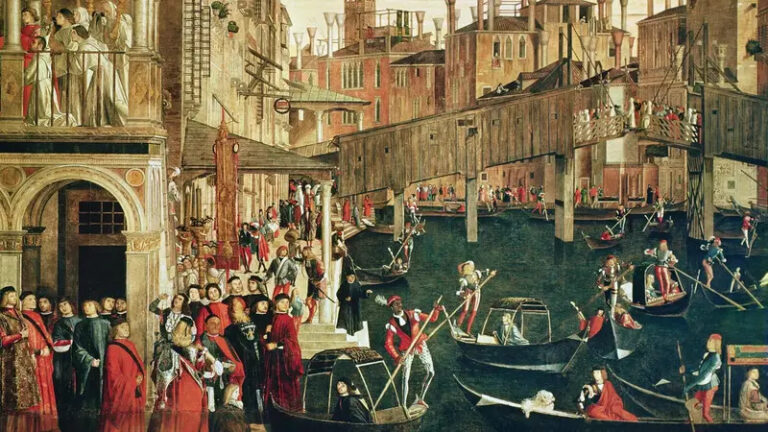
Initially, the Ghetto was meant to be temporary, but as Venice's trade declined, expanding the area became necessary. Over the next three centuries, the Ghetto's three districts—the Ghetto Nuovo, the Ghetto Vecchio, and the Ghetto Nuovissimo—maintained their distinct identities, albeit cramped, unsanitary, and impoverished. Despite numerous restrictions and pervasive hostility, the Ghetto's residents endured and even prospered.
Shakespeare's Shylock may have been a fictional character, but his persecution would have been all too familiar to the Ghetto's inhabitants. Physical violence was not unknown, and even a father witnessed his son being stabbed to death in the street. Throughout its 300-year history, the Ghetto became a symbol of the forced segregation of Jewish communities in Europe.
Written by urgent.news from Literary Hub's reporting — not their text. Machine-written — may contain errors; check the original before relying on it.