Welthandel: Chinas Exporte ziehen an – Weiter Streit mit EU und USA
Chinas Exportmotor läuft trotz Kritik von Handelspartnern unaufhörlich weiter. Auch der Handel mit Deutschland unterstreicht die Probleme. Nun richtet sich der Blick auf ein mögliches Treffen.
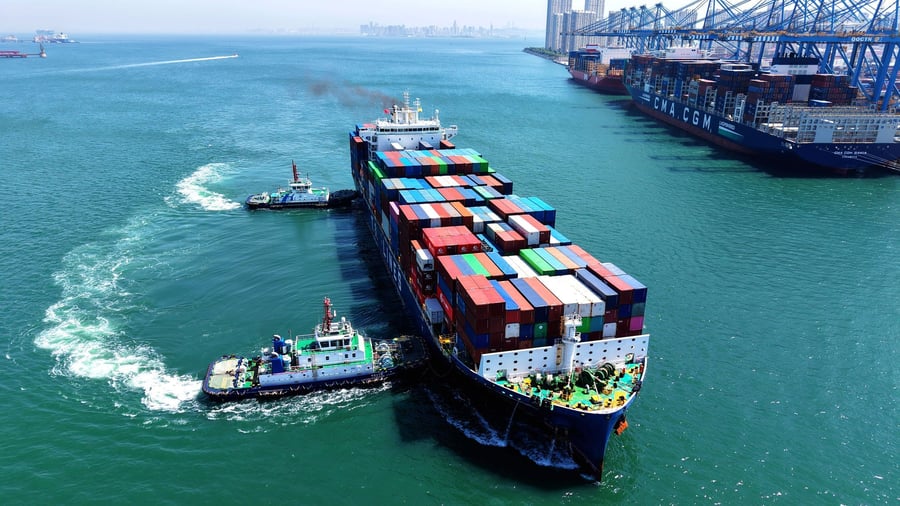
Chinese exports continued to rise in August, growing by 25 percent compared to the same month last year, according to Beijing's customs authority. This growth was even sharper than in July, when exports increased by 23.9 percent. Imports also saw a significant surge, increasing by 28.2 percent in August. Analysts' expectations were largely met with this data, although imports grew slightly less than expected.
China's trade surplus widened to a record 805.5 billion US dollars in the year up to August, surpassing the previous peak of 1.2 trillion US dollars in 2025. China's trade growth is driven by the expansion of artificial intelligence, which requires various components such as semiconductors. Additionally, China is exporting more vehicles internationally, especially as domestic demand for cars declines.
The weak domestic demand, partly due to high youth unemployment and low consumer confidence, is a problem for German companies as well. Oliver Oehms, the head of the German Export Chamber in Northern China, noted that strong domestic demand is essential, and it must be evident in various sectors of the economy. China's export to Germany increased by 9.8 percent in August compared to the same period last year, while imports from Germany fell by 9.7 percent.
China's recent foreign trade data comes just weeks before a scheduled meeting between Chinese President Xi Jinping and US President Donald Trump. Trump had invited Xi to the White House in September during his Beijing visit, but China has not confirmed the visit. The trade dispute between the two countries is expected to be a central issue at the meeting.
China's exports to the United States grew by 34.4 percent year-over-year in August, while imports from the US increased by 17.8 percent. Washington has long criticized the imbalance in trade with China and has urged Beijing to stimulate domestic demand. The trade dispute between the world's two largest economies remains on hold until November, when it would otherwise expire.
The tone of the trade conflict has become harsher recently. During the G20 finance ministers meeting in Asheville, US Treasury Secretary Scott Bessent accused China of blocking a joint statement. Instead, the US released a statement, claiming that China disagreed with several points. One of them addressed countries with "excessive and persistent trade surpluses" and called for the elimination of distortions.
China's Ministry of Commerce denied the statement and accused the US of promoting protectionism and creating excuses for restrictions against China. Beijing always emphasizes that it does not intentionally seek a trade surplus, but points out that export growth is driven by innovation and demand from other countries, such as in the green transformation sector.
The trade dispute also extends to Brussels. The US was once one of China's biggest markets, but since the trade dispute, China has increasingly shipped goods to other markets, as shown by the August customs data, which showed high export gains to Africa (30.9 percent) and Southeast Asia (30.2 percent). Europe has long been an important target market for China.
China's exports to Europe grew by 6.6 percent in August compared to the previous year. However, imports from the EU only grew by 0.7 percent. Brussels has long been urging China to correct the imbalances in the bilateral trade relationship. Negotiations between the EU and China on solutions are expected to conclude by October with concrete results.
Whether further tariffs on Chinese imports will follow remains unclear. The EU has already imposed additional duties on electric cars manufactured in China. Chinese manufacturers are nonetheless gradually securing market share in Europe, particularly in the automotive industry, which is crucial for Germany.
Written by urgent.news from Handelsblatt's reporting — not their text. Machine-written — may contain errors; check the original before relying on it.