Trump and Xi should align on artificial Intelligence
Advanced AI may surpass human control, so the U.S. and China must prepare together to manage the risks.
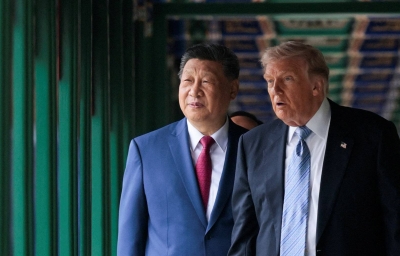
When Chinese President Xi Jinping and U.S. President Donald Trump meet in Washington this month, artificial intelligence (AI) is expected to be a key topic on the agenda. However, their approach to the issue may be hindered by a technological rivalry and mutual suspicion. To foster cooperation, it is crucial to reframe their perspective on AI.
Currently, the U.S.-China summit's agenda revolves around securing powerful AI models and preventing them from falling into the hands of terrorists and criminals. However, this approach is clouded by competitive grievances between the two nations, such as semiconductor restrictions (from China) and open-source models and unauthorized distillation (from the U.S.).
These issues are based on a fundamental assumption that AI remains a controllable tool, which limits the conversation to questions of gaining a competitive edge and access to the technology.
To overcome this limitation, it is essential to consider questions that go beyond the current premise, such as the potential consequences when AI transcends its current capabilities. By shifting the focus from competition and control to the broader implications of AI, both leaders can explore a shared understanding of the technology. This shift in perspective may pave the way for addressing the existential challenges that AI may pose in the future.
Written by urgent.news from Japan Times's reporting — not their text. Machine-written — may contain errors; check the original before relying on it.