Top chipmakers embrace ASML’s $400M machines, agree to crucial chipmaking change
Chipmaking changes could boost productivity of new ASML machines by 40 percent.
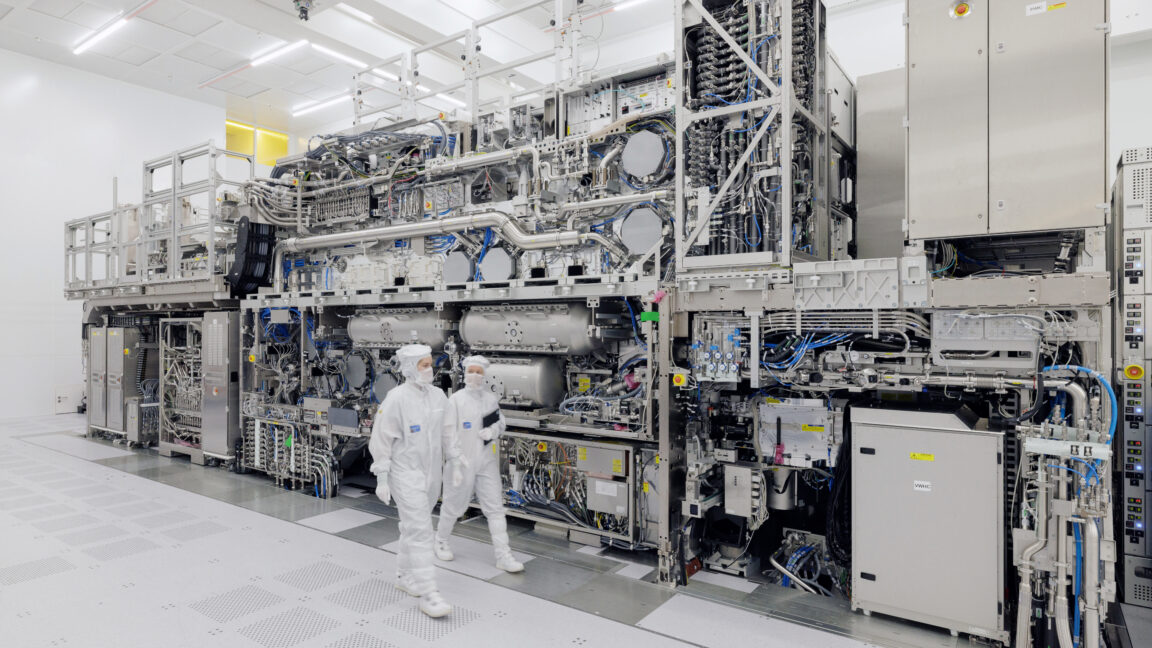
Two of the world's largest chipmakers, Samsung Electronics and Taiwan Semiconductor Manufacturing Co., announced their intentions to adopt ASML's newest chipmaking machines within the coming years. Additionally, Intel agreed to a significant technological shift that could potentially increase chip production on these new machines by 40 percent.
This development marks a larger industry-wide acceptance of high NA EUV (Extreme Ultraviolet) photolithography technology, a technology that can cost up to $400 million per machine and is exclusively provided by ASML, a Dutch technology company. This innovation allows chip designers to create smaller features on potentially more powerful and efficient chips for next-generation AI data centers and consumer electronics like smartphones, tablets, and laptops.
The EUV lithography machines, provided by ASML, utilize intense laser light to imprint detailed patterns onto silicon wafers, layer by layer, gradually forming the intricate circuitry that enables silicon chips to function. However, enhancing EUV technology has necessitated the development of more potent light sources with even shorter wavelengths, capable of producing smaller features on silicon wafers.
Written by urgent.news from Ars Technica's reporting — not their text. Machine-written — may contain errors; check the original before relying on it.
This story
This is one outlet's version. Read the fullest account.