This physics trick allows you to beat the speed of light
In our Universe, there are a few rules that everything must obey. Energy, momentum, and angular momentum are always conserved whenever any two quanta interact. The physics of any system of particles moving forward in time is identical to the physics of that same system reflected in a mirror, with particles exchanged for antiparticles, where the direction of time is reversed. And there’s an…
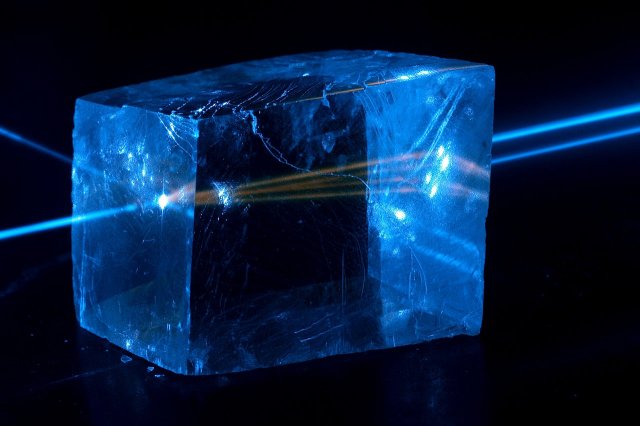
In the cosmos, several immutable laws govern the universe. Energy, momentum, and angular momentum remain consistent during any interaction between quantum particles. The physical laws governing particle motion in time align with the same laws when those particles are mirrored, with particles replaced by their antiparticles, and time reversed.
A cosmic speed barrier exists, prohibiting any object from surpassing the speed of light in a vacuum. Furthermore, any entity possessing a non-zero rest mass cannot ever approach this ultimate speed. Theoretical physicists have proposed tachyons, hypothetical particles capable of exceeding light's speed, but these entities have imaginary masses and are non-existent in reality.
In the context of General Relativity, warped space can generate alternative, shorter pathways than light must traverse, yet our known universe lacks any such wormholes. While quantum entanglement creates seemingly instantaneous connections across vast distances, no information travels faster than light. However, there is a means to outpace the speed of light: by traversing any medium other than a vacuum.
This is how light can seemingly defy the speed of light. Electromagnetic waves, such as light, comprise oscillating, in-phase electric and magnetic fields perpendicular to the direction of propagation. Shorter wavelengths correspond to higher-energy photons, making them more susceptible to alterations in light speed within a medium.
This knowledge emerged following Maxwell's equations in the mid-to-late 1800s. Essentially, light is an electromagnetic wave. While it exhibits particle-like behavior, for the purpose of discussing its propagation speed, it is more advantageous to perceive it as a wave of mutually perpendicular, in-phase electric and magnetic fields.
In the emptiness of space, there are no hindrances to the oscillating fields, enabling them to propagate at their natural amplitude determined by the wave's energy, frequency, and wavelength. However, when light traverses a medium, such as regions containing electric charges or currents, the electric and magnetic fields experience resistance, hindering their free propagation.
One constant remains: the frequency of light remains unchanged as it transitions between vacuum, a medium, or another medium. As the wavelength shortens in a medium, the speed at which light travels must also decrease (slowing down) accordingly. The speed of light in a vacuum serves as the ultimate speed barrier for all light, regardless of wavelength or energy.
Observing light from a distant star, we are merely witnessing light that has already completed its journey from the source to the observer. A striking demonstration of this phenomenon is the refraction of light as it passes through a prism. Sunlight, or white light, encompasses a continuous spectrum of wavelengths. Longer wavelengths, like red light, possess lower frequencies, while shorter wavelengths, such as blue light, have higher frequencies.
In a vacuum, all wavelengths travel at the same speed, with frequency multiplied by wavelength equating to the speed of light. Blue light, with its higher energy, exhibits stronger electric and magnetic fields than red light, which has longer wavelengths. When white light passes through a dispersive medium like a prism, each wavelength responds differently.
Higher-energy (bluer) light experiences a greater effect from passing through the medium. Despite the unchanged frequency, the wavelength of higher-energy light shortens more significantly than that of lower-energy light. Consequently, although all light slows down within a medium compared to a vacuum, red light slows down by a slightly lesser extent than blue light.
This results in various optical phenomena, including rainbows formed as sunlight disperses into different wavelengths as it passes through water droplets and droplets. When light transitions from a vacuum (or air) into a water droplet, it undergoes refraction, reflection off the droplet's back surface, and finally refraction back into a vacuum (or air).
The angle at which incoming light meets outgoing light consistently reaches a peak of 42 degrees, explaining why rainbows exhibit the same angle in the sky.
Written by urgent.news from Big Think's reporting — not their text. Machine-written — may contain errors; check the original before relying on it.