The incongruity of caste and science
A student’s ability to understand thermodynamics or solve a differential equation has nothing to do with the ritual status of their ancestors
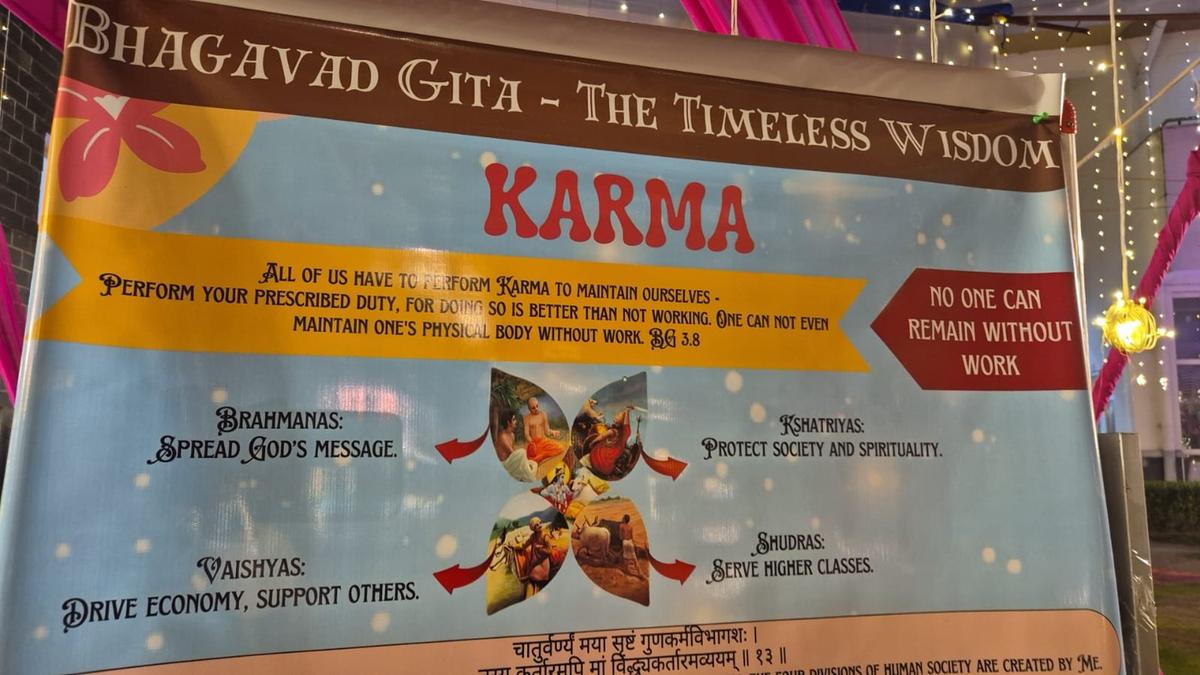
The principle that all humans are equal is a moral and constitutional stance, not a scientific one. Science lacks the authority to dictate moral or constitutional norms. The ancient text 'Manusmriti' suggests that a person's birth into a specific social category determines their role, rights, and relationships within society. However, modern constitutional thinking, as exemplified by the Magna Carta, English Bill of Rights, and contemporary democracies, holds that individuals possess rights based on their status as persons and citizens, not their inherited social functions.
In 2026, a poster at IIT-Mandi displayed a contrasting view, assigning roles to different castes: Brahmanas to spread god's message, kshatriyas to protect society and spirituality, vaishyas to drive the economy and support others, and shudras to serve higher classes. Science, the foundation of IITs' research, offers a different perspective that aligns with constitutional views.
While some argue that caste is rooted in biological differences, it is actually a cause of these differences, affecting the environments in which individuals live. Studies on social determinants of health and social epigenetics show that caste-related inequities in healthcare and access to care, as well as biological changes through mechanisms that affect gene regulation, result from historical social circumstances.
Genetic research indicates that most present-day Indians descend from two ancient populations that mixed extensively before endogamy, resulting in genetic differences due to endogamy's long history. The genome does not dictate marriage practices, but rather reflects the choice of endogamy based on factors beyond scientific guidance.
The human nervous system is highly plastic, constantly adapting to experiences throughout a person's life. This plasticity contributes to the variety of abilities among individuals, demonstrating that the practice of science cannot determine whether all humans are equal. Science can only confirm that all humans are members of one species, that their development is shaped by experiences, and that social environments can become embodied.
Caste-based discrimination, however, limits the spread of knowledge and narrows the social range over which one of humanity's defining capacities can operate.
Written by urgent.news from The Hindu - Sci-Tech's reporting — not their text. Machine-written — may contain errors; check the original before relying on it.
This story
This is one outlet's version. Read the fullest account.
- The incongruity of caste and science thehindu.com