‘Never forget’ turns into ‘remember what?’ Different states’ histories of 9/11 reveal a fractured national memory
In Alabama, Sept. 11 fits into “military involvement in international conflicts since 1980," while Texas teaches an example of “radical Islamic terrorism."
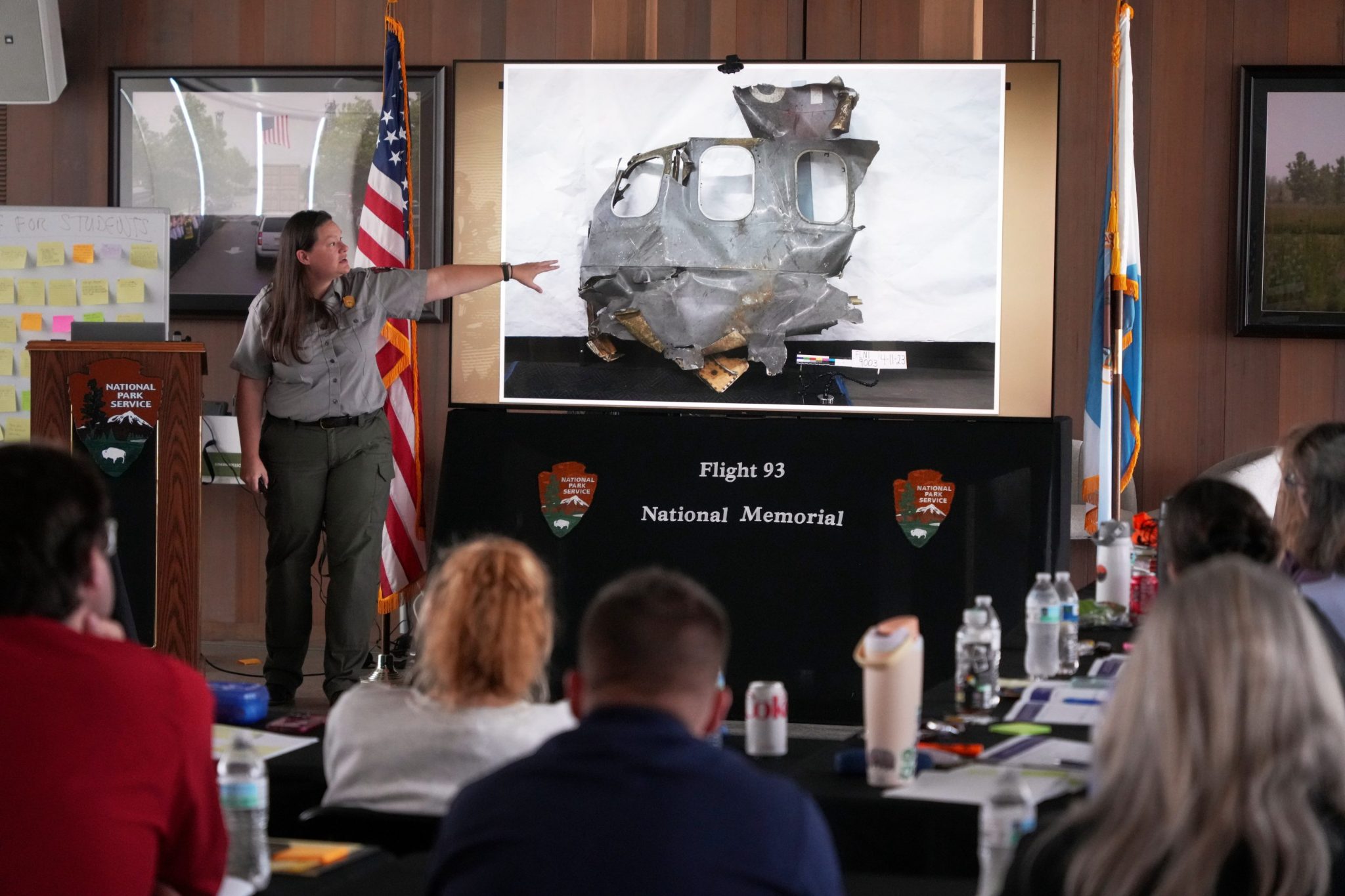
In the past three days, educators gathered at the Flight 93 National Memorial in western Pennsylvania to discuss the 9/11 attacks, which occurred 25 years ago. The main concern is ensuring that the story is told accurately, as omitting it altogether is feared. Gordon Felt, whose brother died on United Airlines Flight 93, expressed this worry during a session.
The importance of teaching about 9/11 in schools has increased, especially considering that about one-third of Americans were born after the events of 9/11. A majority of states, estimated at 40, now expect or suggest incorporating 9/11 into public school curricula, although the specifics of these requirements differ significantly.
Some states provide detailed course content, while others offer only broad concepts. As time progressed and the attacks were viewed as a settled event, there has been more movement towards teaching 9/11, with depth increasing compared to previous decades. A decade ago, around 60% of states did not explicitly mention 9/11 in their education standards, but this has changed.
While states share an interest in teaching about 9/11, their approaches vary. For instance, Alabama includes the attacks under "the United States’ military involvement in international conflicts since 1980" for fifth-graders, while Texas has taught 9/11 within the context of "radical Islamic terrorism" and a key piece of modern history.
Colorado suggests high school students analyze the aftermath of 9/11, including Middle Eastern discrimination, and the aftermath of wars and legislation. New Mexico contemplates discussions covering post-9/11 wars and legislation, U.S. detention at Guantanamo Bay, and the Abu Ghraib prisoner-abuse scandal. The social studies curriculum in states reflecting conservative priorities often includes 9/11, as seen in a Florida law mandating 45 minutes of 9/11 instruction in middle and high school courses.
However, the teaching of 9/11 varies even among states with similar political leanings. In New Mexico, discussions may include the U.S. detention of suspected enemy combatants and the Abu Ghraib scandal. Despite these differences, about 60% of U.S. young adults claim their first exposure to 9/11 was through school, according to a recent Pew Research Center poll.
Written by urgent.news from Fortune's reporting — not their text. Machine-written — may contain errors; check the original before relying on it.