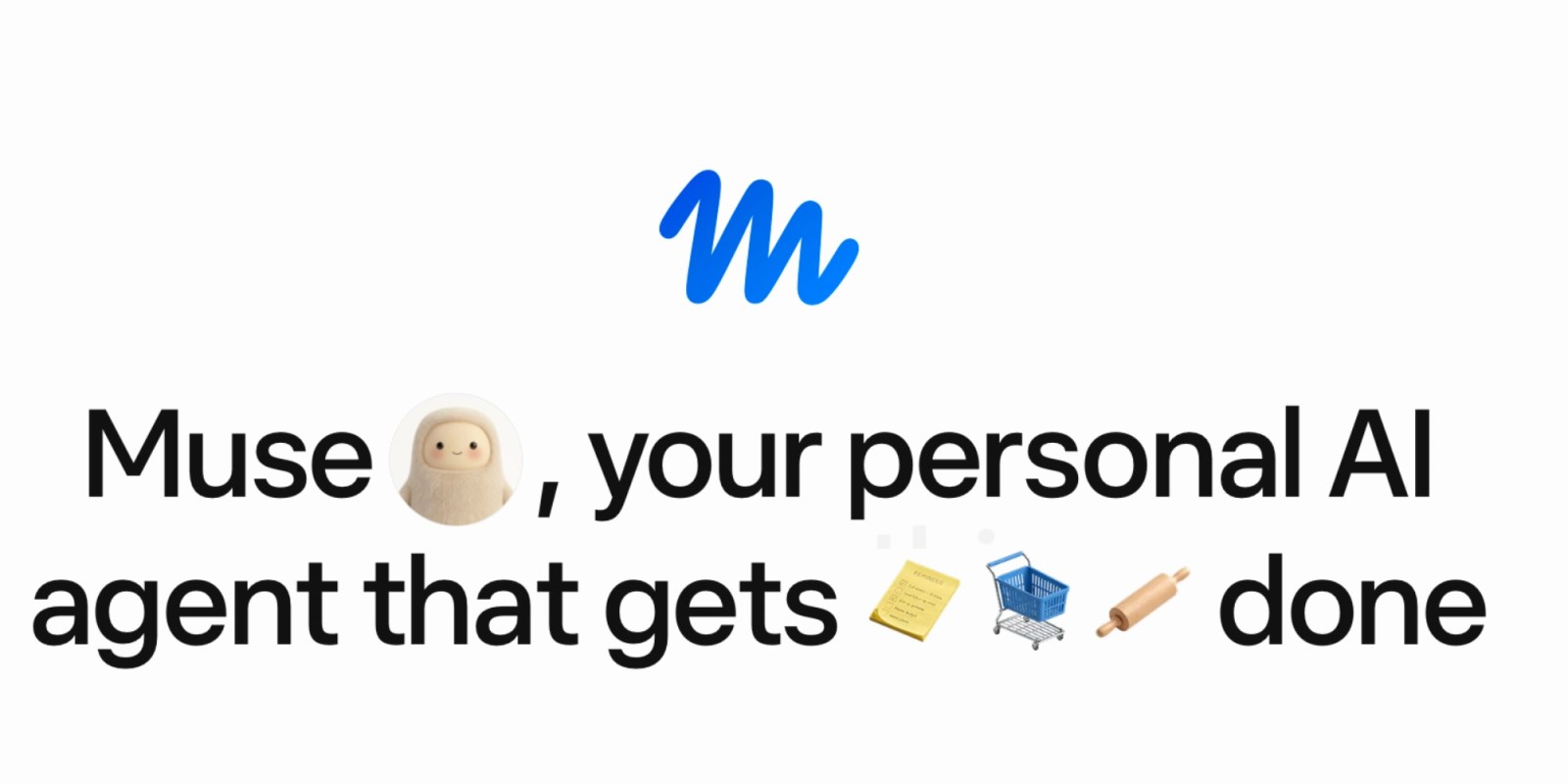
Meta's personal AI agent Muse is powered by Muse Spark 1.3 and is free for up to 100M tokens per week, with $20 and $100 monthly tiers (Riley Griffin/Bloomberg)
Meta Platforms Inc. unveiled a new artificial intelligence agent designed to carry out tasks on a user's behalf, advancing Mark Zuckerberg's vision …
Meta has released Muse, a personal AI agent designed with privacy in mind, for iOS and Android users via a dedicated app and website. Users can also communicate with Muse through WhatsApp. The AI is set to be integrated with Meta's AI glasses in the future. Muse is free to try, but users desiring to automate numerous digital tasks will need one of Meta’s AI subscription plans. The AI agent is developed by Meta Superintelligence Labs, an AI unit formed by CEO Mark Zuckerberg to compete with OpenAI and Anthropic.
Meta claims Muse is user-friendly, requiring no learning curve and allowing users to prompt the agent in natural language to perform tasks such as sending emails, booking travel, or even helping sell a car. The agent can also make purchases on behalf of users, utilizing Stripe's special payment infrastructure to ensure secure transactions. Muse is the first AI agent covered by Stripe's Link payment tool, which provides a single-use card number to protect users' financial information.
Meta aims to differentiate itself from competitors by emphasizing security and privacy features in Muse. The product introduces Secure VM, an architecture that isolates each user's activity in a virtual machine, keeping untrusted data separate from the part of the agent responsible for taking action on behalf of the user. To further enhance security, Meta has developed Sentinel, which monitors and verifies user actions, prompting humans for approval when necessary. This human-in-the-loop system prevents potential attacks like prompt injections.
While the Secure VM architecture is designed to maintain user security and privacy, Meta acknowledges that it is not entirely immune to access. However, users can opt out of allowing their data to be used for training purposes. Meta's Secure VM architecture is notable for its privacy implications, potentially setting a new industry standard for AI agents.
In the future, Meta plans to offer a Confidential VM, providing users with full control over access keys and ensuring that no one else, including Meta, can access their agent VM. Meta is also working with security firms to regularly audit and verify the privacy guarantees of Confidential VM.
To further ensure the integrity of the connection between users and Muse, Meta will publish Confidential VM binaries and a transparency log. The company has already subjected Secure VM to extensive testing, including by its human and agentic red teams and through a bug bounty program, offering payouts up to $300,000 for valid vulnerability findings, including $130,000 for successful prompt injection attacks affecting a single user.
Written by urgent.news from Wired's reporting — not their text. Machine-written — may contain errors; check the original before relying on it.
This story
This is one outlet's version. Read the fullest account.
- Meta Debuts Muse, Its Long-Planned Personal AI Agent meta.slashdot.org
- What is Meta's Muse AI agent? thenationalnews.com
- Meta bets on AI agent Muse to catch up in AI race theverge.com
- Meta debuts its Muse AI agent. Will consumers trust it? techcrunch.com
- Meta AI launches Muse personal agent, including a new mobile app for iPhone 9to5mac.com
- Meta launches Muse, a personal AI agent that runs on a dedicated VM in Meta's cloud, initially available in the US, with support coming soon for its AI glasses (Ina Fried/Axios) axios.com
- Meta Releases Muse, a Personal AI Agent With Privacy ‘Built Into It’ wired.com
- Meta launches personal AI agent, Muse, to help with everyday tasks pbs.org