Masa untuk menilai semula makna dan peranan profesor
Gelaran profesor bukan sekadar pengiktirafan kepakaran, tetapi tanggungjawab menghubungkan ilmu dengan masyarakat.
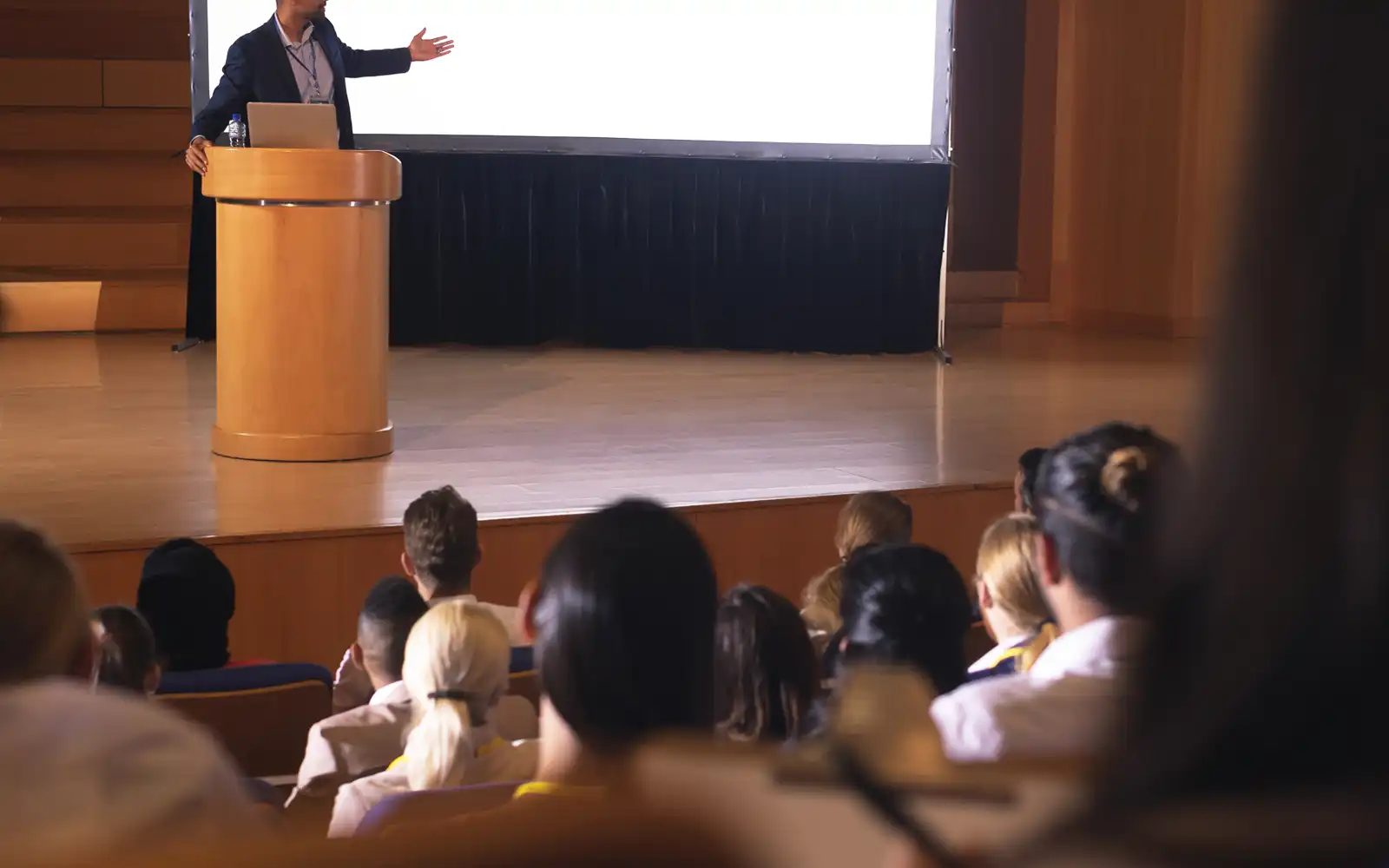
The professor's voice, speaking on a current issue outside their field, often sounds "It is not their area." However, when an expert in the subject remains silent, society wonders where the voice of the scientist is when their discipline is needed. This question raises a larger issue: what is the true meaning of being a professor today?
Is professorship merely recognition of specialization in a rapidly specialized field, or does it also involve responsibility as a scientist helping society understand the issues of its time? The title of professor remains important. It acknowledges academic achievements, research and depth of expertise. Yet, specialization should be the basis of scholarship, not a limit to scholarship.
Scientific advancement does not develop through rigid compartmentalization. Islamic intellectual tradition gave rise to figures like Ibn Sina who moved between medical, philosophical, logical, natural and metaphysical disciplines. Al-Biruni, meanwhile, transcended mathematics, astronomy, geography, history and sociology. They were not great scientists because they knew everything, but because they saw science as interconnected.
The tradition of Western universities was not entirely built on disciplinary isolation. John Henry Newman in The Idea of a University saw the university as a meeting point of diverse branches of knowledge that expand thinking. Clark Kerr later described the modern university as a multiversity - an institution whose function and connection to society becomes increasingly complex.
We often hear of the "comuniiversity" merging community and university as one entity. Thus, the question arises of where the notion comes from that a professor should speak only within their specialized field? Part of the answer lies in modern scientific specialization. Specialization is important because without it, it is difficult to achieve depth of knowledge.
However, the problem starts when our approach to organizing knowledge changes the way we limit thinking. The real world does not have academic ranks. AI is not just a technology issue. Poverty is not just economics. Corruption is not just law. Climate change also intersects with science, economics, politics, ethics and human behavior.
Meanwhile, universities live with separate ranks. Edward O. Wilson, Harvard's renowned scientist and philosopher, and a double Pulitzer Prize winner, in Consilience: The Unity of Knowledge reminds us that the compartmentalization of knowledge through ranks is not a reflection of how the real world is organized, but only partly an "artifact of scholarship".
Wilson then raises the idea of consilience - separate knowledge needs to be reunited to understand reality more fully. More intriguingly, this idea intersects with the epistemology of Tauhid and scientific integration, which are the foundations of the establishment of the International Multi-faith University Malaysia (UIAM). Tauhid views science not as separate pillars standing alone, but as a unity connecting one science to another, values, goals and responsibility towards humanity culminating in divinity.
Therefore, UIAM is currently rekindling epistemology of Tauhid as a framework to address contemporary fragmented science and restore the integrity and reputation of science and universities. This raises the question of the professor's role again. If universities want to reunite fragmented knowledge, professors as holders of the highest academic degree should not become more enclosed within disciplinary boundaries.
Specialization is needed to achieve depth, but scientific unity is needed to understand the whole. Professors, as holders of the highest academic degree, should not become more confined to disciplinary boundaries. Specialization is necessary to achieve depth, but scientific unity is necessary to understand the whole. The development of science requires crossing disciplinary boundaries.
Scientific development requires crossing. Science advances when ideas are questioned, perspectives meet and arguments are tested. Take the example of education subsidies. An economist might look at fiscal capacity and market efficiency; a public policy scholar investigates implementation; a sociologist examines the impact on society; a political science scholar examines legitimacy and public acceptance.
The meeting of perspectives is what produces fuller understanding and more sustainable solutions. That is why the phrase "it's not your field" should be used carefully. Of course, a professor does not have authority on everything just because of their title. A political science professor should not speak about cancer treatment as if they are a medical expert.
The epistemological boundary remains important. However, the academic title is not the same as intellectual humility. A professor should know what they know, acknowledge what they do not know, read what they do not know, and be ready to admit correction. This is epistemic humility. However, intellectual humility should not be a virtue only.
A professor does not need to be an expert in everything. But if the fear that "it's not my field" prevents scholars from participating in cross-disciplinary discourse, we may produce more specialists but fewer scientists. The definition of field determines the depth from which we speak. However, it should not determine the breadth of the challenges we can imagine.
Practice of science - if knowledge is all, what about AI? This question becomes more pressing in the age of AI. If a professor's value is only based on the ability to master many facts, to trace literature, to formulate theories, to compare views and produce academic writing, some functions are increasingly capable of being performed by AI at scale and speed difficult to match by humans.
Written by urgent.news from Free Malaysia Today's reporting — not their text. Machine-written — may contain errors; check the original before relying on it.
Also reported by 1 other outlet
- Masa untuk menilai semula makna dan peranan profesor freemalaysiatoday.com