In Gyirong Port, small items speak of the human cost of the China-Nepal disaster
“I do not want to stop [searching]. If I pause, I start thinking about my brothers and sisters and all the moments of my life here.” Gui Xinwei, deputy chief of the Gyirong Border Inspection Station, was speaking to Chinese state broadcaster CCTV from the ruins of his workplace, seven days after the devastating mudslide erased the port crossing where China and Nepal meet. “I just don’t want to…
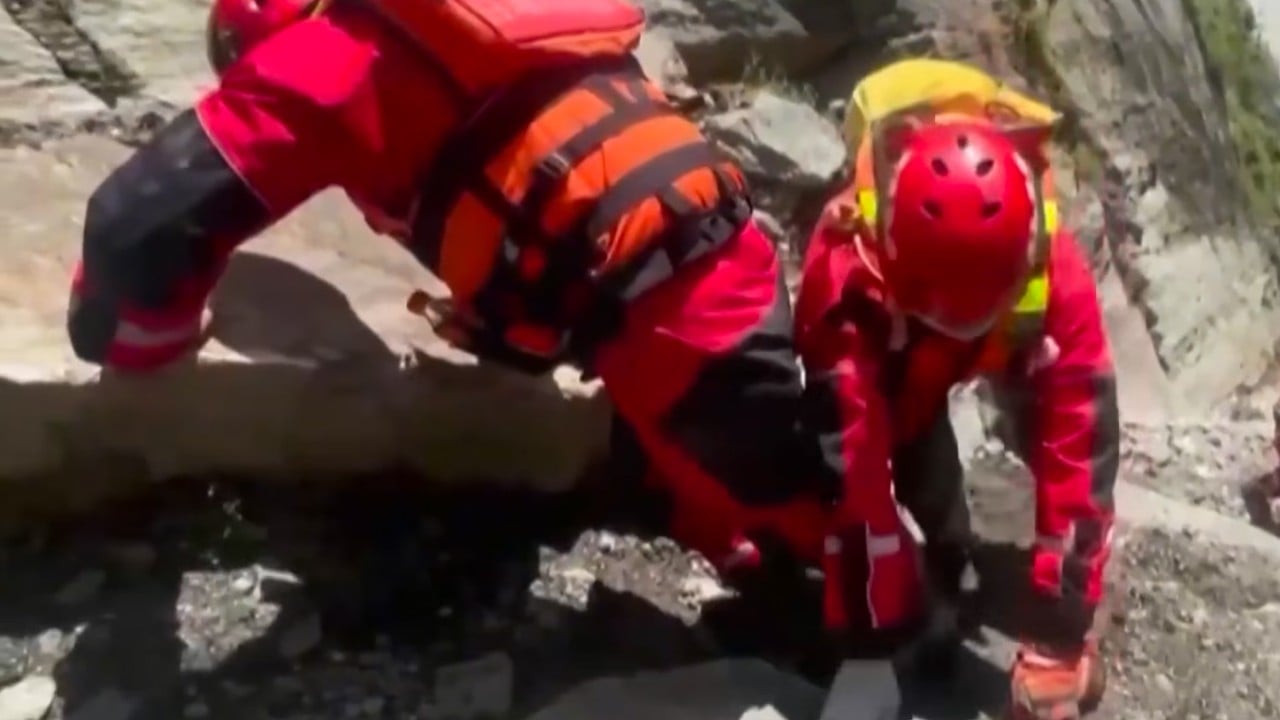
In the aftermath of a devastating mudslide triggered by a collapsing glacier in Nepal, the small port crossing on the China-Nepal border has become a place where the human cost of the disaster is painfully evident. Deputy chief of the Gyirong Border Inspection Station, Gui Xinwei, has been consumed by an unwavering determination not to stop his search for his missing colleagues and family members.
Gui stumbled upon the ruins of the port building that had survived previous calamities, only to find it completely gone. Amidst the debris, he discovered fragments of everyday items like clothing, jewelry, cosmetics, and even a charging cable or phone case, each belonging to someone who vanished without a trace. "These are not just pieces of rubbish," Gui said through tears, "they are the remnants of our loved ones."
The search and rescue efforts have been fraught with numerous challenges, including blocked roads, thick mud, falling rocks, torrential rain, precarious barrier lakes, and the ever-looming risk of secondary flooding. Firefighter Yang Qiqiao, one of the first rescuers to arrive from the city of Shigatze, had to bushwhack through rain-soaked forest for thousands of meters above sea level before reaching the site.
They had to push through a seemingly endless series of mountains to access the disaster area. Once there, they found the area blanketed by thick silt and began their painstaking search through the metre-deep mud, calling out for any survivors.
Yang and his team had to evacuate once when a barrier dam breached, triggering new flooding. They continued their search for days, instructed to look for personal items that could help identify the missing. They found an immigration police officer's vest, a haunting reminder of the lives lost. Engineers and construction crews have been working around the clock to repair the 1.8km stretch of the G216 road destroyed by the mudslide, blocking access to the port site.
They faced immense safety risks, with excavators operating between unstable cliff walls and fast-flowing floodwaters. Operators had to drive blindly, relying solely on feel, as the track was submerged most of the time.
As of Saturday, the Chinese side has counted 43 deaths, while 519 people remain missing, including 261 foreign nationals from 23 countries. On the Nepali side, the death toll has risen to 1,355, with an additional 4,996 people still missing. Over 60 forensic experts are working across three laboratories to identify the victims, and over 993 items have been recovered from the debris. The repairs to the road have finally been completed, and heavy machinery was able to enter the site on September 2.
Written by urgent.news from Reuters Business via SCMP's reporting — not their text. Machine-written — may contain errors; check the original before relying on it.
This story
This is one outlet's version. Read the fullest account.