Hong Kong Jockey Club to offer computer training to more children in Cambodia
The Hong Kong Jockey Club Charities Trust has signed a memorandum of understanding (MOU) with Cambodian education authorities to expand a computational training programme to cover early childhood learning in the Southeast Asian nation. The MOU, which builds on an earlier agreement signed last year to roll out the club’s CoolThink@JC programme in the country’s primary schools, was signed at the…
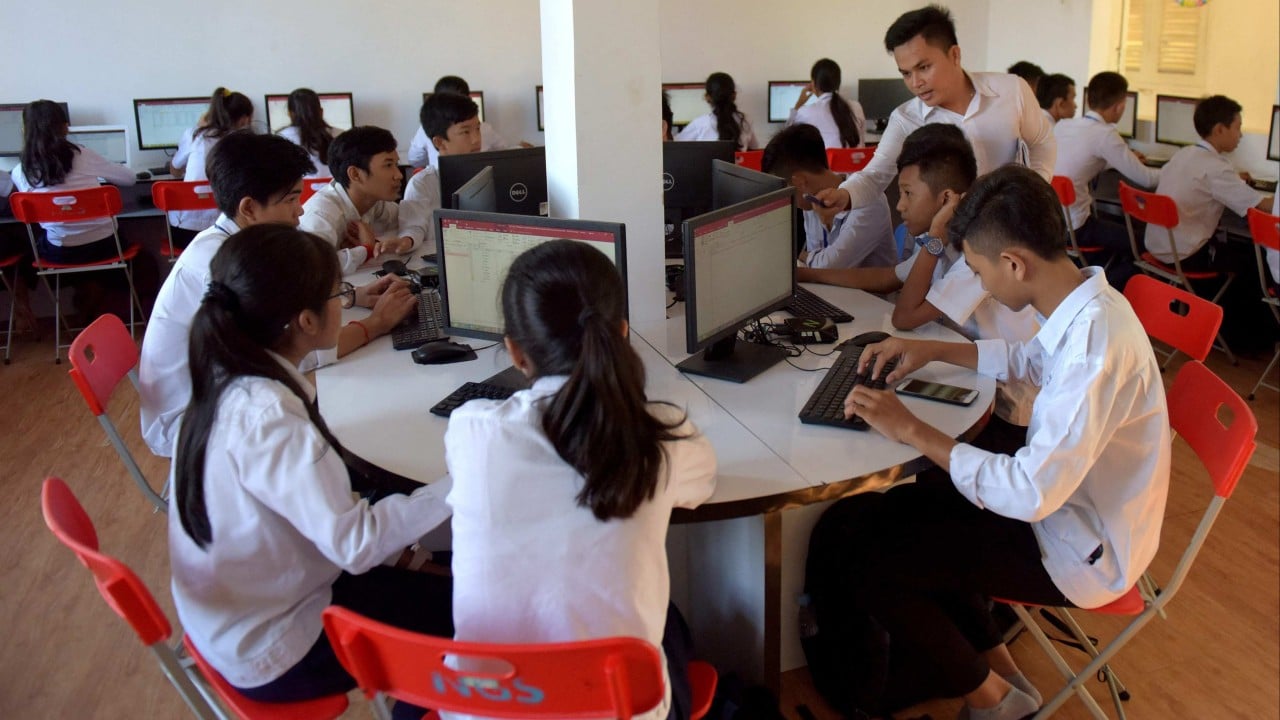
The Hong Kong Jockey Club Charities Trust has entered into a memorandum of understanding with Cambodian education authorities to expand its computational training programme to early childhood learning in Cambodia. This agreement builds upon a previous deal signed last year to introduce the club's CoolThink@JC programme to primary schools in Cambodia.
The original CoolThink@JC programme, launched in 2016, aimed to provide high-quality computational thinking education to primary students in Hong Kong. Collaborators on the programme include the Education University of Hong Kong, City University, and the Massachusetts Institute of Technology. The framework integrates computer programming with logical thinking, problem-solving, and other essential skills.
In 2023, Hong Kong's Education Bureau integrated the programme into public schools, and in 2025, China adopted it through a "sister school" initiative. Last year, the trust signed an MOU with Cambodia's Ministry of Education, Youth, and Sport to bring the programme to the country's primary schools, with 100 public schools set to benefit between 2025 and 2028, impacting approximately 30,000 students.
The latest MOU now extends the programme to early childhood education. During the signing ceremony, Kim Sethany, permanent secretary of Cambodia's Ministry of Education, Youth, and Sports, signed alongside Dr. Gabriel Leung, Jockey Club's executive director for charities and community. Kim highlighted the program's rapid adoption, with 600 teachers utilizing it in the first six months despite the ministry's initial projection of 500 participants.
The programme is currently active in 40 schools, reaching around 16,000 students, and notably, girls constitute the majority of beneficiaries. Kim expressed pride in witnessing young girls collaborate, write code, and lead group projects confidently, emphasizing that equal access to quality tools eradicates gender barriers and allows their potential to flourish.
Written by urgent.news from South China Morning Post's reporting — not their text. Machine-written — may contain errors; check the original before relying on it.
This story
This is one outlet's version. Read the fullest account.