Ghana plans EV skills centre to prepare mechanics for electric vehicle boom
Ghana is considering the establishment of a specialised Electric Vehicle (EV) Capacity Building Centre to train mechanics in the maintenance and repair of electric vehicles as the country prepares for the growth of the emerging industry. The proposed centre is part of efforts to equip Ghanaian mechanics and other technical professionals with the specialised skills […]
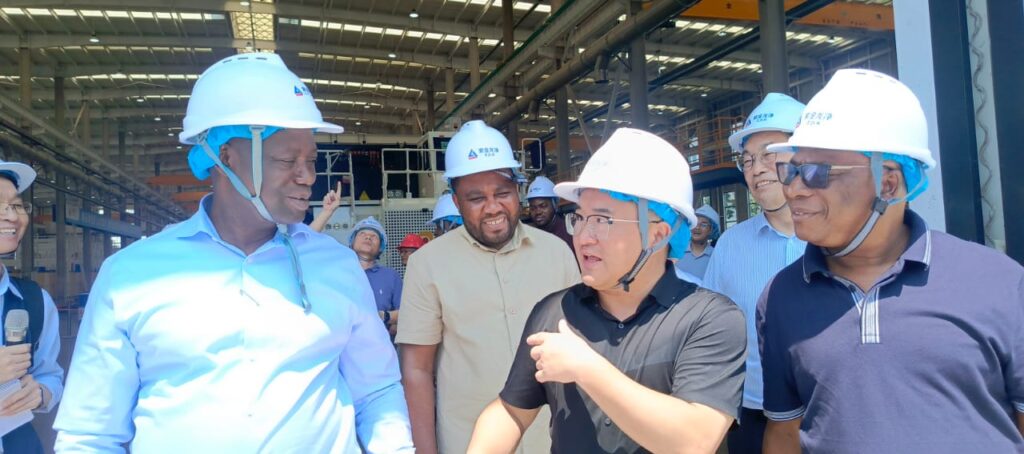
Ghana is considering the creation of an Electric Vehicle (EV) Capacity Building Centre to equip mechanics with the skills necessary to service and repair electric vehicles as the nation anticipates the rise of this burgeoning industry. This initiative is part of broader efforts to equip Ghanaian technical professionals with the specialized knowledge required to diagnose, service, and repair next-generation electric vehicles anticipated in the Ghanaian market.
Emmanuel Armah-Kofi Buah, the Minister for Lands and Natural Resources, revealed that this move becomes crucial as countries worldwide transition from traditional fossil-fuel-powered vehicles to more environmentally-friendly alternatives. He emphasized that Ghana must start preparing its technical workforce for this change by cultivating the human resources needed to support the growth of electric mobility.
During a visit to Longking, a Chinese manufacturer of electric vehicles, the Minister underscored the necessity for a unified national approach to delineate the electric-vehicle industry's role in Ghana and the development of the requisite technical proficiency to sustain it. He highlighted that local mechanics would need specialized training to maintain electric vehicles, whose systems and components differ significantly from conventional internal-combustion vehicles.
Armah-Kofi Buah also proposed that China could play a pivotal role in helping Ghana build the necessary technical capacity, given China’s rapid advancements in electric-vehicle manufacturing and technology. He advocated not only for Ghana to be a market for imported electric vehicles but also to develop local skills and infrastructure to maintain and support them.
China’s EV expansion is not limited to passenger cars; electric heavy-duty trucks are gaining traction in sectors such as mining, ports, factories, and short-haul freight, offering a promising avenue for Ghana's mining, haulage, and logistics sectors. A key technology driving this shift is battery swapping, which can significantly cut vehicle downtime by replacing depleted batteries with fully charged ones at specialised stations.
This technology, coupled with China’s vast lithium-ion battery and electric vehicle manufacturing base, has bolstered the growth of electric mobility. China’s electric heavy-truck market has been expanding, with electric heavy-trucks making up about 44% of new heavy-truck sales in June 2026, a 45% year-on-year increase from the previous quarter.
The International Energy Agency (IEA) estimates that the average range of battery-electric trucks is around 300 kilometres, making short-haul operations a promising early market for the technology. Drawing lessons from China's experience, Armah-Kofi Buah suggested that Ghana could establish an EV Capacity Building Centre to train mechanics, engineers, and other technical professionals in the maintenance and repair of electric vehicles locally.
This initiative would ensure that Ghana's transition to electric mobility is not only supported by the importation and use of electric vehicles but also by the development of local technical expertise to service and maintain them.
Written by urgent.news from MyJoyOnline Ghana's reporting — not their text. Machine-written — may contain errors; check the original before relying on it.