Endangered Sumatran tigers born in Greece as zoos build safety net
The world’s most endangered tigers have started a family in Greece, offering hope for a predator rapidly vanishing from the wild. Three two-month-old Sumatran tiger cubs received identification microchips and their first vaccinations on Tuesday at a zoo near Athens, as part of a global effort to build a backup population. The Sumatran tiger, classified as critically endangered, is found only on…
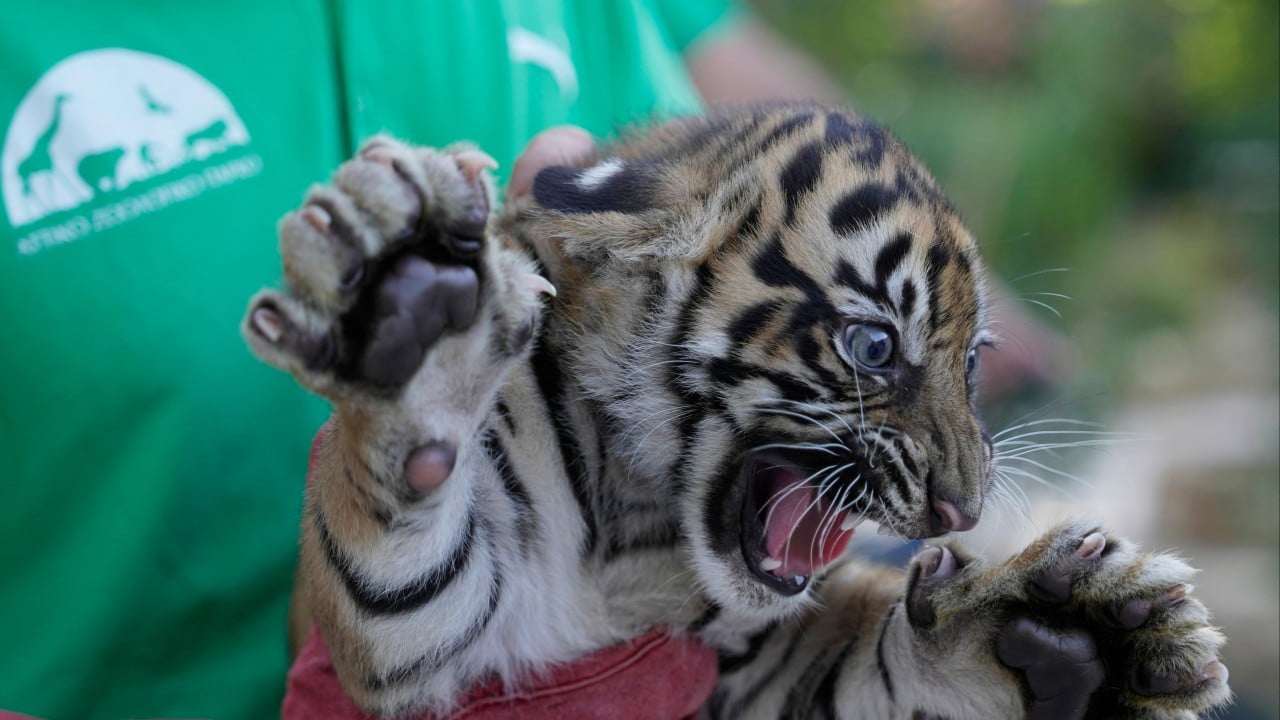
In Greece, a family of critically endangered Sumatran tigers has been born, providing a glimmer of hope for a species rapidly disappearing from the wild. Three two-month-old cubs were identified with microchips and given their first vaccinations at Attica Zoological Park near Athens as part of a global initiative to create a safety net population.
The Sumatran tiger, found exclusively on the Indonesian island of Sumatra, is now classified as critically endangered with fewer than 400 individuals believed to exist in the wild, primarily due to deforestation. Theodoros Babilis, head keeper of cats and monkeys at the zoo, emphasized the tigers' precarious status, stating that they are among the most threatened felines globally.
Zoos across Europe and elsewhere are maintaining a safety population of these animals to potentially reintroduce them into the wild in the future. Despite being the smallest tiger species, males can grow up to 8.4 feet long and weigh up to 309 pounds. The cubs, born in early July to their mother Toba and father Argos (who died of cancer), are expected to be named after characters from Homer's The Odyssey.
Even at two months old, the cubs have developed sharp claws and teeth, making them challenging to handle. Veterinary staff faced difficulties during their vaccinations, requiring assistance to complete the procedure. Dr. Arsenoi Psaroudaki, a zoo and wildlife veterinarian, noted that the tigers are very wild and resist handling, necessitating quick and careful work to minimize stress.
The microchipping procedure involved logging the animals' IDs in a shared database and administering a vaccine to protect against common feline diseases. Dr. Psaroudaki expressed both the demanding nature of the task and the rewarding aspect of contributing to the preservation of this rare tiger species.
Written by urgent.news from South China Morning Post's reporting — not their text. Machine-written — may contain errors; check the original before relying on it.
This story
This is one outlet's version. Read the fullest account.