The $0 Email Engine: How I Used Notion, GitHub, Amazon SES to Outsmart Email Service Providers
Here is how I set up a zero-dollar infrastructure machine, why it completely changes the email workflow
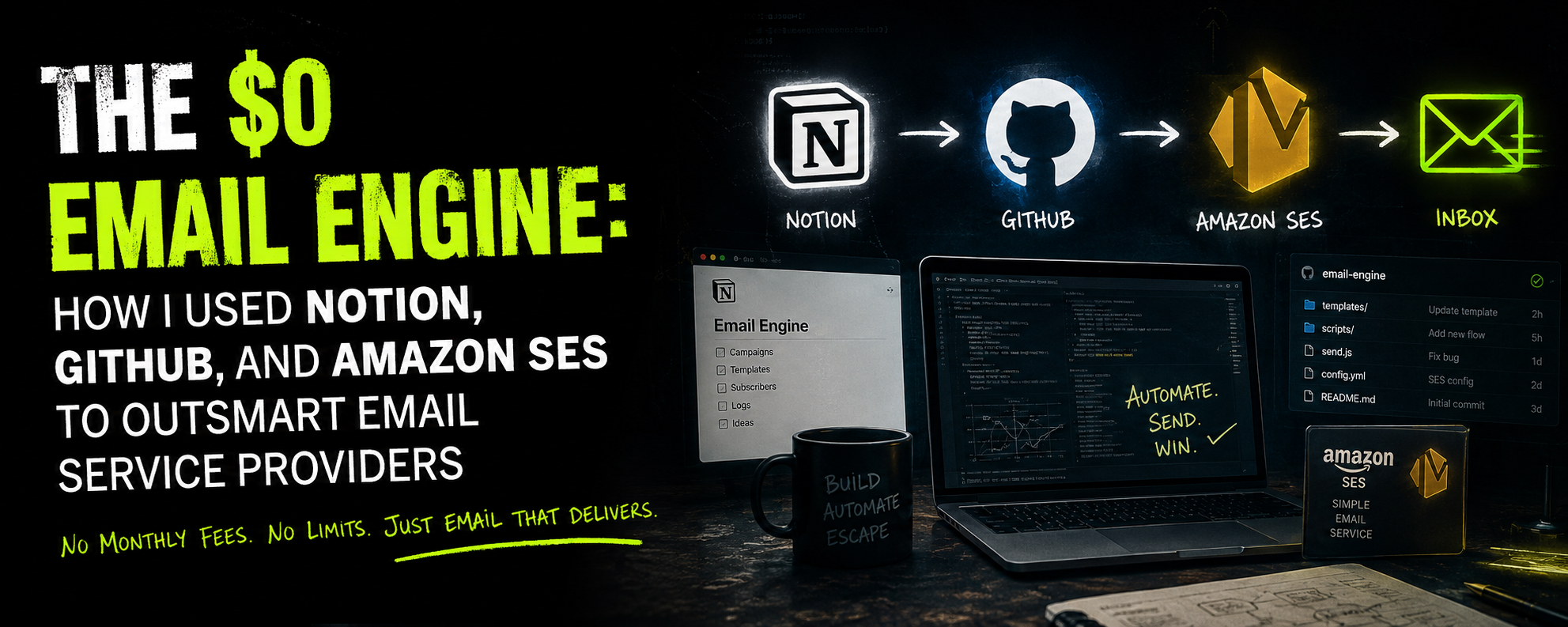
The email marketing industry is notorious for its high costs, charging $300 to $1,000 per month for bloated email service providers (ESPs) such as Mailchimp, SendGrid, and Klaviyo. These providers offer slow, clunky editors, template systems, and dashboards that can become unresponsive when formatting simple elements. As a developer and a Hackernoon editor, the author found this ecosystem frustrating and decided to create a more efficient solution.
To accomplish this, the author leveraged three free developer-friendly tools: Notion, GitHub/GitLab, and Amazon Simple Email Service (SES).
Notion serves as the "frictionless brain dump station" for ideation, drafting, and editing. With zero-friction editing, Markdown support, and modular thinking, the author can break down complex projects into manageable tasks and avoid distractions. GitHub/GitLab acts as the staging and version control layer, allowing for easy rollback in case of CSS errors and providing a free CDN for images.
Finally, Amazon SES offers a cost-effective, transactional email sending service, charging only $0.10 per 1,000 emails—compared to the hundreds of dollars charged by traditional ESPs.
By separating the content creation and code management processes from the email sending infrastructure, the author created a modular, lean email pipeline. This design allows for easy delegation to professional copywriters, making the process more efficient and less prone to procrastination. The next step is to automate this workflow with LLazyEmail, a product designed to further streamline the email marketing process for developers.
Written by urgent.news from HackerNoon's reporting — not their text. Machine-written — may contain errors; check the original before relying on it.