Urgent.News

What's breaking now, across thousands of outlets.

Business

Por que pergunto o que o jovem advogado leu

Ao longo de meus 30 anos de vida profissional, uma pergunta sempre causa desconforto aos jovens candidatos que entrevisto para estágio: “o que você leu, por prazer, nos últimos doze meses?” Conta-se que, como teste, um escritório londrino pedia a seus candidatos apenas uma coisa: que descrevessem a árvore que viam da janela. Os aprovados […] The post Por que pergunto o que o jovem advogado leu…

Throughout my three decades of professional life, a single question has always caused discomfort among young candidates I interview for internships: "What have you read for pleasure in the past twelve months?" The story goes, a London office once asked its candidates to describe the tree they saw out of their window as a test. Those who passed painted it as a "fluffy, leafy tree with bright lilac leaves interspersed with white ones like foam, sparkling in different shades with the light."

Those who failed merely described it as "a very large tree," ending their response with a period. This illustrates the truth of Wittgenstein's maxim that "the limits of my language signify the limits of my world." If one does not read, one does not listen, speak, or see. One observes a distant landscape through a window rather than approaching it fully from the side and contemplating it from all angles, which proves useful in both life and law.

A candidate who responds "I have had no time recently to read," citing the demands of academia, reveals that, despite having the choice of how to spend their free time, they chose not to dedicate themselves to the most influential activity in their future profession. The contentious law practice I specialize in is essentially about managing ambiguities.

A contract may say one thing but mean another; a favorable precedent may have a paragraph that the opposing counsel reads better than we do if we let it. None of this can be resolved with certainty. When I receive a client, a common question is: "What are my chances of winning?" (In percentages, they ask some). The human race is always attached to certainties, forgetting that science thrives precisely on uncertainty.

One who read "Dom Casmurro" reads an initial petition with the same mistrust we have of Bentinho and Capitu, with their "slant-eyed and deceitful eyes." One who read "War and Peace" learned that human motives are complex, and that personality is nothing more than a sum of all our fears, desires, and frustrations — teaching us exactly how lawsuits are born and die.

One who read poetry understands that the order of words changes the product — a routine in interpreting decisions that challenge human comprehension, requiring the ability to assess whether to appeal or not to concede. It is common to see young people say "I do not like public speaking" without being able to replicate (as painful as it may be) that they do not like it because they have nothing to say.

I am not impressed by a candidate fluent in five languages if he does not think in any of them. What I seek, after all, is the reader, this creature on the brink of extinction, trained to question oneself while reading through four hundred pages of an intriguing case. The answer to my question about reading is the only part of the interview where the candidate stops being a résumé and finally exists before me.

Rodrigo Tannuri is a partner at Tannuri Advogados and a graduate of Columbia University Law School. The post "Por que pergunto o que o jovem advogado leu" appeared first on Brazil Journal.

Written by urgent.news from Brazil Journal's reporting — not their text. Machine-written — may contain errors; check the original before relying on it.
Read the original at braziljournal.com →

More in Business

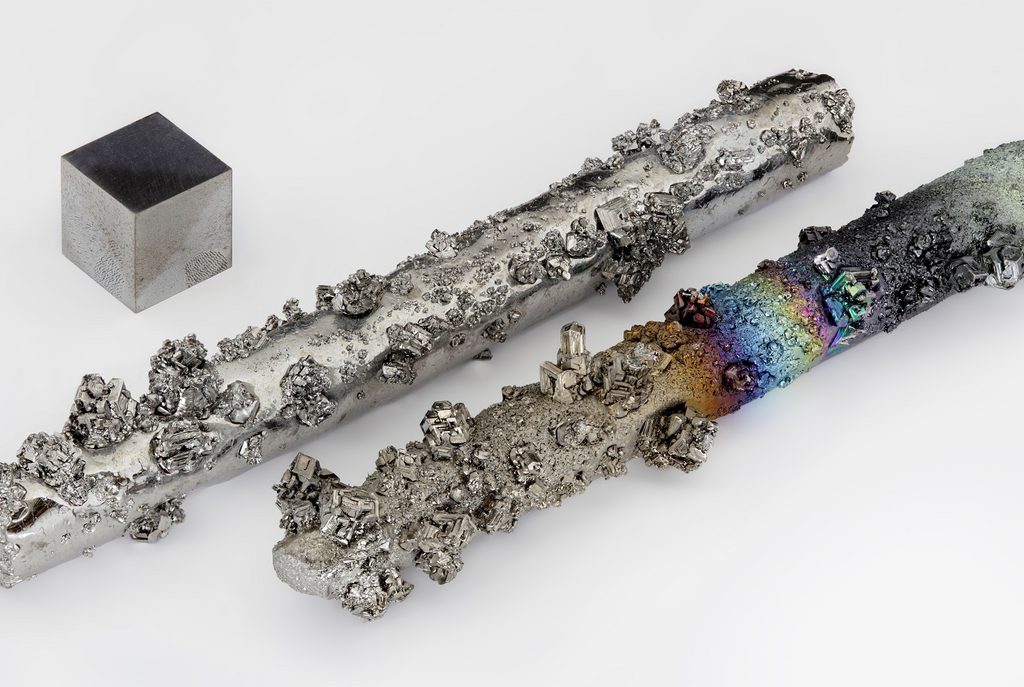
Tungsten, a US$5.4B Metal in 2025, Found in Colombia

What began as a mining exploration campaign in search of gold, silver and copper ended with an unexpected discovery in Caldas, in Colombia’s coffee-growing region: the presence of tungsten, also known as wolfram, one of the strongest and most strategically important metals for the global industry.

Airbus aircraft deliveries to end-August rose 9%

Airbus said in a monthly bulletin that it had delivered 475 jets in the first eight months of the year.

  • Airbus deliveries rose 9% in first eight months of 2026
  • 475 jets delivered from Jan-Aug 2026, up from 434 in 2025
  • 57 deliveries in August, including 11 A330s

More from Monday 7 September →