Huawei unveils new trifold smartphone powered by Tau Scaling Law-based Kirin chip
Huawei Technologies has unveiled its first smartphone powered by a next-generation mobile processor based on the company’s proprietary Tau Scaling Law, continuing its push to boost chip performance while reducing reliance on advanced foreign semiconductor equipment. Speaking at a launch event in Guangzhou on Monday, Richard Yu Chengdong, chairman of Huawei’s consumer business group, described the…
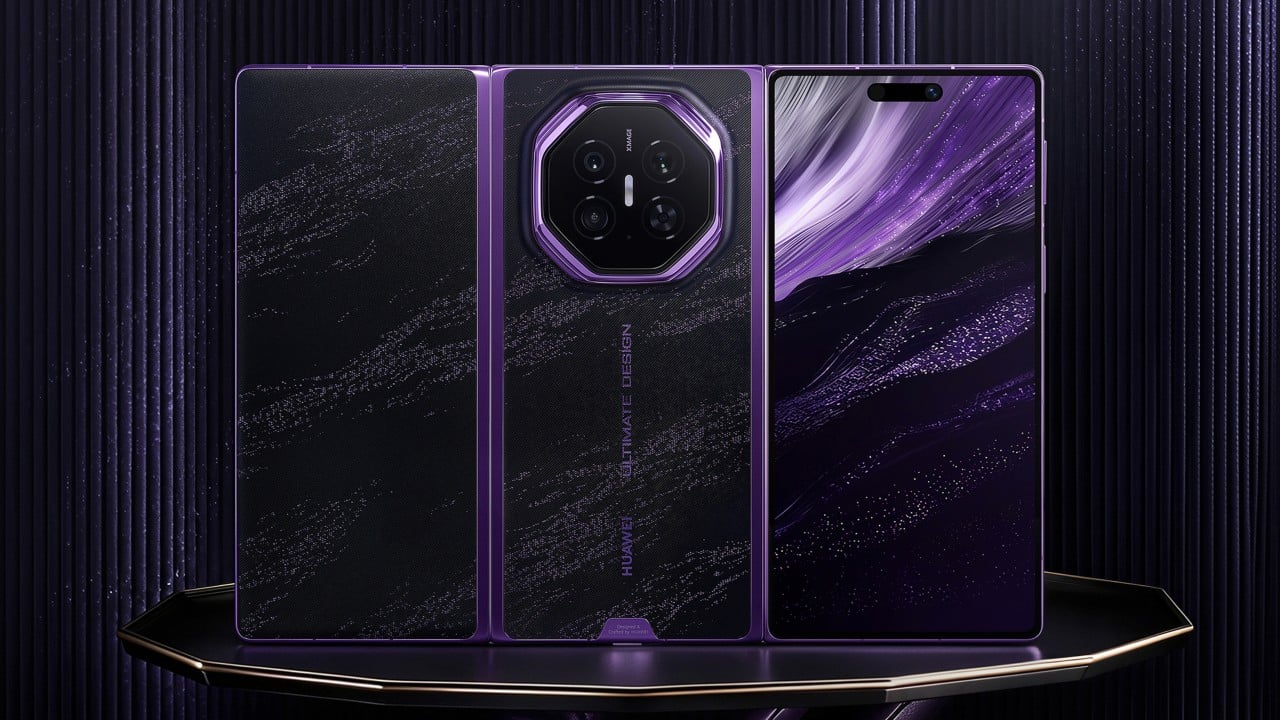
Huawei has revealed its first smartphone powered by a cutting-edge mobile processor based on the company's Tau Scaling Law. At a launch event in Guangzhou, Richard Yu Chengdong, chairman of Huawei's consumer business group, unveiled the Kirin 9050 Pro, touting it as the firm's "most powerful Kirin chip ever". The processor harnesses Huawei's Tau Scaling Law, aiming to enhance semiconductor performance by diminishing signal delays.
One key feature of the new chip, LogicFolding, aims to pack more transistors into a smaller space by reducing signal path lengths. The Kirin 9050 Pro is integrated into the Mate XT 2, a newly unveiled trifold smartphone priced at 19,999 yuan (US$2,980). Yu stated that the chip delivers a 42% performance boost over the previous year's Mate XTs model.
The launch coincides with intensified competition in the foldable phone market, with Xiaomi set to unveil a new foldable model later on Monday and Apple due to reveal its first foldable later on Wednesday. Foldable phone shipments grew by 18% last year, with Counterpoint Research projecting growth to accelerate to 24% this year and 37% in 2027.
The Mate XT 2 also marks the first device to run on the updated HarmonyOS 7. Despite strict export controls limiting access to advanced American chips and semiconductor equipment, Huawei remains committed to innovation. The Kirin chip, code-named "Kirin 2026" in a research paper in July, is based on the Tau Scaling Law and could achieve transistor densities equivalent to a 1.4-nanometre process by 2031 without extreme ultraviolet lithography machines, which face US-led export restrictions to China.
Huawei's heavy investment in chip development, despite rising component costs, has impacted profitability, with research and development spending rising 25% year-on-year to 121.4 billion yuan (US$18 billion) in the first half of the year, while net profit fell 36% to 23.8 billion yuan. However, revenue still grew 9.6% to 467.8 billion yuan.
Huawei continues to dominate the Chinese smartphone market with a 22.6% share in Q2, driven by a 19.4% increase in shipments, according to IDC data. Huawei's Ascend AI chips, as alternatives to China-restricted Nvidia products, are also gaining traction, with AI firms like DeepSeek and Z.ai planning to deploy Huawei chips for AI model training.
Written by urgent.news from SCMP Tech's reporting — not their text. Machine-written — may contain errors; check the original before relying on it.
This story
This is one outlet's version. Read the fullest account.