Huawei unveils new trifold smartphone powered by Tau Scaling Law-based Kirin chip
Huawei Technologies has unveiled its first smartphone powered by a next-generation mobile processor based on the company’s proprietary Tau Scaling Law, continuing its push to boost chip performance while reducing reliance on advanced foreign semiconductor equipment. Speaking at a launch event in Guangzhou on Monday, Richard Yu Chengdong, chairman of Huawei’s consumer business group, described the…
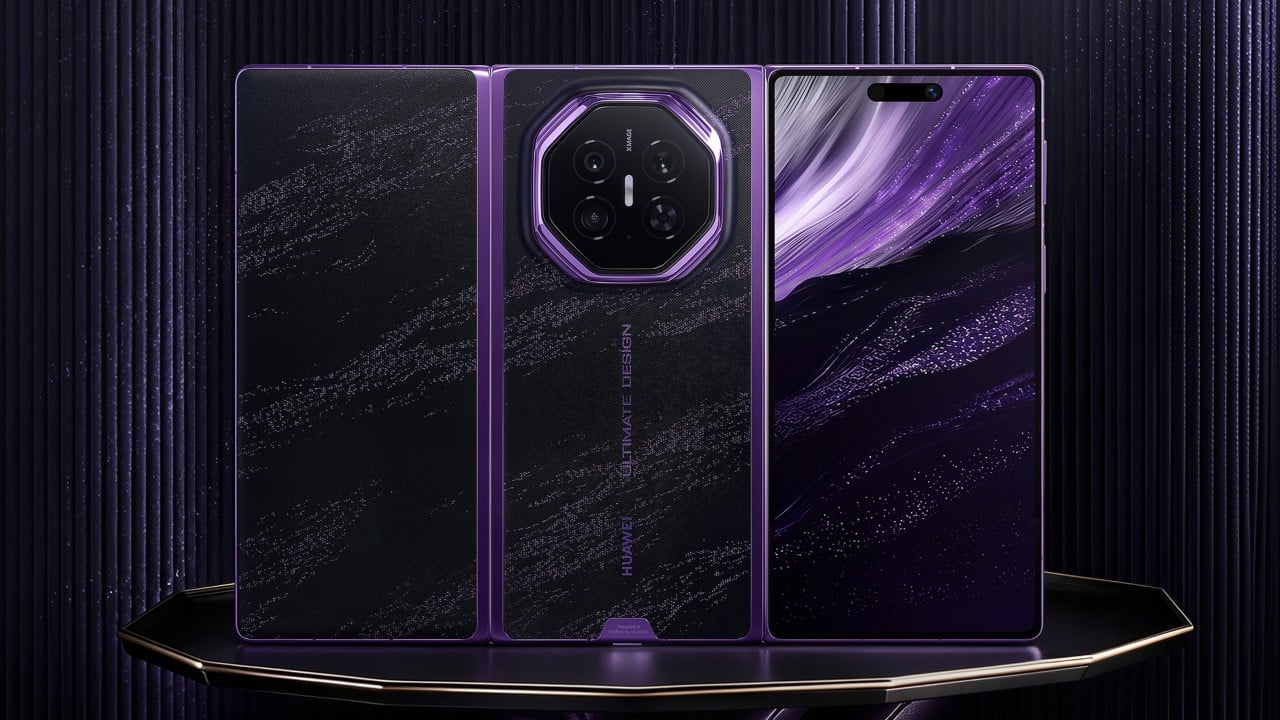
Huawei Technologies introduced its latest smartphone, the Mate XT 2, featuring a powerful Kirin 9050 Pro chip developed using the company's Tau Scaling Law-based architecture during a launch event in Guangzhou on Monday. The Kirin 9050 Pro is Huawei's most potent chip to date, with an enhanced performance of 42 percent over the previous generation of Mate XTs, according to Richard Yu Chengdong, chairman of Huawei's consumer business group.
The new processor incorporates a technology called LogicFolding which minimizes signal paths, enabling more transistors to be packed into a smaller space. The Mate XT 2, priced at 19,999 yuan (US$2,980) for its trifold design, is the first device to run on the updated HarmonyOS 7, Huawei's self-developed operating system, which was launched to developers in June as a beta version with AI coding agents.
The Tau Scaling Law approach, which seeks to improve semiconductor performance by reducing signal delays, aims to achieve transistor densities equivalent to a cutting-edge 1.4-nanometre process by 2031 without requiring advanced extreme ultraviolet lithography machines. Despite strict export controls limiting Huawei's access to advanced American chips and semiconductor equipment and cutting it off from Google's proprietary Android services, Huawei has continued to invest heavily in chip development, leading to a 25 percent year-on-year increase in research and development spending.
However, net profit fell 36 percent to 23.8 billion yuan during the period, but overall revenue still grew 9.6 percent to 467.8 billion yuan, driven by a strong rebound in smartphone shipments and accelerating demand for Huawei's AI processors. Huawei led the Chinese smartphone market with a 22.6 percent share in the second quarter, helped by a 19.4 percent jump in shipments.
Written by urgent.news from South China Morning Post's reporting — not their text. Machine-written — may contain errors; check the original before relying on it.