Dimensionality—neuroscience’s red herring?
Placing too much emphasis on a specific interpretation of dimensionality, or treating it as an end-all quantification of some aspect of neural computation, may hinder progress in understanding the brain.
The debate surrounding the concept of dimensionality in neuroscience has sparked considerable discussion, with some arguing that placing undue emphasis on a specific interpretation may impede progress in understanding the brain. Brains are extraordinarily intricate, boasting billions of neurons and far more synapses than stars in our galaxy.
Even minimal nervous systems, such as those in Caenorhabditis elegans or crustacean stomatogastric ganglia, exhibit an abundance of internal variations that can generate the same behavior.
Starting in the early 2000s, systems neuroscientists observed that neural population activity in various neural circuits, ranging from the locust olfactory system to primate premotor cortex and prefrontal cortex, appeared "low dimensional." When scientists analyzed recordings of dozens to hundreds of neurons using dimensionality-reduction techniques, a small number of components could explain most neural activity.
This observation might seem intuitive, as many factors, including the limited scope of typical laboratory tasks and stimuli, time-dependent dynamics, and recurrence of population activity, constrain the possible states of neural activity.
However, recent studies in mice have challenged the notion that low-dimensional representations are universal, demonstrating that even when viewed from a population perspective, almost all neurons are necessary to capture relevant neural responses to stimuli. This reveals that neural activity can be both "high dimensional" and "low dimensional," without any inherent contradiction.
The confusion arises due to the lack of a universally accepted definition of dimensionality in neuroscience. Researchers often record neural activity from individual cells, with the "full" dimensionality equaling the number of recorded neurons, but neural activity typically explores only a subset of possible states, referred to as the embedding dimensionality.
Furthermore, additional constraints may exist, such as activity existing on a particular surface with curvature or more intricate structure, which could lower the intrinsic dimensionality. Linear dimensionality reduction techniques, like principal component analysis (PCA), can reveal the high-dimensional structure of the data but may not assist in uncovering simpler, more parsimonious explanations within that space.
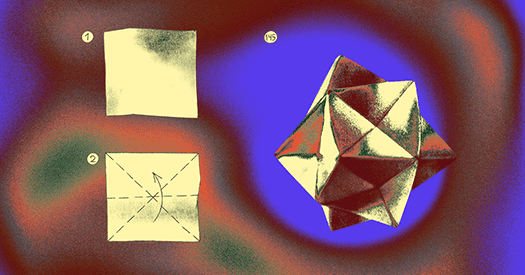
Nonlinear dimensionality reduction techniques, on the other hand, could help uncover the underlying 2D structure of the neural activity, similar to unfolding an origami crane to reveal its 2D representation.
In summary, low-dimensional and high-dimensional representations of neural activity are not mutually exclusive, and both perspectives can be valuable in understanding brain function. The distinction between embedding and intrinsic dimensionality highlights the importance of considering multiple perspectives when interpreting the complex neural representations in the brain.
Written by urgent.news from The Transmitter's reporting — not their text. Machine-written — may contain errors; check the original before relying on it.