Cathay Pacific, Google scale up AI tests to reduce aviation’s climate impact
Hong Kong flag carrier Cathay Pacific and Google are expanding AI-powered flight trials designed to steer aircraft away from contrail-forming zones in the Asia-Pacific region, using the data to inform broader sustainability decisions. Condensation trails, or contrails, formed when aircraft flew through cold, humid patches of air, trapping atmospheric heat and accounting for roughly one-third of…
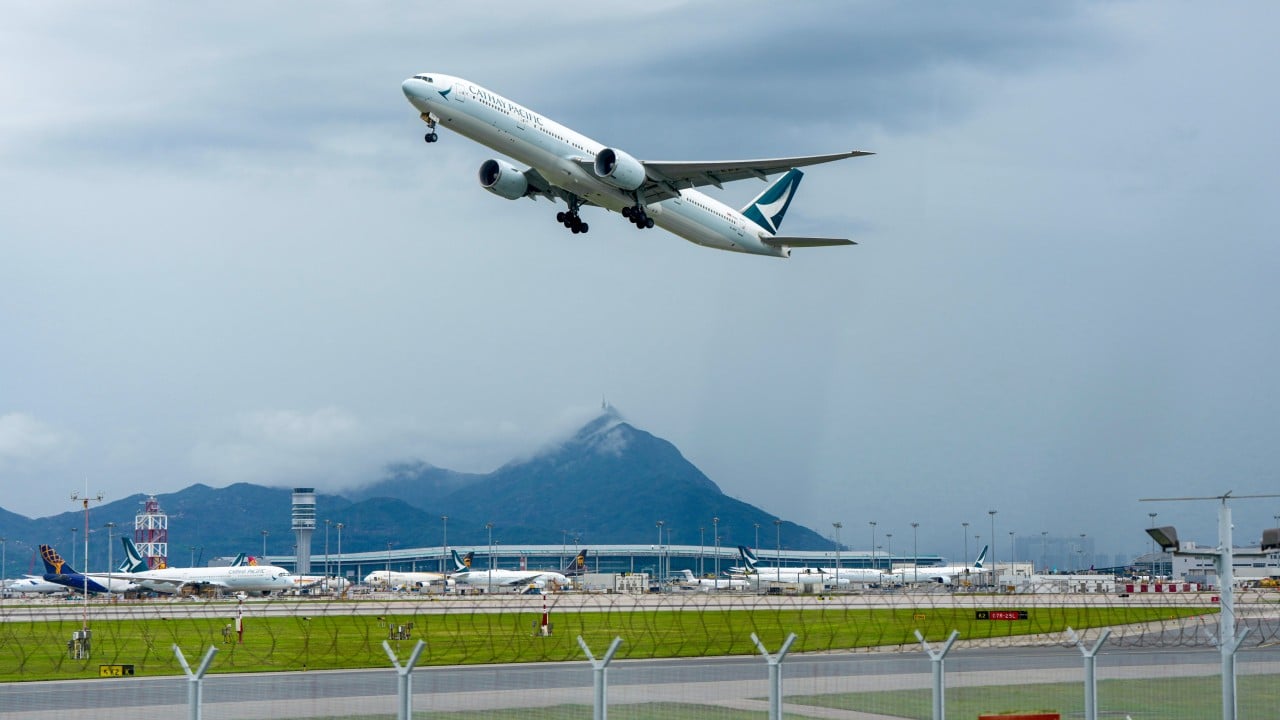
Hong Kong's Cathay Pacific Airways and Google are expanding their AI-powered flight trials aimed at reducing aviation's climate impact. These tests focus on steering aircraft away from condensation trail (contrail) forming zones in the Asia-Pacific region. Contrails, formed by aircraft in cold, humid air, contribute significantly to aviation's climate impact, accounting for about one-third. The trials will include non-governmental organization Contrails.org as a partner.
A randomized controlled trial on ultra-long-haul flights across Asia and transpacific routes will be conducted. This marks an expansion of the partnership into new territory, including larger trials with ultra-long-haul flights. Michael Yue, managing director and general manager at Google Hong Kong, emphasized the potential of predictive AI in finding scalable ways to mitigate contrail impacts on climate.
Cathay Pacific's AI deployment will complement other initiatives like fleet modernization, operational efficiency improvements, and the use of sustainable aviation fuel. The technology delivers flight plans to pilots through an iPad application, with data updated hourly. Grace Cheung, general manager of sustainability at Cathay Pacific, highlighted the importance of international policymaker coordination due to contrails forming in shared airspace.
Lawrence Fong, director of digital and information technology at Cathay Pacific, noted that AI would address broader climate problems beyond contrail mitigation, describing it as just the beginning.
While contrail avoidance does not reduce carbon emissions, it prevents the formation of heat-trapping clouds and offers a cost-effective climate benefit per dollar compared to sustainable aviation fuel. Currently, sustainable aviation fuel accounts for only about 0.3% of global jet fuel. Contrail avoidance is considered a cheap, immediate add-on that can be done with today's aircraft, not a substitute for sustainable aviation fuel.
Pascal Siu, senior research manager and head of green and sustainability research at Our Hong Kong Foundation, emphasized the substantial potential of contrail avoidance due to its status as the single largest non-carbon dioxide warming effect caused by flying.
Written by urgent.news from South China Morning Post's reporting — not their text. Machine-written — may contain errors; check the original before relying on it.
This story
This is one outlet's version. Read the fullest account.