Cathay Pacific, Google scale up AI tests to reduce aviation’s climate impact
Hong Kong flag carrier Cathay Pacific and Google are expanding AI-powered flight trials designed to steer aircraft away from contrail-forming zones in the Asia-Pacific region, using the data to inform broader sustainability decisions. Condensation trails, or contrails, formed when aircraft flew through cold, humid patches of air, trapping atmospheric heat and accounting for roughly one-third of…
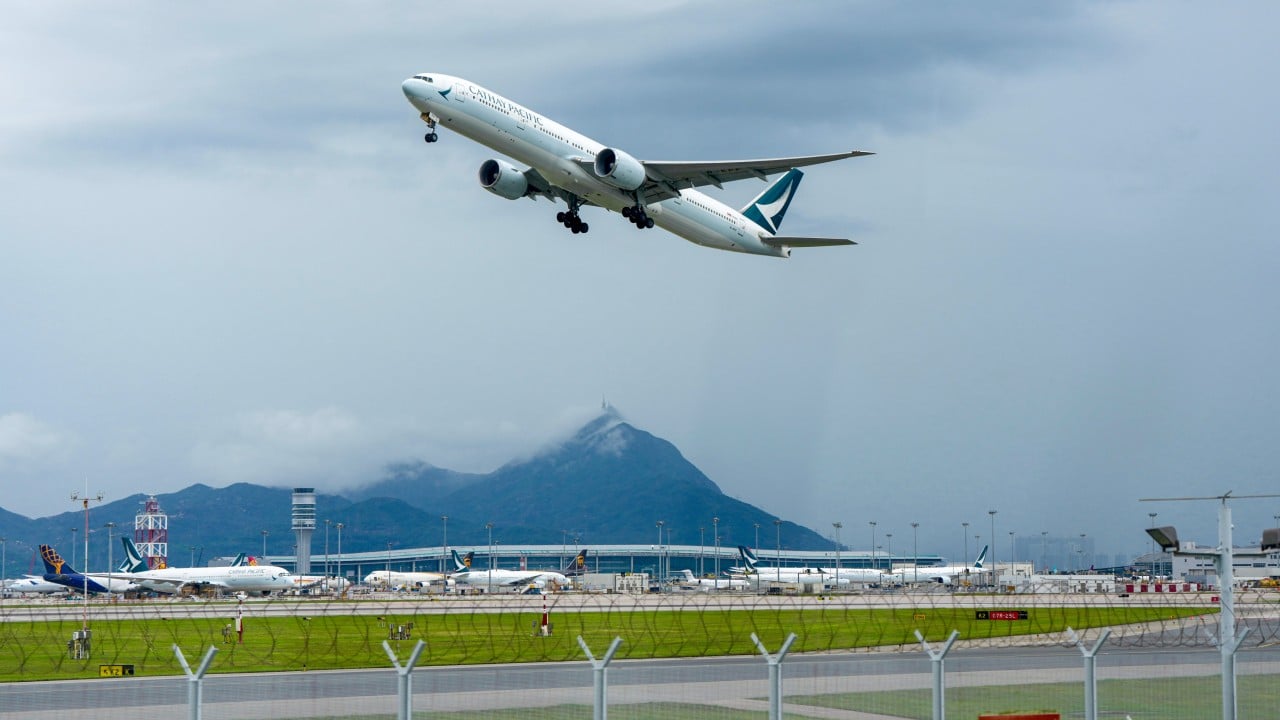
Cathay Pacific Airways and Google are broadening AI-driven flight trials aimed at steering aircraft away from contrail-forming zones in the Asia-Pacific region, with the data to guide broader sustainability decisions. Condensation trails, or contrails, stemming from aircraft flying through cold, humid air, contribute to roughly one-third of aviation's climate impact, as per Kemal Armada, a product manager for climate and AI at Google.
The second phase of trials will incorporate non-governmental organization Contrails.org as a partner. A randomized controlled trial on ultra-long-haul flights across Asia and transpacific routes is slated to commence.
Cathay Pacific, the first commercial airline in the Asia-Pacific to test this technology in live operations and globally in ultra-long-haul routes, is set to expand its partnership with Google in this new phase. This AI-driven approach promises cost-effective and scalable methods to mitigate contrails' impact on climate.
Operational flight plans avoiding contrail-forming conditions are relayed to pilots via an iPad application, with data refreshed hourly during flights. Tony Pringle, a line operations manager and Airbus captain at Cathay Pacific, underlined the scalability of this system within their operations. Grace Cheung, Cathay Pacific's general manager of sustainability, emphasized the importance of international policy coordination, noting that contrails would still form if aircraft from other airlines traversed the same atmospheric zones.
Lawrence Fong, director of digital and information technology at Cathay Pacific, pointed out that AI models would be employed to tackle broader climate challenges beyond contrail mitigation. Pascal Siu, senior research manager and head of green and sustainability research at Our Hong Kong Foundation, highlighted that while contrail avoidance doesn't directly reduce carbon emissions, it prevents the formation of heat-trapping clouds and offers a cost-effective alternative to sustainable aviation fuel.
Contrails represent the most significant non-carbon dioxide warming effect caused by flying, according to Siu. Adjusting the altitude of a select number of flights in optimal cold, humid conditions could substantially reduce this warming, incurring an additional fuel cost of 0.2% to 0.3% across the entire fleet.
Written by urgent.news from South China Morning Post - Hong Kong's reporting — not their text. Machine-written — may contain errors; check the original before relying on it.
This story
This is one outlet's version. Read the fullest account.