Beyond 50 years: AI and energy investment at heart of UAE-Germany economic ties
With five decades of diplomatic and economic ties , bilateral relations between Germany and the UAE are evolving further, with investments in the energy transition, advanced technology and artificial intelligence driving the new phase of growth. This comes into focus as President Sheikh Mohamed is set to begin a state visit to Germany on Wednesday aimed at advancing long-standing ties. The UAE…
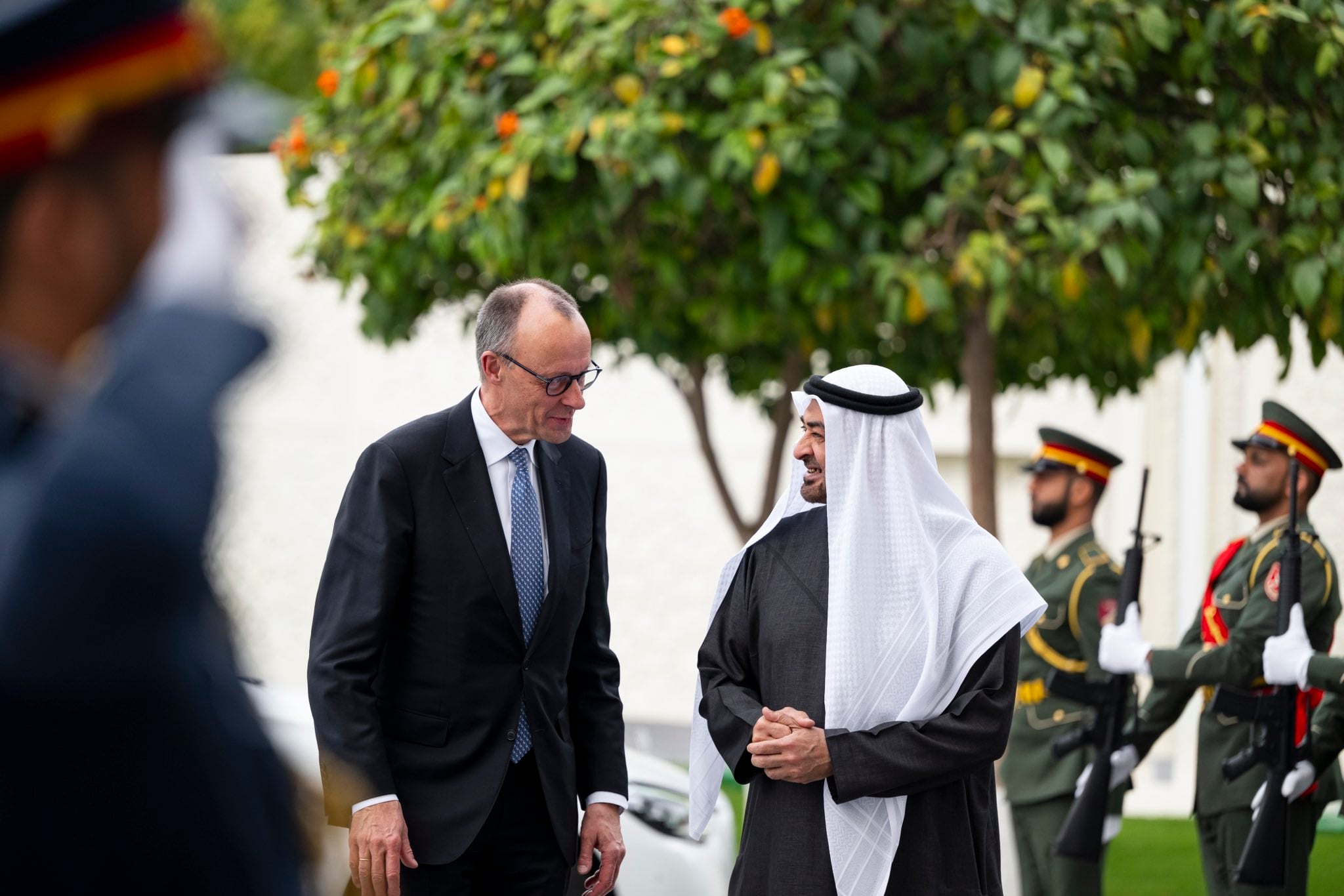
The economic ties between Germany and the United Arab Emirates (UAE) are strengthening as both nations explore new areas of collaboration. President Sheikh Mohamed is set to visit Germany for a state visit aimed at advancing bilateral relations. This visit comes after German Chancellor Friedrich Merz met with Sheikh Mohamed in Abu Dhabi in February, where they signed agreements to boost cooperation in the energy sector.
UAE trade with Germany has seen significant growth in recent years, with non-oil bilateral trade reaching $15.51 billion in 2025, up 14.15% from $13.59 billion at the end of 2024. German exports to the UAE have increased by over 50%, while re-exports have risen by more than 17%. These figures demonstrate the expanding economic partnership between the two countries, which is no longer solely dependent on traditional trade, but also on investments in industrial sectors and advanced technologies like artificial intelligence.
In June, the UAE's Special Envoy for Business and Philanthropy, Badr Jafar, visited Germany to meet with senior executives from major companies and institutions. This visit highlighted the growing role of private sector partnerships in strengthening economic ties. Discussions focused on various sectors, including industry, energy, advanced manufacturing, water technology, mobility, digital infrastructure, space, sport, culture, and innovation.
Key companies such as Airbus Defence and Space, BMW Group, Covestro, Wilo Group, Henkel, energy major RWE, and several others participated in these talks.
The visit followed Chancellor Merz's trip to the UAE in February, during which they discussed long-standing ties and explored opportunities for enhanced collaboration. They signed agreements to collaborate in energy, with Adnoc (Abu Dhabi National Oil Company) partnering with RWE to explore liquefied natural gas supply to Germany and European markets.
Additionally, Masdar and RWE agreed to identify investment opportunities in battery energy storage systems in Germany, while Covestro signed an agreement with Abu Dhabi's Fertiglobe and Ta'ziz to explore opportunities in ammonia and sustainable materials.
Berlin has identified the UAE as Germany's most important economic partner in the Gulf Cooperation Council (GCC). The UAE is currently in advanced discussions with the European Union (EU) to negotiate a Comprehensive Economic Partnership Agreement (Cepa), which would further deepen trade, investment, and cooperation across strategic sectors. With Germany's robust economy and its role in Europe's GDP, the UAE-Germany economic relationship is crucial for the broader UAE-EU economic partnership.
The UAE, home to approximately 2,000 German companies, is actively working to expand its non-oil economic base. The country aims to increase its non-oil foreign trade to $1.089 trillion by 2031, emphasizing the importance of diversifying its economy away from oil. The stronger UAE-Germany ties will not only enhance bilateral cooperation but also provide German companies with greater access to regional markets in the Middle East, Africa, and Asia.
Written by urgent.news from The National Business's reporting — not their text. Machine-written — may contain errors; check the original before relying on it.
This story
This is one outlet's version. Read the fullest account.
- Beyond 50 years: AI and energy investment at heart of UAE-Germany economic ties thenationalnews.com