Wind Power Has Benefitted North Dakota. So Why Have Residents Soured on It?
This story was originally published by Canary Media and is reproduced here as part of the Climate Desk collaboration. George Wolff offered a cautious greeting through the window of my rented F-150. He was fresh from tending livestock, which explained the dried mud on his forehead and shirt. His boots and jeans were soiled with barnyard muck, his ballcap tipped back […]
In the small town of Wishek, North Dakota, wind power has played a significant role in the local economy, but residents have recently grown disillusioned with the technology. George Wolff, a fourth-generation farmer and a resident of the town, shared his thoughts through the window of his F-150, which was still fresh from attending to his livestock.
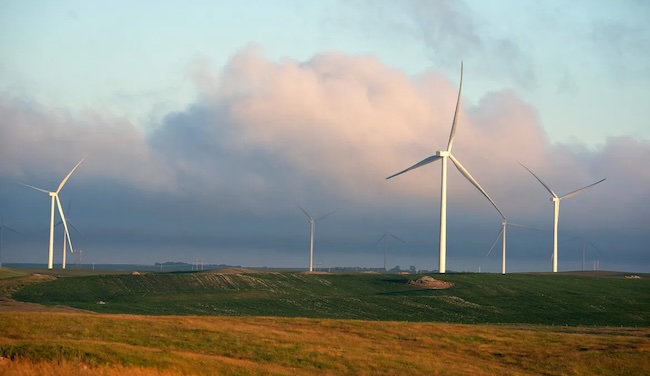
The wind speeds around Wishek were a comfortable 20 miles per hour, with gusts reaching up to 30 miles per hour. Wolff's property is home to a 3-megawatt turbine, part of the newly completed Badger Wind Farm, which is owned by Danish energy giant Ørsted. The farm consists of 92 turbines and has the capacity to generate 250 megawatts of electricity.
This project has been a major economic development for Wishek, a city of 850 people located about 90 miles southeast of Bismarck in McIntosh County. The landowners hosting the turbines receive lease payments from Ørsted, and the county benefits from increased tax revenues based on the project's annual generation. However, for many residents, the initial optimism about the economic benefits of wind power has given way to regret and resentment.
Larry Wald, a lifelong resident and former mayor of Wishek, expressed his concerns about the visual impact of the turbines on the town's landscape. He lamented the loss of the open country that once characterized the area, stating that the turbines are now the first thing residents see when entering Wishek and the last thing they see when leaving.
Other residents, like Lila Raile, feel that the wind turbines have changed the agricultural character of the town and have negatively affected their property values. Raile criticized Ørsted for offering a "dollar-waving" appeal to landowners, who signed lease agreements without any personal connection to Wishek. The county and state officials, she argued, failed to protect the community against the multinational energy company.
The city of Wishek received $150,000 in direct goodwill donations from Ørsted, which was used to build a new firehouse, public swimming pool, and repair the community center. However, the wind turbines remain a point of contention for many residents, who feel that the costs of wind power outweigh the benefits. Ørsted declined to comment on the matter, but the former mayor of Wishek, Brenda Dohn, expressed gratitude for the company's willingness to help the community in exchange for hosting the turbines.
Despite the ongoing debate, wind power continues to play a significant role in the energy landscape of North Dakota, as the state seeks to diversify its energy portfolio and reduce its dependence on fossil fuels.
Written by urgent.news from Mother Jones's reporting — not their text. Machine-written — may contain errors; check the original before relying on it.