These Cyborg Cockroaches Could Save Your Life
The team embedded electrodes into live cockroaches, then outfitted them with cameras and injection devices to deliver medication via remote control.
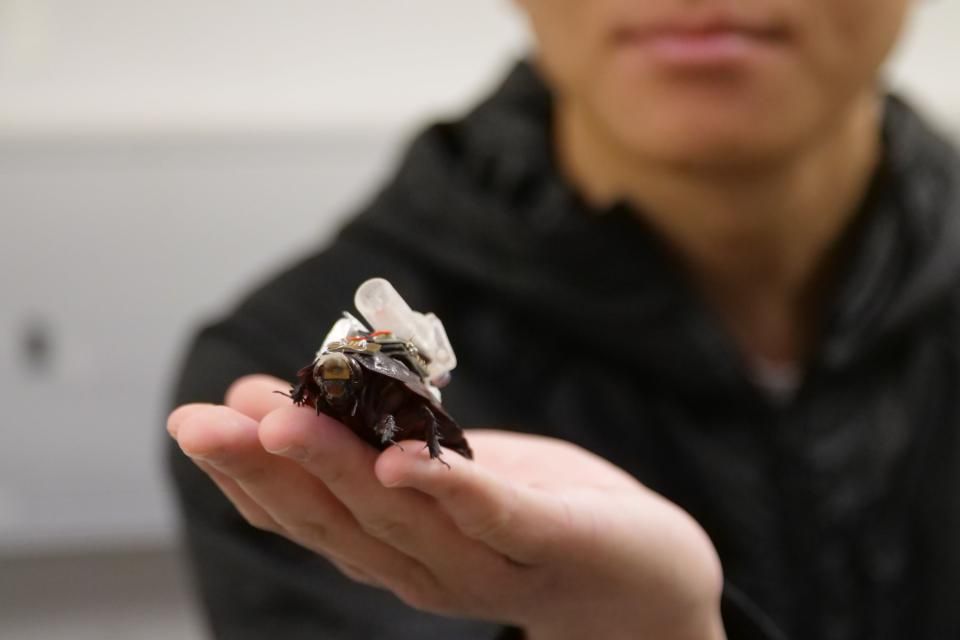
A research team from the University of Queensland and the University of New South Wales has developed the "Paraborg," a cyborg cockroach designed to aid in search and rescue missions. The cockroaches could potentially administer first aid to victims in disaster zones, providing crucial assistance to human rescuers. The Paraborg was developed using the giant burrowing cockroach found in northern Queensland.
This particular species was chosen for its large size, which allows the cockroaches to carry up to 1.5 times their body weight. The team created two types of Paraborgs, each with different functions. One variety is equipped with a camera to film the condition of victims, while the other features an automatic injection mechanism for dispensing medication.
Despite the addition of electrodes and microchips, the cockroaches maintained their normal movements. The researchers controlled the cockroaches' movements by applying electrical stimuli to their antennae and cerci, sensory organs at the rear of the abdomen. By stimulating each antenna independently, they could steer the roach in different directions, while stimulating both cerci controlled its speed.
The injection mechanism works by using a syringe system that breaks a seal triggered by a chemical reaction involving citric acid and baking soda, delivering a measured dose of medication. In a demonstration, the researchers remotely controlled a Paraborg to travel through three checkpoints and administer an injection to a simulated target, achieving a success rate of 95 percent for injections made within 150 millimeters of the target.
The overall success rate for the entire sequence of tasks was 72 percent. The team also showcased the ability of cyborg cockroaches to work together, with one cockroach locating a simulated target while another injected medication. While the study's results are promising, the researchers acknowledge that the experiment did not replicate the complex environmental conditions found in real disaster scenarios.
They hope that, given sufficient resources, cyborg insect rescue teams could be deployed at actual disaster sites within five to 10 years.
Written by urgent.news from Wired Science's reporting — not their text. Machine-written — may contain errors; check the original before relying on it.
This story
This is one outlet's version. Read the fullest account.