The political cost of unconditional cash transfers
Linking benefits to socially desirable outcomes produces broader developmental gains
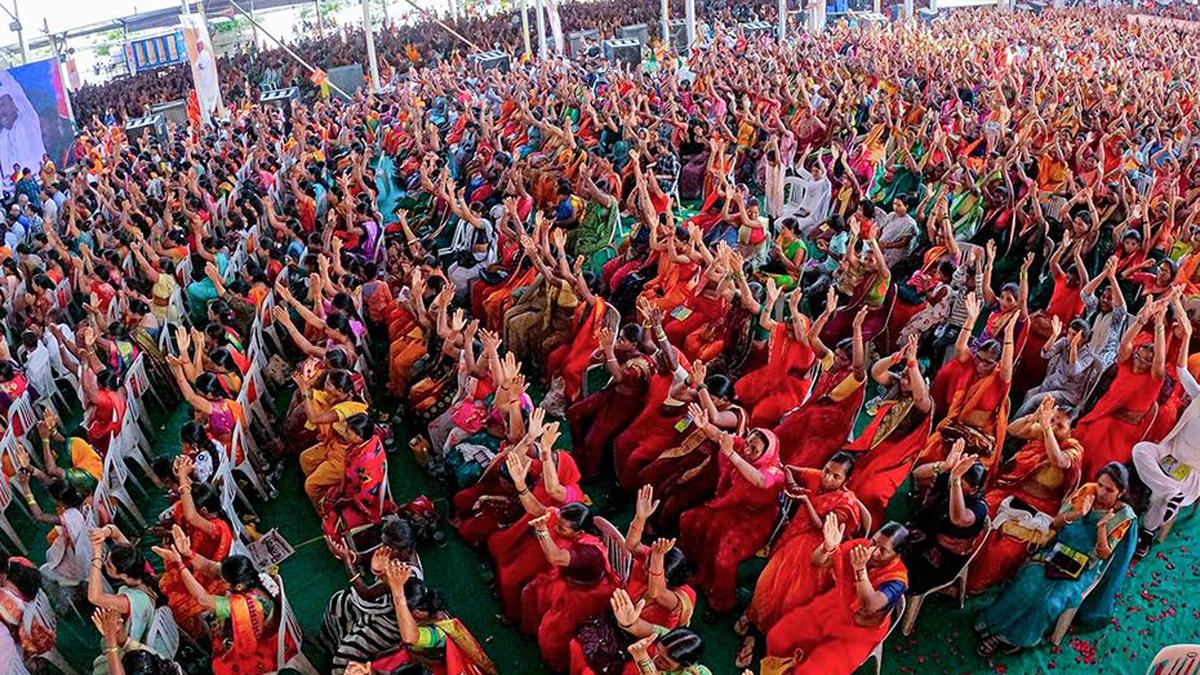
Unconditional Cash Transfer (UCT) schemes have emerged as a significant electoral tactic in India since 2020, especially for winning over women voters. Examples include the Kalaignar Magalir Urimai Thittam in Tamil Nadu, Lakhsmir Bhandar in West Bengal, and Gruha Lakshmi Yojana in Karnataka. However, despite the increase in cash distribution before the 2026 elections, some governments that implemented these schemes were defeated. A potential reason for this loss could be the political cost associated with UCTs.
These schemes, while well-intentioned and aiding financial support to women, advance SDG 5.4, which aims to acknowledge women's unpaid domestic and care work. According to the Ministry of Finance's latest Economic Survey, states are set to spend around $18 billion on UCTs in 2025-26, with a major portion targeted towards women. Yet, critics argue that these schemes act as electoral "freebies," requiring expenditure shifting or larger fiscal deficits, thereby reducing resources for productive investments like employment generation and self-employment programs.
Targeting errors in UCT schemes, whether real or perceived, impose substantial political costs. For instance, the Kalaignar Magalir Urimai Thittam scheme, which promised ₹1,000 per month to all women-headed households before the 2021 election, faced fiscal constraints leading to eligibility restrictions based on income, land ownership, and other parameters by September 2023.
Despite initially covering 1.13 crore women, additional 16.94 lakh beneficiaries were added in December 2025 due to complaints. The scheme cost ₹13,807 crore in 2025-26, yet dissatisfaction persisted, with aggrieved women believing they were unfairly excluded.
Similarly, the Lakshmir Bhandar scheme, introduced in 2021 to provide monthly assistance to women, faced allegations of including non-residential citizens. Though benefits were enhanced before the 2026 election, the incumbent government lost power. Other schemes like Maharashtra's Mukhya Majhi Ladki Bahin Yojana and Karnataka's Gruha Lakshmi Scheme also encountered inclusion and exclusion errors respectively.
These experiences underscore that political costs arise not only from actual errors but also from perceived ones, where individuals who fail to meet eligibility criteria may still feel unfairly treated, and those who legally qualify may be perceived as undeserving due to their relatively higher affluence. Such perceived targeting errors can be as politically consequential as actual administrative mistakes.
Written by urgent.news from The Hindu's reporting — not their text. Machine-written — may contain errors; check the original before relying on it.