Scientists discover previously unknown brainwave chains that organize memory during REM sleep
A new study reveals that during REM sleep, the brain uses repeating chains of rapid electrical waves to replay and organize memories. The findings highlight how different sleep stages work together to store our daily experiences.
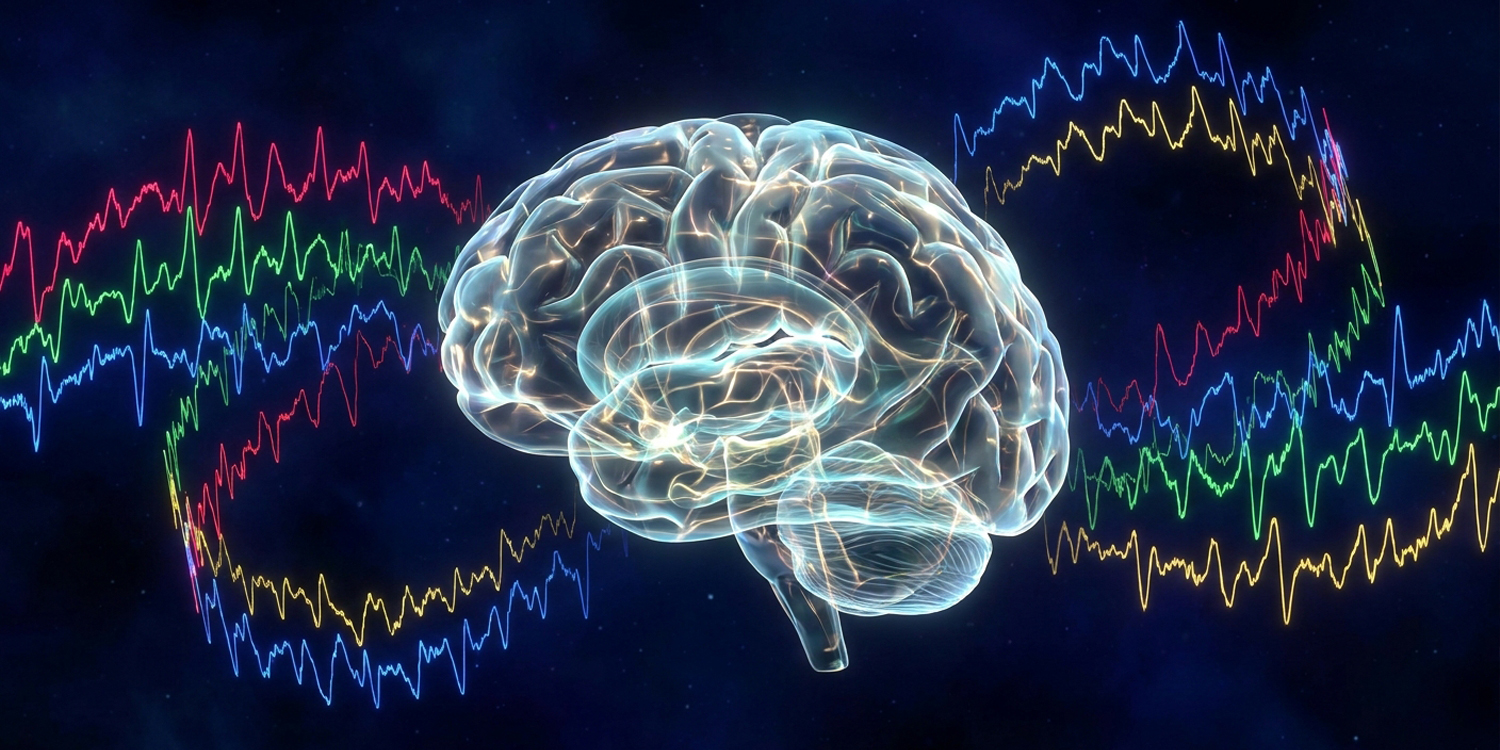
A recent study in rats has revealed that the brain generates repeating chains of rapid electrical waves during the rapid eye movement (REM) phase of sleep to organize and replay memories in a precise manner. These high-frequency brainwave chains facilitate communication between various brain regions and regulate activity in memory centers.
The research, published in the journal eLife, explores how prefrontal and hippocampal dynamics differ during high-frequency electrical events across both NREM and REM sleep stages. Memory consolidation, the process of turning fleeting recent experiences into stable long-term memories, heavily relies on the interaction between the hippocampus and the prefrontal cortex.
While sharp electrical waves coordinate memory replay between these two areas during deep non-REM sleep, the role of REM sleep in this dialogue has been unclear. In the study, researchers monitored the brain activity of 10 adult rats as they learned a spatial memory task, navigating a W-shaped maze for rewards. The rats' brain activity was continuously tracked during learning and subsequent sleep sessions, with surgically implanted tetrodes recording electrical rhythms and individual neuron firing patterns.
The researchers categorized the rats' sleep into NREM and REM stages and detected rapid events in both stages. During NREM sleep, prefrontal cortex ripples triggered massive, synchronous bursts among prefrontal neurons. REM sleep revealed similar rapid events, termed high-frequency oscillations (HFOs), occurring in repeating chains roughly every 130 milliseconds, aligning with the theta wave rhythm.
Unlike NREM sleep's massive bursts, REM HFO chains involved sparse, sequential neuron firing, indicating a more precise and orderly memory replay. REM reactivation showed increased synchronization between the prefrontal cortex and hippocampus, engaging specific hippocampal neurons that were silencing during prefrontal ripples in NREM sleep.
The findings highlight how alternating NREM and REM sleep stages work together to adjust and tune memory circuits, contributing to memory consolidation.
Written by urgent.news from PsyPost's reporting — not their text. Machine-written — may contain errors; check the original before relying on it.