Peace talks rich in symbolism but fundamental differences between Russia and Ukraine remain
Despite talks between US envoys and both Putin and Zelensky, the expectation in Kyiv is the fighting will continue, writes James Landale.
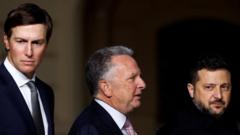
The peace talks held in Kyiv carried significant symbolic weight, as Donald Trump's envoys arrived on Ukrainian soil for the first time since Russia's full-scale invasion. The US diplomats, Steve Witkoff and Jared Kushner, travelled by train to avoid Russian drone attacks on their location, the Kremlin. Ukrainian President Volodymyr Zelensky welcomed the US envoys at the iconic Saint Sophia Cathedral in Kyiv, situated just a few yards from where Russian drones had recently targeted the country's security services.
Both sides engaged in talks for several hours, with additional European national security advisers, including the UK's National Security Adviser Jonathan Powell, joining later. Following the meetings, all parties expressed optimism about having held substantive discussions and were hopeful of reviving past trilateral talks involving the US and Europe.
However, fundamental differences remained between Russia and Ukraine. The US envoys had just returned from Moscow, where Russian President Vladimir Putin had claimed his troops had made tangible advances on the battlefield. Meanwhile, Ukrainian officials reported that in August, they had gained more territory than they lost, while Russia suffered 42,000 casualties.
Putin reportedly told the US envoys that addressing the root causes of the conflict was essential, a reference to his longstanding strategic demands that Ukraine cede territory, renounce NATO membership, and decrease the size of its army.
Zelensky emphasized that Ukraine would require strong and clear security guarantees, including a robust army, and expressed no willingness to give up any territory in the eastern Donbas region, which he described as "difficult." Witkoff acknowledged that progress had been made but noted that both sides would need to make compromises to bridge the gap between them. Despite these efforts, it remains unclear if either side is willing to make the necessary concessions.
The outlook for the conflict in Kyiv is grim, with the expectation that fighting will continue and the country will face a challenging winter ahead. Some diplomats suggest there may be a window of opportunity for a possible settlement next spring, but others remain less optimistic. Zelensky thanked the US envoys for their visit, citing the short-term pause in air strikes agreed upon by both sides as a brief respite for the people of Kyiv. However, few expect this ceasefire to last long.
Written by urgent.news from BBC World's reporting — not their text. Machine-written — may contain errors; check the original before relying on it.
This story
This is one outlet's version. Read the fullest account.