Nokia, Ericsson, IBM, to Blackberry: How humbled tech giants reinvented for a comeback
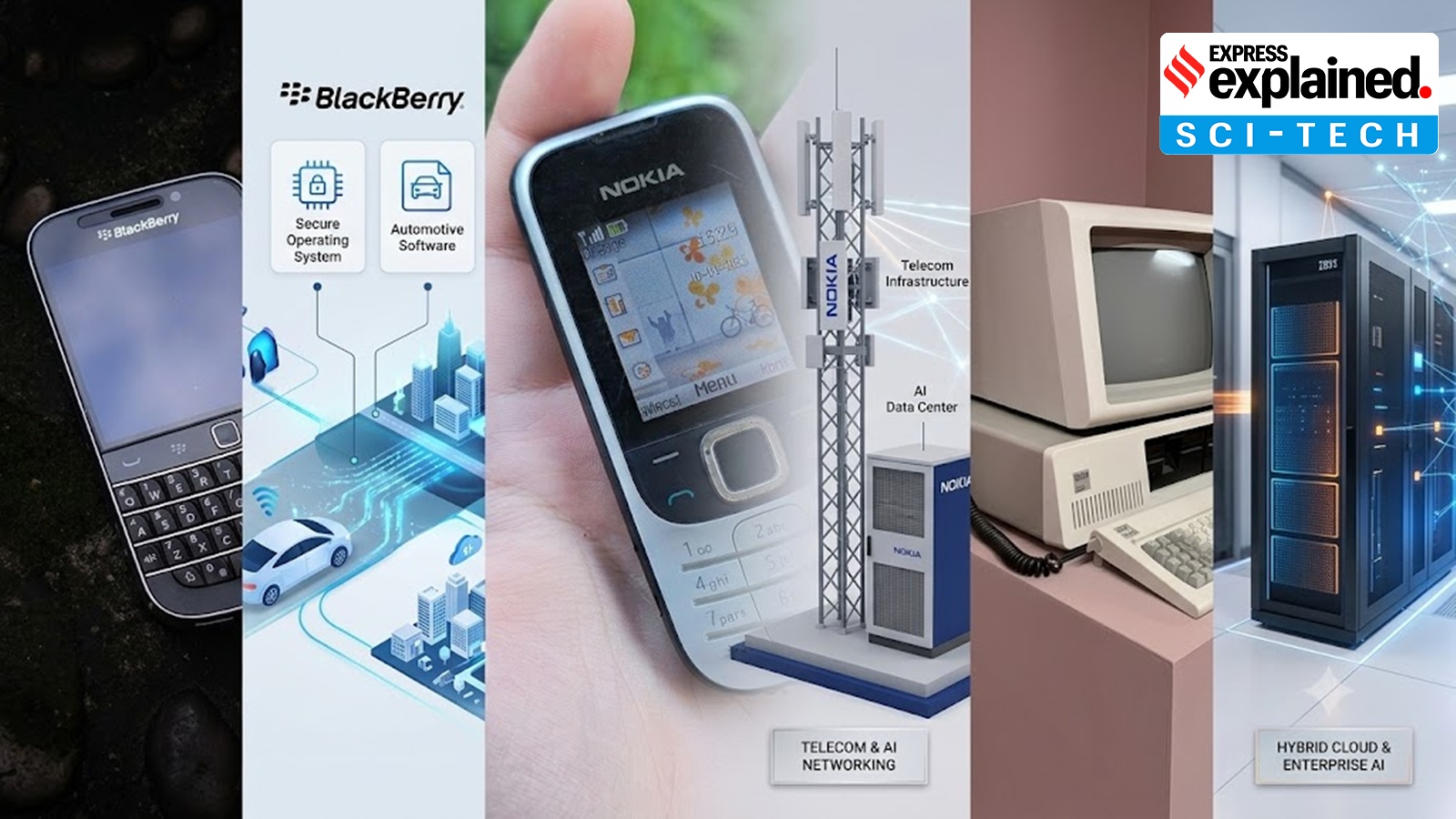
In the electronics industry, established brands often reinvent themselves by exiting products that defined them and returning in a new form. BlackBerry, a Canadian smartphone maker, was once on the brink of collapse due to the decline of its handset business. However, it has since become a profitable enterprise and software company, with its shares increasing by over 100% in the past year.
Nokia, the world's largest mobile phone manufacturer, now primarily earns revenue from providing telecom and networking infrastructure, positioning itself for the AI data centre boom. IBM, known for popularising personal computers, exited the PC market two decades ago and now focuses on enterprise software, hybrid cloud, AI, and high-end computing.
These companies typically reinvent by leveraging less visible technologies they developed, such as software, patents, networks, or enterprise infrastructure, when facing disruption or commoditization in consumer hardware. This reinvention is distinct from technology giants that started in entirely different businesses before finding their eventual calling.
Samsung, for example, began as a trading company dealing in dried fish and groceries before entering electronics, while Nintendo started as a playing card company before moving into video games and handheld gaming consoles. Corporate turnarounds, however, come with risks. Aswath Damodaran, a professor of finance at NYU's Stern School of Business, warns that companies often fall into the trap of acting their age or trying to be young again, leading to significant value destruction.
Companies must act according to their stage in the life cycle, or risk falling victim to consultants and "plastic surgeons" of business who promise to make them young again. BlackBerry's reinvention involved shifting from consumer smartphones to QNX, its operating system and software platform used in cars and other embedded systems, and secure communications software for governments and businesses.
This transition led to a positive cash flow in the quarter ending May 2026 and a significant recovery in the company's market value, now valued at around $5 billion. Nokia, once the world's biggest mobile phone maker, pivoted from handsets to telecommunications infrastructure, expanding through acquisitions like Alcatel-Lucent and Infinera.
This infrastructure focus led to a 49% year-over-year increase in AI and cloud sales in the first quarter of 2026, while its Optical Networks business grew by 20%. IBM, which popularized personal computers in the 1980s, deliberately shifted away from PCs and towards services, software, and enterprise computing. Selling its PC division to Lenovo and acquiring Red Hat allowed IBM to focus on hybrid cloud and AI, with its Red Hat hybrid cloud revenue growing by 11% in the second quarter of 2026, and distributed infrastructure revenue rising by 37%.
Ericsson, once a major mobile phone brand in the 1990s, also transitioned from phones to networks, reflecting a similar pattern of reinvention as Nokia.
Written by urgent.news from The Indian Express's reporting — not their text. Machine-written — may contain errors; check the original before relying on it.