‘Made by Malaysia’ Belanjawan 2027: Pengajaran daripada kebangkitan kuasa besar China
Kita mempunyai ilmu, tetapi mekanisme yang menghubungkan ilmu dengan tindakan belum cukup tangkas.
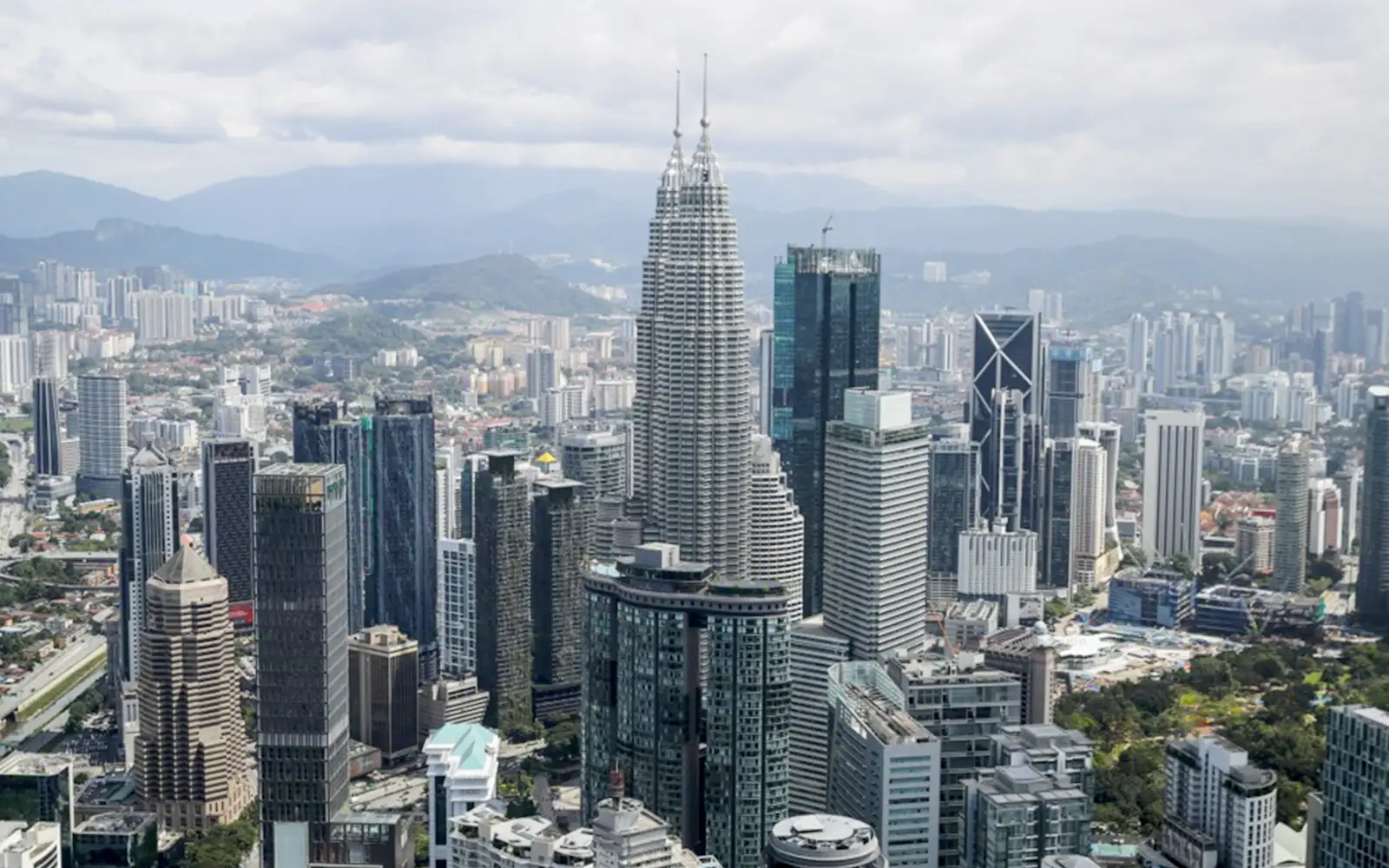
Malaysia is aiming to shift beyond merely being a manufacturing hub. In its 2027 budget, the government emphasized the aspiration of "Made by Malaysia," to create more products, technologies and intellectual property, designed, developed and owned by Malaysians. Semiconductors, artificial intelligence (AI), digital economy and energy transition sectors continue to be identified as strategic for the nation.
The figure is staggering, with Malaysia recording RM218.5 billion of investment approvals in the first half of 2026, expected to create nearly 100,000 jobs. However, for a country aiming to climb to a high-value economy, the primary concern isn't just the amount of investment coming in. More importantly, how much capability, technology and value ultimately becomes ours.
For this, we lack foundational support. We also lack universities, researchers, engineers or talent. The harder question is: why does so much of our research still take too long to become technology, products, solutions and economic strength? This question resurfaced after attending The 2nd China-Southeast Asia Kerry Youth Scientist Forum in Nanjing, which focused on China-Southeast Asia: Industrial Trade, Green Development and Common Prosperity in a Changing Global Landscape.
Every time I attend a conference in China, I am not only interested in what is discussed, but also how it connects knowledge to national issues. They can discuss trade, technology, green development and common prosperity within a clear framework, meaning knowledge should ultimately give rise to capability. While China is not the model we need to copy literally, there is something worth learning: how a country takes knowledge and doesn't lose its own.
During a discussion at the forum, a colleague told them about adapting a Western approach to fit their own values. It reminded me of the long-held concept of 中体西用 (zhōng tǐ xī yòng), meaning learning from China as the foundation, learning from the West as beneficial. Simply take the best technology, methods and knowledge from abroad, but don't surrender the right to determine how everything is used.
China learns from the West without having to become the West. The difference lies between borrowing tools and borrowing direction. The second lesson is more closely related to Malaysia's current challenge, where China is seriously narrowing the gap between knowing and doing. Knowledge continues to be advanced and translated into technology or foundations, then funded, tested, developed and evaluated.
Research is not considered complete until a paper is published. Its value is tested when it enters factories, markets, communities or government systems. This formula and model of the science cycle and knowledge chain should become practice in Malaysia as well. In China's tradition of thought, there is the concept of 知行合一 (zhī xíng hé yī), unity between knowledge and action.
Knowledge that is not translated into action is not considered complete. Today, this ancient philosophy seems to have breathed new life through closer interaction between universities, government, industry, financing and implementation. The success examples show their agenda is poverty alleviation, reducing 800 million people out of severe poverty in about four decades - a social transformation scale hard to match.
China's 2021 declared elimination of absolute rural poverty. The scale, measurement and approach of China can be debated, but the most important is the ability to translate knowledge into action on a massive scale. Poverty alleviation's foundation doesn't stop at national targets. The poor are explicitly identified, local conditions are mapped and the form of intervention is tailored to each need.
This is what I mean by completing the science chain and practice. Knowledge gives rise to foundations; foundations are translated into programs; programs are implemented to the field; results are evaluated and improved. Malaysia is not starting from nothing. We have good universities, researchers, engineers, mature semiconductors and electronics ecosystem, decades-long semiconductor industry and numerous innovation funds.
We also want to move from traditional strengths in semiconductor placement, encapsulation and testing to higher-value activities such as chip design, accelerated encapsulation and R&D. However, the ambition to raise value-added doesn't come from adding another primary plan. We need to ask some less perfect questions. How many university research actually rewrite the foundations?
How many patents become companies or products? How much R&D ultimately produces widely used solutions? How quickly can a good idea move across bureaucracy, universities, industry and financing? Malaysia may not lack 'aql (ideas and the like). The problem is the chain from 'aql to action (strategy, foundations, programs and the like) that often gets stuck in the middle. We have knowledge, but the chain often breaks down halfway.
Written by urgent.news from Free Malaysia Today's reporting — not their text. Machine-written — may contain errors; check the original before relying on it.
This story
This is one outlet's version. Read the fullest account.
- ‘Made by Malaysia’ Belanjawan 2027: Pengajaran daripada kebangkitan kuasa besar China freemalaysiatoday.com