Jail officials who approve projects in wetlands and forest reserves – Prof Frimpong-Boateng
Former Minister for Environment, Science, Technology and Innovation, Professor Kwabena Frimpong-Boateng, has proposed personal criminal liability for public officials who approve development projects in protected wetlands, watercourses, drainage channels and forest reserves.
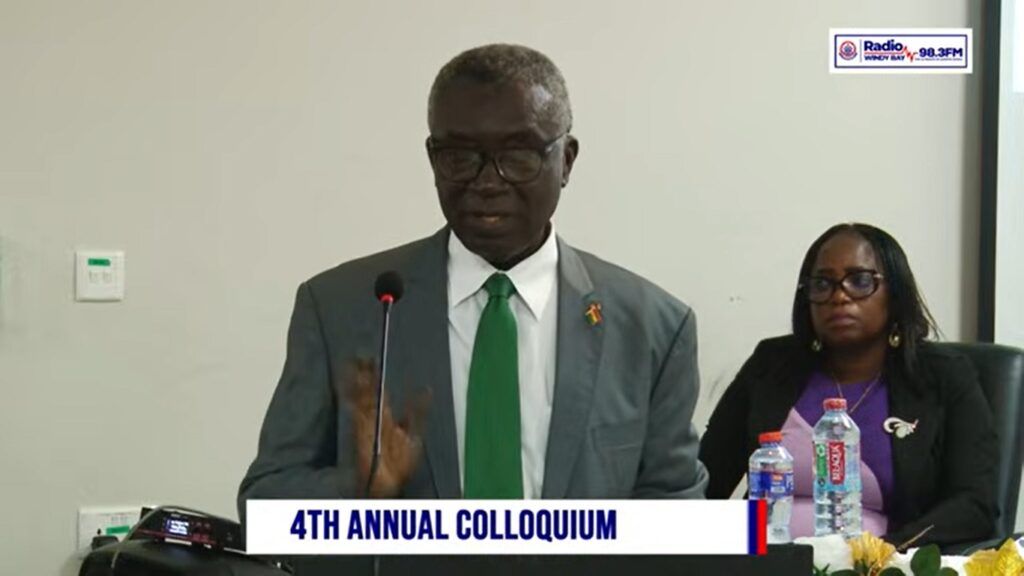
Former Environment Minister Prof Kwabena Frimpong-Boateng has suggested imposing criminal liability on individual public officials who authorize development projects in protected wetlands, watercourses, drainage channels, and forest reserves in Ghana. He maintains that the current system fails to hold accountable those responsible for unlawful or harmful permits, which are typically seen as decisions made by institutions.
Speaking at the Fourth Annual Colloquium of the Department of Political Science Education at the University of Education, Winneba on September 2, 2026, Prof. Frimpong-Boateng proposed that liability for granting permits in protected areas should persist even after the responsible official has left office, similar to how fraud is treated.
He emphasized that the officer who signs a development permit for a protected wetland, watercourse, drainage reserve, or forest reserve should face personal criminal charges, not institutional ones. Prof. Frimpong-Boateng highlighted that weak accountability in land-use planning has led to the loss of wetlands, obstruction of natural waterways, and frequent flooding, particularly in Greater Accra.
He pointed out that all nine drainage basins in the region have been narrowed, encroached upon, or converted for development, and parts of the Korle Lagoon and the Densu Delta have been taken over by projects. He used the June 3, 2015, flood and fire disaster in Accra, which claimed over 150 lives, to illustrate the dire consequences of planning and permitting failures.
Prof. Frimpong-Boateng argued that such disasters are essentially permits, and that no individuals were prosecuted due to the responsibility being attributed to institutions. He also advocated for placing forest reserves and water bodies entirely outside the mining licensing system, with no ministerial discretion or exemptions. He asserted that attaching names and personal responsibility to permit decisions would discourage officials from authorizing developments that endanger lives and weaken Ghana's environmental security.
Written by urgent.news from MyJoyOnline Ghana's reporting — not their text. Machine-written — may contain errors; check the original before relying on it.