From the Treasure of Villena to the French Crown Jewels: The lucrative business of stealing pieces of history
The spectacular rise in the price of gold over the past nine years has triggered a wave of increasingly violent heists at European museums, which are struggling to protect themselves
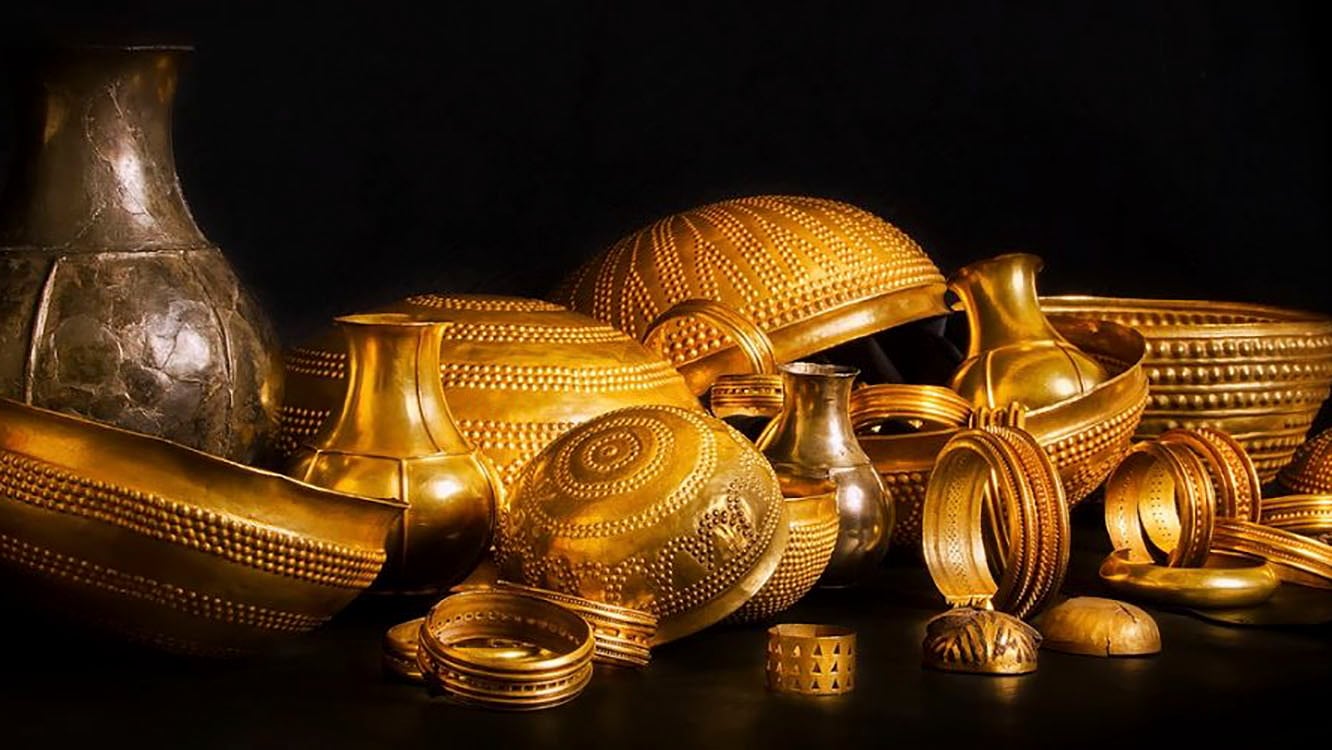
Museum robberies have been a persistent issue for many years, with the recent surge in gold prices further fueling criminal activity. Over the past nine years, the price of gold has quintupled, prompting European museums to bolster their security measures. Europol, the European Union Agency for Law Enforcement Cooperation, has issued warnings to cultural institutions about violent gangs employing explosive tactics in their thefts.
Three Spanish museums – Villena, Badajoz, and Albacete – have recently fallen victim to these crimes, losing priceless and irreplaceable gold artifacts.
One notable robbery occurred on April 4, 1921, when the Visigothic King Suintila's votive crown was stolen from the Royal Palace of Madrid. The crown was part of the renowned Treasure of Guarrazar, comprising crowns, crosses, and other gold artifacts belonging to Visigothic kings who ruled the Iberian Peninsula between the 5th and 8th centuries. Many of these pieces were later melted down by silversmiths in Toledo, and only a handful have survived to the present day.
In April 2023, the Villena Treasure – a collection of 3,000-year-old burial artifacts weighing 22 pounds – was stolen from its new home at the Villena Museum. The museum's security was reportedly compromised, as the thieves entered through a side window and managed to escape with only five or six pieces, most of which were made of silver or iron. The museum had recently undergone two security audits and implemented new measures, but the thieves still found a way to infiltrate the facility.
The Villena museum's security measures included a 10-foot-high glass case, high-security lamination, armored metal sheeting, and an extensive alarm system. Despite these precautions, the thieves managed to breach the display case in under four minutes. The museum had also recently reviewed and tested its security systems, but the criminals still managed to exploit a weakness in the facility's design.
In a separate incident, the Albacete Provincial Museum was burglarized on July 27, with thieves stealing 220 gold coins from the 19th century. Four masked individuals entered through a window at midnight and raided the Archaeology Room, where the coins were being kept. The getaway car was later found torched. Similarly, the Provincial Archaeological Museum of Badajoz was robbed on April 25, with a criminal gang stealing 149 coins from the Villanueva Treasure collection.
The thieves forced open a security grille, smashed a display case, and fled the scene without leaving any trace of the stolen artifacts.
Written by urgent.news from El Pais English's reporting — not their text. Machine-written — may contain errors; check the original before relying on it.